MinuteRead
30 min
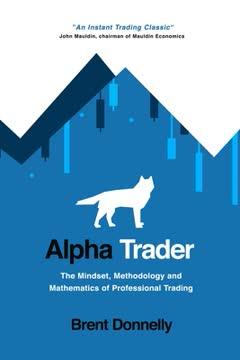
Every year, thousands of intelligent people enter the financial markets convinced they have what it takes to succeed. They bring advanced degrees, sharp analytical minds, and access to more information than any previous generation. They read the news, study charts, and develop sophisticated theories about where prices should go. And every year, most of them lose money.
**Author:** Brent Donnelly
**Estimated Reading Time:** 45 minutes
**What You'll Learn:**
- Why raw intelligence matters less than rational thinking in trading - How to recognize and neutralize the cognitive biases that destroy trading accounts - The hidden mechanics of market microstructure that professionals exploit - How narrative cycles drive market trends and how to anticipate their turning points - Why technical analysis should be used for execution, not prediction - Practical systems for emotional control, discipline, and continuous adaptation
**Who This Book Is For:**
This book is for anyone who trades or invests, whether professionally or personally. It is for the retail trader trying to understand why consistent profitability remains elusive. It is for the institutional trader seeking to sharpen their edge. It is for the curious observer who wants to understand how markets truly function beneath the surface of news headlines and price charts. If you have ever made a trading decision you knew was irrational, watched a position collapse while hoping it would recover, or felt the sting of overconfidence after a winning streak, this book speaks directly to you.
Every year, thousands of intelligent people enter the financial markets convinced they have what it takes to succeed. They bring advanced degrees, sharp analytical minds, and access to more information than any previous generation. They read the news, study charts, and develop sophisticated theories about where prices should go. And every year, most of them lose money. The uncomfortable truth is that trading success has very little to do with how smart you are. Brent Donnelly spent over two decades trading currencies at some of the world's largest banks, and throughout his career he watched brilliant people make consistently terrible decisions. He watched PhDs blow up accounts. He watched analysts with encyclopedic market knowledge freeze at critical moments. He watched confident professionals double down on losing positions until the losses became catastrophic. At the same time, he observed traders of average intelligence achieve extraordinary results. These traders were not necessarily the smartest people in the room, but they shared certain qualities: they thought clearly under pressure, they understood their own limitations, they respected the complexity of markets, and they followed disciplined processes even when their emotions screamed at them to do otherwise. The problem, Donnelly argues, is that most trading education focuses on the wrong things. Aspiring traders spend countless hours learning technical indicators, studying chart patterns, and memorizing economic data. They obsess over entry signals and exit strategies. They search for the perfect system that will unlock consistent profits. But they spend almost no time developing the one skill that actually determines success: rational thinking. Markets are not mathematical puzzles waiting to be solved. They are…
Continue reading in the MinuteRead app
Get the complete 30-minute summary of Alpha Trader
Get the complete summary in the appRationality beats intelligence. Focus on developing clear thinking, not just knowledge.
Overconfidence is your greatest enemy. Guard against it constantly.
Take small losses. Cut losing positions quickly and move on.
Understand market narratives. Know where the story is in its life cycle.
Use technical analysis for execution, not prediction.
Study market microstructure. Understand how trading actually works.
"Alpha Trader" is a strong fit if you want practical ideas around finance, business, economics, especially themes like rationality beats intelligence. focus on developing clear thinking, not just knowledge; overconfidence is your greatest enemy. guard against it constantly. The MinuteRead summary distills these concepts into a focused read, whether you're deciding whether to buy the book or applying its lessons at work.
Brent Donnelly is a seasoned currency trader with over 25 years of experience in the financial industry. He currently holds a senior FX trader position at HSBC New York and authors a popular daily macro and FX report called AM/FX. Throughout his career, Donnelly has worked at top banks in various roles, including market maker, trader, and senior manager. His expertise spans multiple financial instruments, including spot FX, interest rates, options, and commodities. Donnelly is recognized as a re…
View all summaries by Brent DonnellyContinue Reading
Access the complete 30-minute summary and thousands more nonfiction books in the MinuteRead app.

Continue reading the complete summary in the MinuteRead app.