MinuteRead
30 min
Book summary
Premium summary · Opens in the app · 30 min read
There is a peculiar cruelty in the way fear operates. It does not announce itself with a loud warning. It creeps in quietly, often days before you are scheduled to speak. You notice it first as a small knot in your stomach when you think about the date on the calendar. Then it grows. By the morning of the event, your hands are cold, your mouth is dry, and a voice in your head is asking a terrible question: what if I fail?
**Author:** Dale Carnegie
**Estimated Reading Time:** 45 minutes
**What You'll Learn:**
- How to conquer the fear that keeps most people silent - The mechanics of a voice that commands attention - How to use pace, pitch, and pause to create impact - Why enthusiasm matters more than technique - How to prepare so thoroughly that confidence becomes inevitable
**Who This Book Is For:**
This book is for anyone who has ever felt their throat tighten at the thought of standing before a room. It is for the professional who must present to colleagues, the student facing an oral examination, the community member asked to speak at a gathering, and the quiet person with something important to say. If you have ever walked away from a conversation wishing you had spoken up, or sat through a presentation wondering why the speaker failed to hold your attention, this book will show you what separates the forgettable from the unforgettable.
There is a peculiar cruelty in the way fear operates. It does not announce itself with a loud warning. It creeps in quietly, often days before you are scheduled to speak. You notice it first as a small knot in your stomach when you think about the date on the calendar. Then it grows. By the morning of the event, your hands are cold, your mouth is dry, and a voice in your head is asking a terrible question: what if I fail? Dale Carnegie understood this fear intimately. He was not born a confident speaker. He grew up poor on a Missouri farm, the son of a struggling farmer, and he knew what it felt like to stand before others feeling inadequate. When he began teaching public speaking courses in the early twentieth century, he did so not as a man who had never known fear, but as one who had faced it and learned, through years of practice and observation, exactly how to overcome it. The problem Carnegie identified was not that people lacked intelligence or worthwhile ideas. The problem was that they had never been taught how to share those ideas effectively. Schools taught reading and writing, but speaking, the most immediate and powerful form of human communication, was left to chance. People assumed that good speakers were born, not made. This assumption was wrong, and Carnegie spent his life proving it. The cost of this neglect is enormous. Careers stall because talented people cannot present their work convincingly. Communities lose the voices of those who have wisdom to share but no confidence to share it. Relationships suffer because people cannot express what they truly feel. And individuals carry a quiet burden of regret, wondering what they might have…
Continue reading in the MinuteRead app
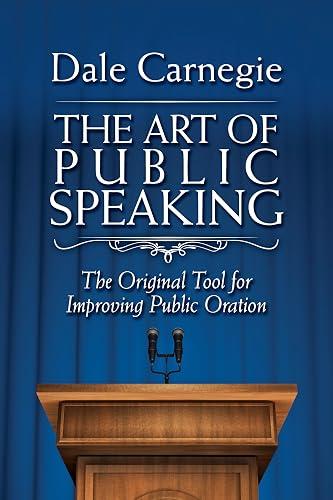
Get the complete 30-minute summary of The Art of Public Speaking
Get the complete summary in the appAction cures fear. Speak, and speak again, until the fear diminishes.
Prepare thoroughly. Know your subject better than your audience does.
Focus on your message, not on yourself. Absorption drives out anxiety.
Vary your pitch, pace, and volume. Monotony destroys attention.
Emphasize through contrast. Subordinate the unimportant so the important can stand out.
Use pauses deliberately. Silence can be more powerful than words.
"The Art of Public Speaking" is a strong fit if you want practical ideas around self help, business, psychology, especially themes like action cures fear. speak, and speak again, until the fear diminishes; prepare thoroughly. know your subject better than your audience does. The MinuteRead summary distills these concepts into a focused read, whether you're deciding whether to buy the book or applying its lessons at work.
Motivated to help readers with practise, Dale Carnegie wrote “The Art of Public Speaking” to package those ideas for a fast, focused read. In “The Art of Public Speaking”, Dale Carnegie focuses on practise. Through “The Art of Public Speaking”, Dale Carnegie distills the core ideas on self help into lessons readers can absorb in a single short sitting. Readers turn to this work when they want Dale Carnegie's perspective on the subject without working through the entire original volume. Dale Carn…
View all summaries by Dale CarnegieContinue Reading
Access the complete 30-minute summary and thousands more nonfiction books in the MinuteRead app.

Continue reading the complete summary in the MinuteRead app.