MinuteRead
30 min
Book summary
by Brett King
Premium summary · Opens in the app · 30 min read
For over six hundred years, banking operated on a simple premise. If you wanted to manage money, you went to a place where money was managed. The building had marble columns and vault doors and people in suits who spoke in careful, measured tones. The architecture communicated permanence. The processes communicated caution. The entire system was designed around the idea that money needed a physical home, and that home needed to be protected, regulated, and visited.
**Author:** Brett King **Estimated Reading Time:** 45 minutes
**What You'll Learn:** Why banking is no longer a place you go but something you do, how technology is dismantling the traditional banking model, and what the future of financial services will look like when money becomes embedded in everyday life.
**Who This Book Is For:** Banking professionals who sense the ground shifting beneath them, entrepreneurs building financial technology, investors trying to understand where value is moving, and anyone curious about how the way we pay, save, borrow, and invest is being fundamentally reinvented.
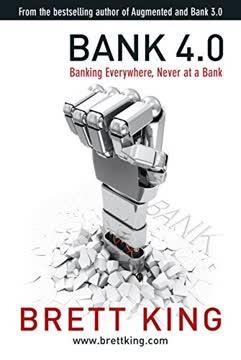
For over six hundred years, banking operated on a simple premise. If you wanted to manage money, you went to a place where money was managed. The building had marble columns and vault doors and people in suits who spoke in careful, measured tones. The architecture communicated permanence. The processes communicated caution. The entire system was designed around the idea that money needed a physical home, and that home needed to be protected, regulated, and visited. That world is ending. Not gradually, not in some distant future, but right now, in ways that most people barely notice because the change is happening inside their pockets. Consider what happened in China between 2013 and 2018. In those five years, mobile payments went from a novelty to the default way that over a billion people transacted. Street vendors stopped accepting cash. Beggars started carrying QR codes. The idea of writing a check became as antiquated as sending a telegram. And the companies driving this transformation were not banks. They were technology platforms: Alipay, WeChat Pay, and a constellation of fintech startups that understood something fundamental about money that banks had forgotten. Money is not about buildings. Money is about utility. It is about the ability to pay for a meal, receive a salary, save for a child's education, or borrow to start a business. When technology can deliver that utility faster, cheaper, and more conveniently than a physical branch, the branch becomes irrelevant. The bank becomes invisible. And banking becomes something you do, not somewhere you go. Brett King wrote Bank 4.0 to document this transformation and to issue a warning. The warning is not subtle. Banks that continue to operate on the assumptions of the twentieth century will not survive the twenty-first. The evidence is already mounting. Branch traffic is declining in every developed economy. Customer loyalty is eroding. Technology companies are skimming the most profitable parts of the banking value chain. And a generation of consumers is growing up that has never walked into a bank branch and has no intention of ever doing so. But this is not a book about doom. It is a book about…
Continue reading in the MinuteRead app
Get the complete 30-minute summary of Bank 4.0
Get the complete summary in the appBanking is no longer somewhere you go, it is something you do.
The branch is dying, and trying to save it by making it more attractive misunderstands the problem.
First principles thinking reveals possibilities that incremental thinking cannot see.
FinTech and TechFin companies are proving that banks are not necessary for many financial functions.
AI will eliminate more than 30 percent of banking jobs.
Voice and augmented reality will become major channels for financial services.
"Bank 4.0" is a strong fit if you want practical ideas around finance, banking, business, especially themes like banking is no longer somewhere you go, it is something you do; the branch is dying, and trying to save it by making it more attractive misunderstands the problem. The MinuteRead summary distills these concepts into a focused read, whether you're deciding whether to buy the book or applying its lessons at work.
Brett King is a renowned fintech expert, author, and entrepreneur. He co-founded Moven, an online bank, and has written several books on the future of banking. King is known for his visionary approach to the financial industry, predicting major shifts towards digital and AI-driven banking. His work focuses on how technology is disrupting traditional banking models and the need for banks to adapt to survive. King is a sought-after speaker and consultant in the fintech world, sharing his insights …
View all summaries by Brett KingContinue Reading
Access the complete 30-minute summary and thousands more nonfiction books in the MinuteRead app.

Continue reading the complete summary in the MinuteRead app.