MinuteRead
30 min
Book summary
by Jim Collins
Premium summary · Opens in the app · 30 min read
Every entrepreneur begins with a vision. A product. A service. A way to solve a problem better than anyone else. That initial spark of creation feels exhilarating. You hire your first employees. You land your first customers. You watch your idea take shape in the real world.
**Author:** Jim Collins
**Estimated Reading Time:** 45 minutes
**What You'll Learn:**
- The true definition of leadership and why it matters more than management - How to build a company that endures beyond any single leader - The discipline of combining humility with fierce resolve - Why the right people matter more than the right strategy - How to maintain momentum through consistent, disciplined action - The principles that separate lasting greatness from temporary success
**Who This Book Is For:**
Entrepreneurs who want to build something that lasts. Leaders who feel the weight of responsibility for others. Managers tired of quick fixes and superficial advice. Anyone who suspects that real excellence requires something deeper than charisma, luck, or aggressive goal-setting. If you want to understand the mechanics of enduring success, this book will show you the machinery.
Every entrepreneur begins with a vision. A product. A service. A way to solve a problem better than anyone else. That initial spark of creation feels exhilarating. You hire your first employees. You land your first customers. You watch your idea take shape in the real world. Then something happens that nobody warned you about. The company grows. Complexity increases. Decisions multiply. The things that made you successful in the early days no longer seem sufficient. You find yourself pulled in a hundred directions. You wonder whether the organization depends too much on you. You ask yourself a question that most entrepreneurs never voice aloud: What happens to this company when I am no longer here? Jim Collins has spent decades studying this question. His research into what separates great companies from merely good ones has produced some of the most influential business books ever written. But BE 2.0 represents something different. It is not just a sequel to his earlier work. It is a distillation of everything he has learned about building organizations that endure. The central problem Collins addresses is deceptively simple. Most companies do not fail because they lack good ideas. They fail because they lack the leadership and organizational discipline to turn good ideas into lasting institutions. The business landscape is littered with companies that experienced explosive growth, only to collapse when their founding genius departed or the market shifted. The question is not whether you can build something successful. The question is whether you can build something that lasts. What makes Collins's approach distinctive is his insistence on evidence over opinion. He does not offer theories based on what should work. He studies companies that actually did work, over decades, through multiple leadership transitions, economic cycles, and competitive threats. He compares them to similar companies that did not achieve the same results. The patterns he identifies are not…
Continue reading in the MinuteRead app
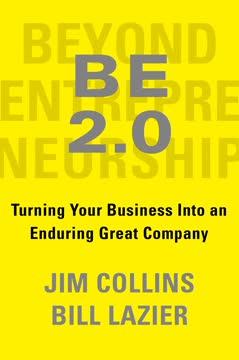
Get the complete 30-minute summary of BE 2.0 (Beyond Entrepreneurship 2.0)
Get the complete summary in the appLeadership is getting people to want to do what must be done.
Combine personal humility with professional will.
Get the right people on the bus before deciding where to drive.
Confront brutal facts while maintaining faith in ultimate success.
Find the intersection of passion, excellence, and economics.
Build momentum through consistent, cumulative effort.
"BE 2.0 (Beyond Entrepreneurship 2.0)" is a strong fit if you want practical ideas around business, entrepreneurship, leadership, especially themes like leadership is getting people to want to do what must be done; combine personal humility with professional will. The MinuteRead summary distills these concepts into a focused read, whether you're deciding whether to buy the book or applying its lessons at work.
Jim Collins is a renowned business researcher and author, known for his studies on what makes companies great and enduring. He has authored or co-authored several bestselling books, including "Built to Last" and "Good to Great," which have been translated into multiple languages. Collins began his career as a faculty member at Stanford Graduate School of Business and later founded a management laboratory in Colorado. He has worked with various corporate and social sector organizations, teaching …
View all summaries by Jim CollinsContinue Reading
Access the complete 30-minute summary and thousands more nonfiction books in the MinuteRead app.

Continue reading the complete summary in the MinuteRead app.