MinuteRead
30 min
Book summary
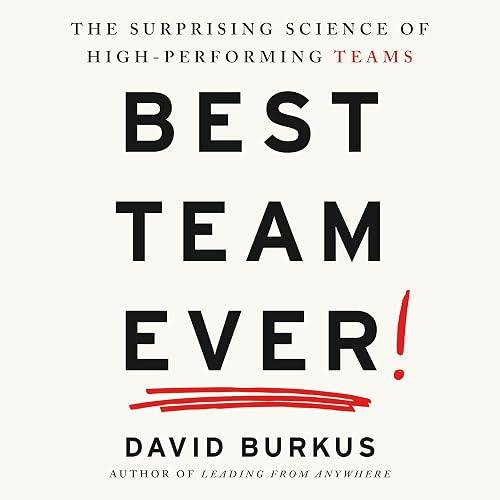
by David Burkus
Premium summary · Opens in the app · 30 min read
We have a talent problem. Not the kind you might think. The problem is not that organizations struggle to find talented people. The problem is that we have overestimated what talent alone can do.
**Author:** David Burkus
**Estimated Reading Time:** 45 minutes
**What You'll Learn:**
- Why team culture matters more than individual talent - How to build common understanding through clarity and empathy - The science behind psychological safety and why it drives performance - How to cultivate trust and respect in any team - Practical ways to connect work to meaning and impact - A complete framework for transforming your team
**Who This Book Is For:**
This book is for anyone who leads a team, works on a team, or wants to understand why some groups achieve extraordinary results while others flounder despite having talented members. Whether you manage a small startup, lead a department in a large corporation, coach a sports team, or simply want to improve collaboration with colleagues, the principles here apply universally.
We have a talent problem. Not the kind you might think. The problem is not that organizations struggle to find talented people. The problem is that we have overestimated what talent alone can do. For decades, the prevailing wisdom has been simple: hire the best people, and you will get the best results. Recruiters chase top performers. Companies compete fiercely for graduates from elite universities. Sports teams trade for star players. The assumption is that individual excellence translates directly into team excellence. But the evidence tells a different story. Consider the 2018 United States Olympic curling team. The team that won gold at the Winter Olympics in Pyeongchang was not the all-star squad assembled by USA Curling. It was a group of players who had been rejected by the official selection process. They called themselves "Team Reject." They trained together, lived together, and built a culture of trust and mutual support that the official team lacked. When they faced the world's best, they did not win because they had superior individual talent. They won because they had something more powerful: a team culture that elevated everyone's performance. The same pattern appears in business. Google, a company obsessed with data and optimization, set out to discover the formula for the perfect team. Project Aristotle, as the initiative was called, analyzed 180 teams across the company. Researchers looked at team composition, individual performance ratings, personality types, educational backgrounds, and dozens of other variables. They expected to find that the best teams were simply composed of the best individuals. They found nothing of the sort. No matter how they sliced the data, there was no correlation between individual talent and team effectiveness. The best predictor of team performance was not who was on the team. It was how the team worked together. Specifically, it was the unwritten rules, the norms, the culture that determined whether a team thrived or…
Continue reading in the MinuteRead app
Get the complete 30-minute summary of Best Team Ever
Get the complete summary in the appTeam culture, not individual talent, drives performance. The team makes the talent.
Common Understanding requires both clarity (knowing roles and expectations) and empathy (knowing each other as humans).
Psychological Safety is the shared belief that the team is safe for interpersonal risk-taking. It is the foundation of l
Trust is built through vulnerability. Someone has to go first, and that someone is usually the leader.
Respect is demonstrated through active listening, sharing credit, and treating conflict as collaboration.
Prosocial Purpose means understanding who your work serves. Purpose is not a why. Purpose is a who.
"Best Team Ever" is a strong fit if you want practical ideas around leadership, business, management, especially themes like team culture, not individual talent, drives performance. the team makes the talent; common understanding requires both clarity (knowing roles and expectations) and empathy (knowing each other as humans). The MinuteRead summary distills these concepts into a focused read, whether you're deciding whether to buy the book or applying its lessons at work.
Motivated to help readers with 1) Team Culture, David Burkus wrote “Best Team Ever” to package those ideas for a fast, focused read. In “Best Team Ever”, David Burkus focuses on 1) Team Culture. Through “Best Team Ever”, David Burkus distills the core ideas on leadership into lessons readers can absorb in a single short sitting. Readers turn to this work when they want David Burkus's perspective on the subject without working through the entire original volume. David Burkus wrote “Best Team Ever…
Continue Reading
Access the complete 30-minute summary and thousands more nonfiction books in the MinuteRead app.

Continue reading the complete summary in the MinuteRead app.