 MinuteRead
30 min
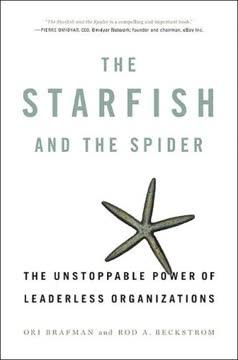
Book summary
by Ori Brafman
Premium summary · Opens in the app · 30 min read
In 1519, the Spanish conquistador Hernán Cortés landed on the shores of what is now Mexico with six hundred men, sixteen horses, and a singular mission: conquer the Aztec Empire. The Aztecs were a formidable civilization with a vast army, sophisticated infrastructure, and a centralized capital city, Tenochtitlan, that rivaled any European metropolis. Cortés understood something crucial about centralized power. Capture the emperor, seize the capital, and the entire empire collapses. He did exactl
**Author:** Ori Brafman and Rod A. Beckstrom **Estimated Reading Time:** 45 minutes
**What You'll Learn:** Why some organizations grow stronger when attacked, how leaderless groups reshape entire industries, and what the rise of decentralization means for your career, business, and life. You will learn to recognize starfish and spider organizations, understand the hidden power of catalysts, and discover how to thrive in a world where control is no longer the only path to success.
**Who This Book Is For:** Leaders frustrated by competitors who seem immune to traditional tactics. Entrepreneurs building movements rather than companies. Anyone trying to understand why the internet changed everything about power, organization, and influence. And readers who sense that the old rules of hierarchy no longer apply but cannot quite explain why.
In 1519, the Spanish conquistador Hernán Cortés landed on the shores of what is now Mexico with six hundred men, sixteen horses, and a singular mission: conquer the Aztec Empire. The Aztecs were a formidable civilization with a vast army, sophisticated infrastructure, and a centralized capital city, Tenochtitlan, that rivaled any European metropolis. Cortés understood something crucial about centralized power. Capture the emperor, seize the capital, and the entire empire collapses. He did exactly that. Within two years, the Aztec Empire fell. Now consider a very different kind of enemy. For decades, the United States government has pursued Al-Qaeda with the most sophisticated military apparatus in human history. Drones, special forces, intelligence networks, financial tracking, the full weight of a superpower brought to bear. And yet Al-Qaeda persists. Not only persists but mutates, spreads, and in some ways grows stronger with every attack against it. Cut off the head, and two more appear. Disrupt a cell in Pakistan, and a new one emerges in Yemen. The harder you fight, the more diffuse and resilient the enemy becomes. These two stories illustrate the central puzzle of organizational power in the twenty-first century. Some systems operate like spiders. They have a head, a brain, a central command structure. If you remove the head, the spider dies. Other systems operate like starfish. A starfish has no head. Its nervous system is distributed throughout its body. Cut off an arm, and the starfish grows a new one. With some species, the severed arm grows an entirely new starfish. Attack it, and you may end up with more starfish than you started with. This book exists because the world is undergoing a profound shift from spider organizations to starfish organizations, and most people do not see it happening. The music industry did not see Napster coming until its entire business model lay in ruins. Encyclopedia Britannica did not see Wikipedia coming until a volunteer army of amateurs built…
Continue reading in the MinuteRead app
Get the complete 30-minute summary of The Starfish and the Spider
Get the complete summary in the appSpider organizations concentrate power at the center and die when the head is removed. Starfish organizations distribute
The five legs of a starfish are circles, the catalyst, ideology, the pre-existing network, and the champion. All five ar
A catalyst starts things and steps back. A champion pushes things forward relentlessly. Both roles are essential, and th
Ideology is the glue. Without shared beliefs, decentralized organizations fall apart. Ideology must be authentic, not ma
Starfish organizations grow on pre-existing networks. Find the network before you try to build the movement.
Attacking a starfish with spider tactics usually makes it stronger. Use starfish strategies instead: change the ideology
"The Starfish and the Spider" is a strong fit if you want practical ideas around business, leadership, management, especially themes like spider organizations concentrate power at the center and die when the head is removed. starfish organizations distribute; the five legs of a starfish are circles, the catalyst, ideology, the pre-existing network, and the champion. all five ar. The MinuteRead summary distills these concepts into a focused read, whether you're deciding whether to buy the book or applying its lessons at work.
Ori Brafman is an organizational expert and bestselling author known for his work on decentralized systems and human behavior. Born in Israel and raised in Texas, Ori Brafman studied at Stanford University before co-founding a networking organization for CEOs. His collaborative writing style, often partnering with his brother Rom Brafman, has produced several influential books exploring unconventional approaches to business and social dynamics. Brafman's expertise in organizational psychology an…
View all summaries by Ori BrafmanContinue Reading
Access the complete 30-minute summary and thousands more nonfiction books in the MinuteRead app.

Continue reading the complete summary in the MinuteRead app.






