MinuteRead
30 min
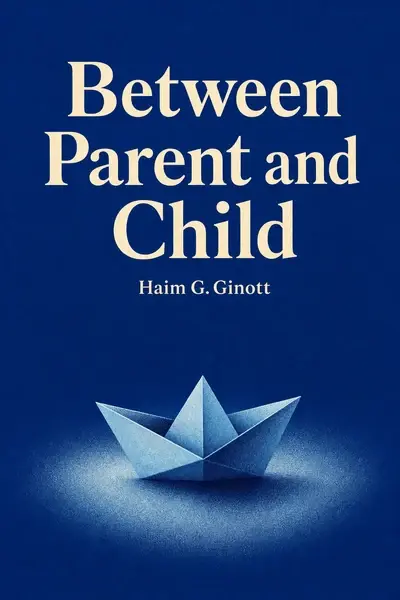
Book summary
Premium summary · Opens in the app · 30 min read
There is a moment every parent knows well. A child comes home from school, throws down a backpack, and announces that a teacher is unfair, a friend is mean, or a sibling is unbearable. The parent, wanting to help, responds with logic. The teacher probably had a reason. Your friend didn't mean it. You should be nicer to your sister.
**Author:** Haim G. Ginott **Estimated Reading Time:** 45 minutes
**What You'll Learn:**
- Why children's emotions are the gateway to cooperation and connection - How to praise in ways that build genuine self-esteem instead of dependence on approval - The art of setting limits without attacking a child's character - How to handle jealousy, fear, anxiety, and difficult questions with honesty and compassion - A complete framework for discipline that teaches rather than punishes - Practical language you can use today to transform everyday conflicts
**Who This Book Is For:**
Parents who want to move beyond power struggles and punishment. Educators seeking a more humane approach to guiding children. Anyone who remembers what it felt like to be a child whose feelings were dismissed, and who wants to do better for the next generation.
There is a moment every parent knows well. A child comes home from school, throws down a backpack, and announces that a teacher is unfair, a friend is mean, or a sibling is unbearable. The parent, wanting to help, responds with logic. The teacher probably had a reason. Your friend didn't mean it. You should be nicer to your sister. And then the child explodes, or withdraws, or says the words that sting: "You don't understand." Haim Ginott spent his career observing these moments. He watched well-intentioned parents say all the wrong things for all the right reasons. He saw children who felt unheard, parents who felt frustrated, and homes that became battlegrounds over issues that could have been resolved with a different kind of conversation. The problem, Ginott realized, was not that parents lacked love. The problem was that they lacked a language. They had no vocabulary for acknowledging feelings, no grammar for setting limits without blame, no syntax for praise that builds rather than burdens. Between Parent and Child was first published in 1965, but its insights have not aged. If anything, they have become more relevant. Modern parents are bombarded with advice about schedules, enrichment, screen time, and achievement. What gets lost is the fundamental question: How do we talk to our children so they feel understood? How do we listen so they want to talk? Ginott's answer is deceptively simple. Children are people. They have the same emotional needs as adults: to be heard, to be respected, to have their feelings acknowledged even when their behavior must be limited. The difference is that children have fewer tools for expressing those needs. They act out because they lack words. They throw tantrums because they lack perspective. They resist because they feel powerless. The parent's job is not to control the child. The parent's job is to be the child's emotional anchor, the person…
Continue reading in the MinuteRead app
Get the complete 30-minute summary of Between Parent and Child
Get the complete summary in the appAcknowledge feelings before offering solutions. "You seem upset" opens the door. "Don't be upset" closes it.
Praise effort and specific actions, not personality. "You worked hard" builds more than "You're smart."
Set limits by stating the rule and offering an alternative. Focus on behavior, not character.
Accept all feelings. Limit unacceptable behavior. Both happen in the same sentence.
Offer choices within boundaries. "Do you want to do your homework before or after dinner?"
Acknowledge jealousy. Do not deny it. Spend individual time with each child.
"Between Parent and Child" is a strong fit if you want practical ideas around parenting, psychology, self help, especially themes like acknowledge feelings before offering solutions. "you seem upset" opens the door. "don't be upset" closes it; praise effort and specific actions, not personality. "you worked hard" builds more than "you're smart.". The MinuteRead summary distills these concepts into a focused read, whether you're deciding whether to buy the book or applying its lessons at work.
Haim G. Ginott was an influential child psychologist, teacher, and psychotherapist who specialized in working with children and parents. He developed groundbreaking techniques for communicating with children that remain widely taught and practiced today. Ginott's most famous work, Between Parent and Child, became a bestseller and continues to be popular among parents and educators. His approach emphasized empathy, respect, and effective communication in parent-child relationships. Ginott's metho…
View all summaries by Haim G. GinottContinue Reading
Access the complete 30-minute summary and thousands more nonfiction books in the MinuteRead app.

Continue reading the complete summary in the MinuteRead app.