MinuteRead
5 min
Book summary
Premium summary · Opens in the app · 5 min read
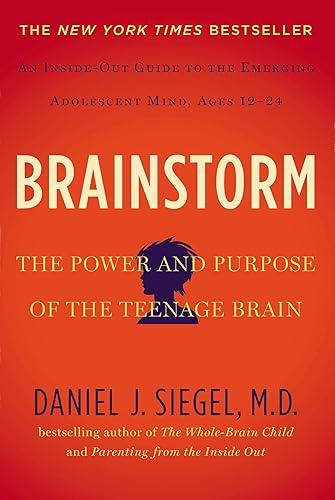
Brainstorm is a fascinating look into the teenage brain that explains why adolescents act so hormonally and recklessly.
Brainstorm is a fascinating look into the teenage brain that explains why adolescents act so hormonally and recklessly.
It may sound crazy, but the wild behavior of teenagers is a sign that their brain is right on track developmentally. Let’s take the embarrassment and frustration that kids suddenly feel toward their parents as one example.
Although this behavior is hurtful, understanding its purpose in the developing mind can help. All your teenager wants to do is develop a healthy emotional distance so they can be ready to leave your home. When they lash out and say that they hate you, it’s not really true. Instead, see it as the brain’s effort to emotionally detach so the transition to adulthood is easier.
Similarly, you may shake your head at the teenagers you know that are constantly pushing the boundaries. They seem to always be doing what’s unsafe, and it drives you crazy! But on closer inspection, this behavior is also completely understandable for a teenager.
While connected to the elevated levels of dopamine in their brains and peer pressure, kids recklessness has a higher purpose. It’s also related to preparing for leaving home. Looking at it from an evolutionary perspective, early humans needed to be as far away from their family gene pool as possible to have healthier offspring. The disregard for safety in teenagers is an effort for their brains to get out of their comfort zones in preparation to go out away from their family. This has the additional benefit of helping them grow, which allows them better opportunities for education and work.
Not only do teenagers struggle with aggression, but they also appear to be pretty lazy. Partying all night and sleeping in until the early afternoon are hallmarks of adolescence. On closer inspection, however, this time of life is rather productive from the brain’s perspective. In childhood, your brain develops extra neurons and connections. But as you age, the brain begins pruning those parts of the brain it no longer needs. So how does your mind decide what stays and what goes? Look at your prior experience. A child who shows interest in music, for example, would need to be nurtured to develop that skill. Otherwise, in her teenage years, the brain may see the musical experiences as unnecessary, and prune the associated neural connections. Opposite of pruning is the process of myelination. This phenomenon is how the brain strengthens the neural connections made in childhood. It allows for messages to travel faster between neurons, making a person better at that particular skill. If you can help your teenagers have a focus, like sports or music, then they will become better as they age because of myelination.…
Continue reading in the MinuteRead app
Get the complete 5-minute summary of Brainstorm
Get the complete summary in the appAdolescents may act strange, but upon closer inspection their behavior is perfectly normal.
The development of the brain during youth is crucial for success later in life.
Learning the right way to have reflective conversations with teenagers will help them prepare for adulthood.
"Brainstorm" is a strong fit if you want practical ideas around communication skills, parenting, psychology, especially themes like adolescents may act strange, but upon closer inspection their behavior is perfectly normal; the development of the brain during youth is crucial for success later in life. The MinuteRead summary distills these concepts into a focused read, whether you're deciding whether to buy the book or applying its lessons at work.
Daniel J. Siegel, M.D. is a graduate of Harvard Medical School and completed his postgraduate medical education at UCLA with training in pediatrics and child, adolescent, and adult psychiatry. He is currently a clinical professor of psychiatry at the UCLA School of Medicine, founding co-director of UCLA’s Mindful Awareness Research Center, founding co-investigator at the UCLA Center for Culture, Brain and Development, and executive director of the Mindsight Institute, an educational center devot…
View all summaries by Daniel J. Siegel M.D.Continue Reading
Access the complete 5-minute summary and thousands more nonfiction books in the MinuteRead app.

Continue reading the complete summary in the MinuteRead app.