 MinuteRead
30 min
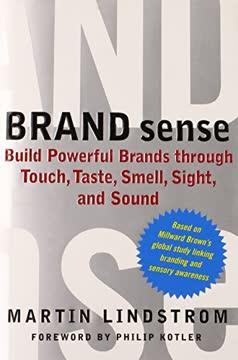
Every day, the average person encounters thousands of brand messages. They appear on billboards, television screens, smartphone notifications, product packaging, and the sides of buses. Most of these messages are visual. A smaller number are auditory. Almost none of them engage the other three senses that human beings use to understand the world.
**Author:** Martin Lindstrom
**Estimated Reading Time:** 42 minutes
**What You'll Learn:**
- Why the most powerful brands in the world engage all five senses, not just sight and sound - How scent, touch, and taste create deeper emotional connections than traditional advertising - The concept of "smashable brands" and why some products are recognizable even in pieces - How sensory branding builds religious-like devotion among customers - Practical ways to apply multisensory thinking to any product, service, or experience
**Who This Book Is For:**
This book is for marketers, entrepreneurs, product designers, and business leaders who want to move beyond conventional branding. It is for anyone who senses that there is something missing from modern marketing, something deeper than logos and slogans. If you have ever wondered why certain products feel irreplaceable while others are forgotten the moment they leave the shelf, this book will show you the answer.
Every day, the average person encounters thousands of brand messages. They appear on billboards, television screens, smartphone notifications, product packaging, and the sides of buses. Most of these messages are visual. A smaller number are auditory. Almost none of them engage the other three senses that human beings use to understand the world. This is a remarkable oversight. Human beings are equipped with five sensory channels, each one evolved over millions of years to help us navigate, survive, and find meaning in our environment. Yet modern marketing, for all its sophistication, operates almost exclusively on two of them. We have built an entire industry around what people see and hear, while ignoring the profound influence of what they smell, touch, and taste. Martin Lindstrom noticed this gap and spent years investigating what happens when brands engage all five senses. What he discovered challenges fundamental assumptions about how marketing works. The brands that inspire genuine loyalty, the ones people defend in arguments and queue up to buy, are not simply the ones with the best advertisements. They are the ones that have learned to occupy multiple sensory channels simultaneously. Consider the experience of drinking a Coca-Cola from a glass bottle. The visual identity of the red label and the distinctive script are important. But so is the weight of the bottle in your hand, the texture of the glass, the sound the cap makes when it opens, the coldness against your lips, the specific fizz and bite of the liquid. Each of these sensory inputs reinforces the others. Together, they create an experience that is far more memorable than any single element could achieve alone. Now consider what most brands offer: a logo, a color scheme, perhaps a jingle. They are competing in a sensory arena with only a fraction of their…
Continue reading in the MinuteRead app
Get the complete 30-minute summary of Brand Sense
Get the complete summary in the appBrands that engage more senses create stronger, more lasting connections with consumers.
A smashable brand remains recognizable even when broken into pieces, like the Coca-Cola bottle or the Harley-Davidson en
Smell is the most emotionally direct sense, with a direct neurological pathway to memory and emotion centers in the brai
Sound creates immediate emotional responses and influences behavior, from shopping pace to quality perceptions.
Touch is closely linked to quality perception. The way a product feels shapes how customers evaluate it.
Taste, while limited in application, creates the most intimate brand connections.
"Brand Sense" is a strong fit if you want practical ideas around business, design, psychology, especially themes like brands that engage more senses create stronger, more lasting connections with consumers; a smashable brand remains recognizable even when broken into pieces, like the coca-cola bottle or the harley-davidson en. The MinuteRead summary distills these concepts into a focused read, whether you're deciding whether to buy the book or applying its lessons at work.
Martin Lindstrom is a bestselling author and business thinker known for his work on branding and consumer behavior. Born in 1970, he has written several influential books, including "The Ministry of Common Sense" and "Buyology." Lindstrom's books have sold 4.5 million copies and been translated into 60 languages. He advocates for eliminating bureaucratic inefficiencies and improving customer experiences through unconventional thinking. TIME Magazine named him one of the World's Most Influential …
View all summaries by Martin LindstromContinue Reading
Access the complete 30-minute summary and thousands more nonfiction books in the MinuteRead app.

Continue reading the complete summary in the MinuteRead app.






