MinuteRead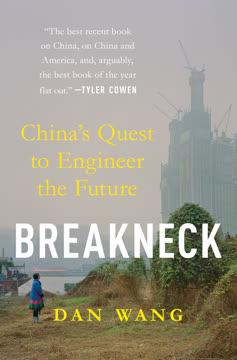
30 min
In 1915, the express train from New York to New Haven took two hours. It still takes two hours. In that same span of time, China went from having virtually no modern infrastructure to building the world's largest high-speed rail network, the world's longest highway system, and more renewable energy capacity than the rest of the world combined.
**Author:** Dan Wang **Estimated Reading Time:** 42 minutes
Why China builds highways through mountains while America cannot fix a subway tunnel. How a nation run by engineers differs from one run by lawyers. What happens when a government treats citizens as aggregates to be managed rather than individuals with rights. Why manufacturing knowledge lives in workers' hands, not in patents. And what the rise of the engineering state means for the future of American power.
Anyone trying to understand the real differences between the world's two largest economies. Readers who sense that something profound has shifted in the global balance of power but cannot quite name it. People who work in technology, manufacturing, policy, or business and need to understand China's strengths and vulnerabilities. And anyone who has ever wondered why their city cannot seem to build anything anymore.
In 1915, the express train from New York to New Haven took two hours. It still takes two hours. In that same span of time, China went from having virtually no modern infrastructure to building the world's largest high-speed rail network, the world's longest highway system, and more renewable energy capacity than the rest of the world combined. Something fundamental separates these two civilizations. Dan Wang's argument is that the difference comes down to who runs each country. China is governed by engineers. America is governed by lawyers. And the consequences of that difference are visible in every bridge, every factory, every delayed construction project, and every abandoned manufacturing town. Wang is uniquely positioned to make this argument. Born in China, raised in Canada, educated in the United States, and working as a technology analyst focused on China, he has spent years traveling through both countries and observing how they actually function. He has cycled through China's poorest provinces and walked through America's deindustrialized heartland. He has studied the Chinese political system from the inside and the American regulatory state from the outside. His conclusion is uncomfortable for Americans. The United States, he argues, lives in the ruins of an industrial civilization. Its infrastructure is barely maintained and rarely expanded. Its manufacturing capacity has been hollowed out. Its ability to build anything at scale has been strangled by a legal system that prioritizes procedure over outcomes. China, by contrast, has become the world's greatest building machine. It pours concrete at a rate unmatched in human history. It trains engineers by the millions. It dominates global manufacturing in sector after sector. And it does all this despite being, by most measures, a poorer country than the United States. But Wang's argument is not simply pro-China. The engineering state has its own pathologies, and they are severe. The same mindset that builds a…
Continue reading in the MinuteRead app
Get the complete 30-minute summary of Breakneck
Get the complete summary in the appChina is run by engineers who build; America is run by lawyers who litigate.
Process knowledge, the expertise gained through hands-on practice, is the most important form of technology and cannot b
When America offshored manufacturing, it transferred irreplaceable tacit knowledge to China.
Shenzhen's factory floors, not labs, made China a tech superpower.
The one-child policy, designed by a missile scientist using flawed models, led to 321 million abortions and a demographi
Zero-Covid revealed the engineering state's control neurosis: it locked down 25 million people in Shanghai for eight wee
"Breakneck" is a strong fit if you want practical ideas around china, politics, economics, especially themes like china is run by engineers who build; america is run by lawyers who litigate; process knowledge, the expertise gained through hands-on practice, is the most important form of technology and cannot b. The MinuteRead summary distills these concepts into a focused read, whether you're deciding whether to buy the book or applying its lessons at work.
Dan Wang is a Chinese-born analyst and writer who immigrated to Canada at age seven before moving to the United States. He has worked as a technology analyst for investment firms specializing in China. Wang is known for his annual letters from China, which have become essential reading for those interested in the country. His background in philosophy and experience living in both China and the US provide him with a unique perspective on the two nations. Wang's writing style is described as engag…
View all summaries by Dan WangContinue Reading
Access the complete 30-minute summary and thousands more nonfiction books in the MinuteRead app.

Continue reading the complete summary in the MinuteRead app.