MinuteRead
5 min
Book summary
by Rick Hanson
Premium summary · Opens in the app · 5 min read
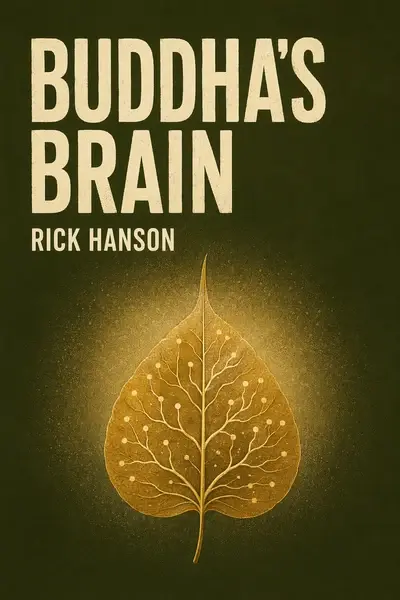
Buddha’s Brain explains how world-changing thought leaders like Moses, Mohammed, Jesus, Gandhi and the Buddha altered their brains with the power of their minds and how you can use the latest findings of neuroscience to do the same and become a more positive, resilient, mindful and happy person.
Buddha’s Brain explains how world-changing thought leaders like Moses, Mohammed, Jesus, Gandhi and the Buddha altered their brains with the power of their minds and how you can use the latest findings of neuroscience to do the same and become a more positive, resilient, mindful and happy person.
There’s a great quote you might have heard, which is often accredited to Buddha, but whose origin is actually unknown.
It pretty much sums up the idea Hanson describes in the book, which says that we experience discomfort on two levels.
The first level feels like being struck by a dart. It’s a sudden rush of pain, for example from an accident (stubbing your toe, touching a hot plate, crashing with your bike), a disappointed expectation, failure or rejection. This kind of pain is normal, we all have to face it in our lives, and there’s not much we can do about it.
Most of the time, however, we make it worse by throwing a second dart at ourselves, based on how we physically and mentally react to the first dart. For example, when you crash with your bike, you might curse at the person that blocked your view, blame the shitty tarmac, or not instantly go to the hospital because you have an important meeting. All of these add suffering to the pain you already have, but are entirely in your control.
You don’t have to do any of these. Instead, you can just accept the pain, do what’s necessary to heal your wounds, and get on with your life. 99% of the time the second darts are a lot worse than the first ones, because we keep throwing them long after the first dart has vanished, for example by obsessing for months over an ended relationship or worrying about test results.
Life throws enough darts at you as is, so stop throwing more at yourself, okay?
Have your parents ever told you to “keep your composure” when you were a kid? What does that even mean? Most of the time, we use it in a false context. When people say it, they often expect you to not act out your feelings. For example, when you get an email in the middle of class, telling you you’ve been accepted into the school you so desperately want to go to, you’ll likely want to jump up and dance right then and there. If you do it, your teacher will probably tell you to “keep it together”. Same goes when we’re on the brink of despair, about to do something crazy. But composure doesn’t mean hiding your feelings. When you’re composed you stay with and experience your feelings just long enough to let…
Continue reading in the MinuteRead app
Get the complete 5-minute summary of Buddha's Brain
Get the complete summary in the appOne dart hurts enough. Don’t make your pain worse by dwelling on it.
Quit the eternal rat race for more by practicing composure every day.
Reduce the suffering in your life by not identifying with so many things.
"Buddha's Brain" is a strong fit if you want practical ideas around happiness, history, mental health, especially themes like one dart hurts enough. don’t make your pain worse by dwelling on it; quit the eternal rat race for more by practicing composure every day. The MinuteRead summary distills these concepts into a focused read, whether you're deciding whether to buy the book or applying its lessons at work.
Motivated to help readers with buddha’s Brain explains how world-changing thought leaders like Moses, Rick Hanson PhD wrote “Buddha's Brain” to package those ideas for a fast, focused read. In “Buddha's Brain”, Rick Hanson PhD focuses on buddha’s Brain explains how world-changing thought leaders like Moses. Through “Buddha's Brain”, Rick Hanson PhD distills the core ideas on happiness into lessons readers can absorb in a single short sitting. Readers turn to this work when they want Rick Hanson …
View all summaries by Rick HansonContinue Reading
Access the complete 5-minute summary and thousands more nonfiction books in the MinuteRead app.

Continue reading the complete summary in the MinuteRead app.