MinuteRead
30 min
Book summary
Premium summary · Opens in the app · 30 min read
Most investment analysis starts with demand. Will consumers buy more smartphones? Will emerging markets consume more energy? Will aging populations need more healthcare? The questions pour in, and analysts build elaborate forecasts to answer them.
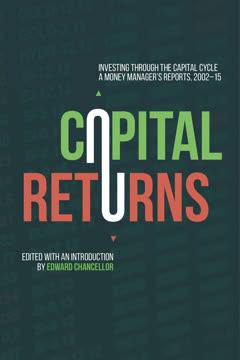
**Investing Through the Capital Cycle**
By Edward Chancellor
**Estimated Reading Time:** 90 minutes
**What You'll Learn**
Why most investors focus on the wrong things. How the supply side of industries reveals opportunities that demand forecasts miss. What the capital cycle is, how it works, and why understanding it can transform your investment results. The real drivers of long-term returns, the warning signs of speculative excess, and the management qualities that separate great capital allocators from the rest.
**Who This Book Is For**
Investors who sense that conventional analysis leaves something out. Professionals tired of short-term thinking. Anyone who wants to understand why booms turn to busts, why some companies compound wealth for decades while others destroy it, and how to think more clearly about capital, competition, and returns.
Most investment analysis starts with demand. Will consumers buy more smartphones? Will emerging markets consume more energy? Will aging populations need more healthcare? The questions pour in, and analysts build elaborate forecasts to answer them. But demand is notoriously difficult to predict. Consumer preferences shift. Technologies disrupt. Economic growth surprises on the upside or disappoints. Even the best demand forecasts prove wrong with uncomfortable regularity. There is another way to think about investing, one that starts from a different place entirely. Instead of asking what demand will do, ask what supply is doing. Instead of forecasting the unknowable, examine what is already happening and what must logically follow. This is the capital cycle approach. The central insight is simple but profound. When an industry earns high returns, capital floods in. Companies build new factories, competitors enter the market, and supply expands. Eventually, supply exceeds demand. Prices fall. Profits collapse. Capital exits, sometimes painfully. Supply contracts. And the stage is set for the next upswing. This cycle is not a theory. It is a recurring pattern visible across industries and throughout history. It explains why yesterday's high-flying growth stocks become tomorrow's value traps. It explains why unloved, out-of-favor sectors sometimes produce spectacular returns. And it explains why most investors, fixated on short-term earnings and demand projections, miss the biggest opportunities and walk into the worst disasters. The capital cycle approach was developed and refined over decades by Marathon Asset Management, a London-based investment firm. Marathon's partners observed that changes in the supply side of industries were often well-flagged, occurred with predictable lags, and had powerful effects on long-term returns. They built their investment process around this insight. This book collects and organizes Marathon's thinking. It explains the capital cycle in depth, shows how it applies across industries and situations, and provides a framework for putting these ideas into practice. It is not a book about quick tips or easy formulas. It is a…
Continue reading in the MinuteRead app
Get the complete 30-minute summary of Capital Returns
Get the complete summary in the appHigh returns attract capital, and capital eventually destroys those returns. Watch where capital is flowing.
Focus on supply, not demand. Supply changes are often more predictable and more important for long-term returns.
The best investments are often in industries where capital is leaving, not where it is arriving.
True competitive advantages are rare. Verify moats, do not assume them.
Capital allocation is the most important thing management does. Evaluate it rigorously.
Most acquisitions destroy value. Be skeptical of deals.
"Capital Returns" is a strong fit if you want practical ideas around money & finance, business, economics, especially themes like high returns attract capital, and capital eventually destroys those returns. watch where capital is flowing; focus on supply, not demand. supply changes are often more predictable and more important for long-term returns. The MinuteRead summary distills these concepts into a focused read, whether you're deciding whether to buy the book or applying its lessons at work.
Edward Chancellor is a financial historian, journalist, and investment strategist. He is best known for his work on financial crises and speculative manias, including his book "Devil Take the Hindmost: A History of Financial Speculation." Chancellor has written for various publications, including the Financial Times and Wall Street Journal. He has also worked as a financial strategist at GMO, a global investment management firm. As the editor of "Capital Returns," Chancellor curated and organize…
View all summaries by Edward ChancellorContinue Reading
Access the complete 30-minute summary and thousands more nonfiction books in the MinuteRead app.

Continue reading the complete summary in the MinuteRead app.