 MinuteRead
30 min
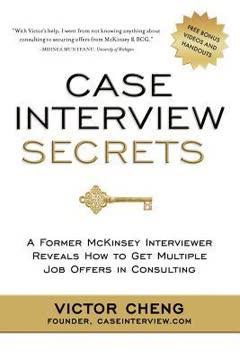
Book summary
by Victor Cheng
Premium summary · Opens in the app · 30 min read
Every year, thousands of talented students and professionals apply to firms like McKinsey, Bain, and BCG. They have impressive resumes, strong grades, and genuine ambition. Most of them fail. The reason is not a lack of intelligence or effort. The reason is that they prepare for the wrong test.
### A Condensed Edition
**Author:** Victor Cheng
**Estimated Reading Time:** 45 minutes
**What You'll Learn:**
- The four core tools consultants use to solve billion-dollar problems - How to think like a McKinsey consultant under pressure - Why frameworks matter less than the reasoning behind them - How to communicate answers with clarity and confidence - The practice habits that lead to offers from top firms
**Who This Book Is For:**
This book is for anyone preparing for a case interview at a top consulting firm. It is also for professionals who want to learn how consultants think, structure problems, and communicate solutions. If you have ever wondered how management consultants earn their fees, this book reveals the mental machinery behind the work.
Every year, thousands of talented students and professionals apply to firms like McKinsey, Bain, and BCG. They have impressive resumes, strong grades, and genuine ambition. Most of them fail. The reason is not a lack of intelligence or effort. The reason is that they prepare for the wrong test. The case interview is unlike any other interview format. A typical job interview asks about your past experiences, your strengths, your weaknesses, and your career goals. A case interview asks you to solve a business problem on the spot. You might be asked to help a struggling airline improve profitability. You might be asked whether a pharmaceutical company should acquire a smaller competitor. You might be asked to estimate the size of the market for electric bicycles in Germany. There is no right answer to these questions in the traditional sense. The interviewer is not looking for a specific number or a memorized solution. The interviewer is looking for something deeper: a way of thinking. Victor Cheng spent years as a consultant and interviewer at McKinsey. He sat on the other side of the table and watched candidate after candidate make the same mistakes. They memorized frameworks. They recited business jargon. They tried to impress with speed. And they failed because they did not understand what the interviewer was actually evaluating. The case interview is a simulation of consulting work. Consultants are hired to solve problems they have never seen before. A partner at McKinsey does not know the answer to a client's problem when the engagement begins. The entire job is figuring out the answer through a structured process. The case interview tests whether you can do that process in miniature. The problem is that most candidates approach the case interview as a test of knowledge. They believe that if they memorize enough frameworks and practice enough cases, they will succeed. This is a fundamental misunderstanding. The case interview is a test of reasoning, not recall. It…
Continue reading in the MinuteRead app
Get the complete 30-minute summary of Case Interview Secrets
Get the complete summary in the appStart every case with a hypothesis, an educated guess about the answer.
Use frameworks as templates, not rigid structures. Adapt them to the situation.
Apply the MECE principle when structuring problems: Mutually Exclusive, Collectively Exhaustive.
Practice mental math until it becomes automatic under pressure.
Communicate your synthesis clearly using a structured format: recommendation, reasons, risks.
Invest 50 to 100 hours in preparation. Consistency matters more than intensity.
"Case Interview Secrets" is a strong fit if you want practical ideas around business, management, reference, especially themes like start every case with a hypothesis, an educated guess about the answer; use frameworks as templates, not rigid structures. adapt them to the situation. The MinuteRead summary distills these concepts into a focused read, whether you're deciding whether to buy the book or applying its lessons at work.
Victor Cheng is a former McKinsey consultant and interviewer who has leveraged his experience to become an authority on case interview preparation. He founded the website caseinterview.com and authored Victor Cheng's "Case Interview Secrets" to help aspiring consultants prepare for interviews at top firms. Cheng's approach emphasizes analytical thinking, problem-solving frameworks, and understanding the consultant mindset. While some readers appreciate his insights, others criticize his self-pro…
View all summaries by Victor ChengContinue Reading
Access the complete 30-minute summary and thousands more nonfiction books in the MinuteRead app.

Continue reading the complete summary in the MinuteRead app.






