MinuteRead
30 min
Book summary
Premium summary · Opens in the app · 30 min read
Imagine two people. One finds a $100 bill on the sidewalk. The other works an extra shift and earns $100. Both now have $100 more than they did yesterday. Classical economics says they should treat this money identically. A dollar is a dollar. Money is fungible. What matters is the total amount of wealth, not where it came from.
**Author:** Daniel Kahneman
**Estimated Reading Time:** 45 minutes
**What You'll Learn:**
- Why losing $100 feels worse than winning $100 feels good - How mental accounting shapes every financial decision you make - Why a dollar is not always a dollar in your mind - How framing changes choices without changing facts - Practical ways to recognize and correct decision-making biases
**Who This Book Is For:**
Anyone who makes decisions involving money, risk, or trade-offs. That means everyone. Whether you are an investor, a manager, a consumer, or simply someone trying to understand why smart people make puzzling choices, this book offers a rigorous yet accessible framework for understanding how the mind actually works when it evaluates options.
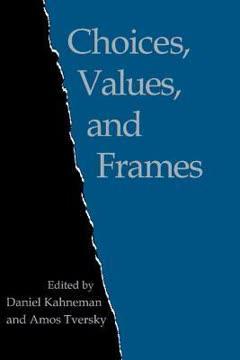
Imagine two people. One finds a $100 bill on the sidewalk. The other works an extra shift and earns $100. Both now have $100 more than they did yesterday. Classical economics says they should treat this money identically. A dollar is a dollar. Money is fungible. What matters is the total amount of wealth, not where it came from. But watch what actually happens. The person who found the money is far more likely to spend it on dinner, drinks, or something frivolous. The person who worked the extra shift is more likely to deposit it into savings or use it for something practical. Same amount. Same purchasing power. Radically different behavior. This is not an anomaly. It is a window into how the human mind actually processes decisions about value, risk, and choice. And it is the central subject of Daniel Kahneman's work. Kahneman, a psychologist who won the Nobel Prize in Economics, spent decades documenting the systematic ways in which human decision-making departs from the rational models that dominated economic theory for centuries. The book "Choices, Values, and Frames" brings together the foundational research that Kahneman conducted with his longtime collaborator Amos Tversky. Together, they built a new framework for understanding choice, one grounded not in idealized assumptions about rational actors but in careful observation of how real people actually behave. The problem this book addresses is both simple and profound. Traditional economic theory assumes that people know what they want, evaluate options consistently, and make choices that maximize their well-being. But decades of experimental evidence show that this assumption fails in predictable ways. People make different choices depending on how the same problem is worded. They treat money differently depending on where it came from or what mental category it belongs to. They take risks in some situations and avoid them in others, even when the underlying odds are identical. Why does this matter? Because the decisions shaped by these psychological forces are not trivial. They determine how much…
Continue reading in the MinuteRead app
Get the complete 30-minute summary of Choices, Values, and Frames
Get the complete summary in the appPeople evaluate outcomes as gains or losses relative to a reference point, not as absolute states of wealth.
Losses loom larger than gains. Losing $100 hurts more than gaining $100 pleases.
Mental accounting is the psychological system for organizing financial activities, and it violates the principle of fung
The source of income affects how it is spent. Windfalls are treated differently from regular income.
Transaction utility, the perceived value of a deal, can drive purchases even when the goods themselves provide little va
The value function is concave for gains and convex for losses, producing risk aversion for gains and risk seeking for lo
"Choices, Values, and Frames" is a strong fit if you want practical ideas around psychology, economics, science, especially themes like people evaluate outcomes as gains or losses relative to a reference point, not as absolute states of wealth; losses loom larger than gains. losing $100 hurts more than gaining $100 pleases. The MinuteRead summary distills these concepts into a focused read, whether you're deciding whether to buy the book or applying its lessons at work.
Daniel Kahneman was an Israeli-American psychologist renowned for his pioneering work in behavioral economics and cognitive psychology. Born in 1934 and passing away in 2024, he was awarded the Nobel Prize in Economics in 2002 for his groundbreaking research on decision-making under uncertainty. Collaborating with Amos Tversky, Kahneman developed Prospect theory and established a cognitive basis for common human errors using heuristics and biases. His work challenged traditional economic assumpt…
View all summaries by Daniel KahnemanContinue Reading
Access the complete 30-minute summary and thousands more nonfiction books in the MinuteRead app.

Continue reading the complete summary in the MinuteRead app.