MinuteRead
30 min
Book summary
by Tiha von Ghyczy
Premium summary · Opens in the app · 30 min read
Carl von Clausewitz never finished his masterpiece. He died in 1831, leaving behind a sprawling manuscript that his widow, Marie von Clausewitz, assembled and published as *On War*. The book was dense, philosophical, and at times contradictory. Yet it became one of the most influential works on strategy ever written, studied not only by military officers but by business leaders, diplomats, and political thinkers across the world.
**Author:** Tiha von Ghyczy **Estimated Reading Time:** 45 minutes
The strategic principles of Carl von Clausewitz, the Prussian military theorist whose insights into conflict, decision-making, and leadership have shaped thinking for nearly two centuries. You will discover why strategy is simple to understand but extraordinarily difficult to execute, how to navigate uncertainty and friction, and why the human element remains the decisive factor in any strategic contest.
Leaders who must make consequential decisions with incomplete information. Managers navigating competitive markets. Entrepreneurs building organizations under pressure. Military professionals seeking deeper strategic understanding. Anyone who has discovered that clever plans often fail upon contact with reality, and who wants to understand why, and what to do about it.
Carl von Clausewitz never finished his masterpiece. He died in 1831, leaving behind a sprawling manuscript that his widow, Marie von Clausewitz, assembled and published as *On War*. The book was dense, philosophical, and at times contradictory. Yet it became one of the most influential works on strategy ever written, studied not only by military officers but by business leaders, diplomats, and political thinkers across the world. Tiha von Ghyczy recognized something important about Clausewitz. The Prussian general was not writing a manual of military tactics. He was exploring something far more fundamental: how human beings make decisions when the stakes are high, information is incomplete, and an intelligent opponent actively works against them. These conditions describe not only war but also business competition, political campaigns, legal battles, and countless other domains of human activity. The problem most people face when approaching Clausewitz is accessibility. His writing is dense, his examples are rooted in Napoleonic-era warfare, and his arguments unfold over hundreds of pages. Many readers abandon the effort, sensing that valuable insights lie within but finding them too difficult to extract. Von Ghyczy's contribution is to distill Clausewitz's essential ideas into a form that modern readers can grasp and apply. This matters because the challenges Clausewitz identified have not diminished. If anything, they have intensified. The pace of change has accelerated. Information overload has replaced information scarcity as the primary challenge. Competitive environments have become more complex and interconnected. Yet the fundamental nature of strategic competition remains what Clausewitz described: a clash of wills, conducted under conditions of uncertainty, where friction disrupts even the best-laid plans. Clausewitz's approach differs from many modern strategy frameworks in a crucial way. He did not offer simple formulas or step-by-step processes. He understood that strategy cannot be reduced to a checklist. Instead, he sought to educate the mind of the strategist, to develop the judgment and intuition required to make sound decisions in unique and unpredictable situations. This is why his work has endured while countless strategy…
Continue reading in the MinuteRead app
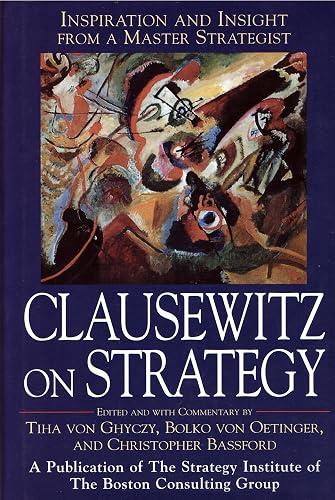
Get the complete 30-minute summary of Clausewitz on Strategy
Get the complete summary in the appStrategy is simple but not easy. The principles are straightforward; execution under pressure is the challenge.
Strategy is a clash of wills. Your opponent is an intelligent actor who will respond to your moves.
Friction and fog are inherent features of strategic action. They cannot be eliminated, only managed.
Concentrate your forces at the decisive point. You cannot be strong everywhere.
Moral forces determine outcomes more than material factors. Morale, leadership, and belief in the cause are strategic as
Tactics and strategy are interconnected. Tactical actions must serve strategic objectives, and strategic plans must resp
"Clausewitz on Strategy" is a strong fit if you want practical ideas around military fiction, business, leadership, especially themes like strategy is simple but not easy. the principles are straightforward; execution under pressure is the challenge; strategy is a clash of wills. your opponent is an intelligent actor who will respond to your moves. The MinuteRead summary distills these concepts into a focused read, whether you're deciding whether to buy the book or applying its lessons at work.
Motivated to help readers with "So everything in strategy is very simple, Tiha von Ghyczy wrote “Clausewitz on Strategy” to package those ideas for a fast, focused read. In “Clausewitz on Strategy”, Tiha von Ghyczy focuses on "So everything in strategy is very simple. Through “Clausewitz on Strategy”, Tiha von Ghyczy distills the core ideas on military fiction into lessons readers can absorb in a single short sitting. Readers turn to this work when they want Tiha von Ghyczy's perspective on the …
Continue Reading
Access the complete 30-minute summary and thousands more nonfiction books in the MinuteRead app.

Continue reading the complete summary in the MinuteRead app.