MinuteRead
30 min
Book summary
Premium summary · Opens in the app · 30 min read
Wesley K. Clark spent thirty-four years in the United States Army, rising to the rank of four-star general and commanding NATO forces during the Kosovo War. He knows, as few people do, what war is and what it costs. He also knows what it is for a nation to drift into conflict without a clear strategy, and what it means to ask young men and women to fight without a coherent vision of what victory would look like. That knowledge shapes every page of this book.
**A Strategy for American Renewal**
By Wesley K. Clark
*Estimated Reading Time: 18 minutes*
**What This Story Explores:** A nation standing at a crossroads, caught between the reflexes of a superpower and the realities of a world that no longer fits the old maps. It is an argument about fear and hope, about the difference between reacting to threats and shaping a future, and about whether a country can rediscover a sense of common purpose without first needing an enemy to unite against.
**Who This Book Is For:** Readers who want to understand how military thinking translates into national strategy, citizens trying to make sense of America's place in a shifting world, and anyone who suspects that the greatest dangers of the coming decades will not be met by force alone.
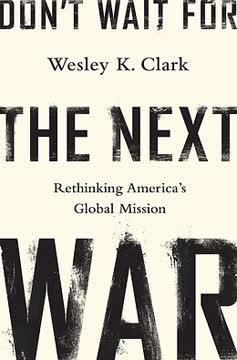
Wesley K. Clark spent thirty-four years in the United States Army, rising to the rank of four-star general and commanding NATO forces during the Kosovo War. He knows, as few people do, what war is and what it costs. He also knows what it is for a nation to drift into conflict without a clear strategy, and what it means to ask young men and women to fight without a coherent vision of what victory would look like. That knowledge shapes every page of this book. The title is a warning and a plea. Clark is not arguing for pacifism. He is arguing against a particular kind of strategic laziness, the habit of waiting for the next crisis, the next attack, the next war, before deciding what America stands for and what it intends to do in the world. He sees a country that has been living from emergency to emergency, reacting to events rather than shaping them, and he believes that this pattern is not only dangerous but unnecessary. The book emerged from a specific historical moment. Clark wrote in the years after the 2008 financial crisis, when the wars in Iraq and Afghanistan had stretched the American military to its limits, when the rise of China was becoming impossible to ignore, and when the scientific consensus on climate change was hardening even as American politics grew more divided. He looked at this landscape and saw something that the standard foreign policy debates were missing. The threats were real, but they were not the kind of threats that could be met by aircraft carriers and armored divisions alone. They were slower, more diffuse, more deeply woven into the fabric of daily life. Clark's central argument is that America needs a new national strategy, one that rests on a foundation of clear-eyed realism about the dangers ahead but also claims for the United States the moral high ground of…
Continue reading in the MinuteRead app
Get the complete 30-minute summary of Don't Wait for the Next War
Get the complete summary in the appWesley K. Clark spent thirty-four years in the United States Army, rising to the rank of four-star general and commanding NATO forces during the Kosovo War. He knows, as few people do, what war is and what it costs. He also knows what it is
"Don't Wait for the Next War" will resonate with readers drawn to politics, military fiction, history. Wesley K. Clark spent thirty-four years in the United States Army, rising to the rank of four-star general and commanding NATO forces during the Kosovo War. He knows, as few people… Our summary captures the core argument so you can learn the essentials before committing to the full book.
Wesley Kanne Clark, Sr. is a retired U.S. Army general with a distinguished military career. He graduated as valedictorian from West Point and earned a Rhodes Scholarship to Oxford. Clark served 34 years in the Army and Department of Defense, receiving numerous decorations including a Presidential Medal of Freedom. He commanded NATO forces during the Kosovo War. After retiring, Clark entered politics, running for the Democratic presidential nomination in 2004. He later supported various Democrat…
View all summaries by Wesley K. ClarkContinue Reading
Access the complete 30-minute summary and thousands more nonfiction books in the MinuteRead app.

Continue reading the complete summary in the MinuteRead app.