MinuteRead
30 min
Book summary
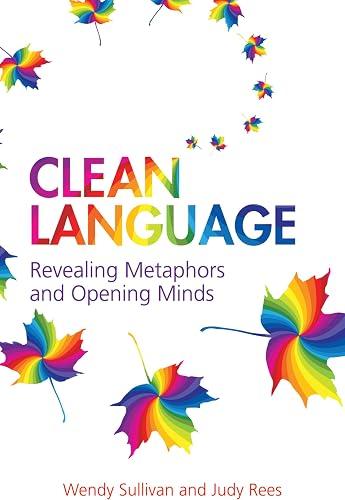
by Wendy Sullivan
Premium summary · Opens in the app · 30 min read
Most conversations are built on a hidden assumption: that the best way to help someone is to tell them something. We offer advice, share our experience, suggest solutions, and explain what worked for us. We do this with genuine good intentions. We want to help.
**Author:** Wendy Sullivan **Estimated Reading Time:** 45 minutes
### What You'll Learn
How to ask questions that reveal another person's inner world without contaminating it with your own assumptions. You will discover why metaphors are not decorative language but the fundamental structure of thought, and how a small set of precisely worded questions can unlock profound insights in coaching, management, education, and everyday conversation.
### Who This Book Is For
Anyone who wants to communicate more effectively. Coaches and therapists seeking a rigorous method for facilitating client insight. Managers and leaders who want to develop their teams rather than simply direct them. Teachers aiming to draw out student understanding. And anyone curious about how language shapes thought and how better questions lead to better answers.
Most conversations are built on a hidden assumption: that the best way to help someone is to tell them something. We offer advice, share our experience, suggest solutions, and explain what worked for us. We do this with genuine good intentions. We want to help. Yet this approach has a fundamental flaw. Every piece of advice we offer comes from our own model of the world. Our experiences, our values, our fears, our assumptions about what matters and what works. The person we are trying to help has a different model entirely. Their situation, their history, their desires, and their constraints are not ours. When we give advice, we are essentially saying: "Here is how I would solve your problem if I were you." But they are not you. And the solutions that fit your life may fit theirs poorly or not at all. Clean Language offers a radically different approach. Instead of providing answers, it provides questions. Instead of imposing a solution, it explores the other person's inner landscape. Instead of assuming we understand what someone means, it asks them to clarify, elaborate, and discover their own meaning. The method originated with David Grove, a New Zealand-born therapist working in the 1980s. Grove noticed something remarkable about his clients. When they described their problems, they often used metaphorical language. A client might say "I feel stuck" or "There's a wall in front of me" or "I'm carrying a heavy weight." Grove discovered that if he asked questions about these metaphors, using the client's exact words, something extraordinary happened. The metaphors began to shift and transform. And when the metaphors changed, the client's experience of the problem changed too. Grove spent years refining his questioning technique. He became obsessive about removing his own assumptions from his questions. He wanted to ask questions so clean that they could not introduce any of his own thinking into the client's exploration. The result was a set of questions…
Continue reading in the MinuteRead app
Get the complete 30-minute summary of Clean Language
Get the complete summary in the appMetaphors structure thought. They are not just figures of speech but the fundamental way we understand abstract concepts
Use the person's exact words. Never paraphrase or interpret. Their words carry important information.
Ask "What kind of X is that X?" This question reveals the nature of an experience.
Ask "Where is X?" This question locates the experience in space or in the body.
Ask "Is there anything else about X?" This question invites deeper exploration.
Ask "What would X like to have happen?" This question reveals desired outcomes and often catalyzes change.
"Clean Language" is a strong fit if you want practical ideas around leadership, psychology, self help, especially themes like metaphors structure thought. they are not just figures of speech but the fundamental way we understand abstract concepts; use the person's exact words. never paraphrase or interpret. their words carry important information. The MinuteRead summary distills these concepts into a focused read, whether you're deciding whether to buy the book or applying its lessons at work.
Motivated to help readers with clean Language amounts to a new way of thinking about the way people think, Wendy Sullivan wrote “Clean Language” to package those ideas for a fast, focused read. In “Clean Language”, Wendy Sullivan focuses on clean Language amounts to a new way of thinking about the way people think. Through “Clean Language”, Wendy Sullivan distills the core ideas on leadership into lessons readers can absorb in a single short sitting. Readers turn to this work when they want Wend…
Continue Reading
Access the complete 30-minute summary and thousands more nonfiction books in the MinuteRead app.

Continue reading the complete summary in the MinuteRead app.