MinuteRead
30 min
Book summary
Premium summary · Opens in the app · 30 min read
Most conversations about change fail before they begin. We tell people what to do. We offer advice. We share our own experiences as if they were universal templates. We diagnose problems and prescribe solutions. And then we wonder why nothing shifts.
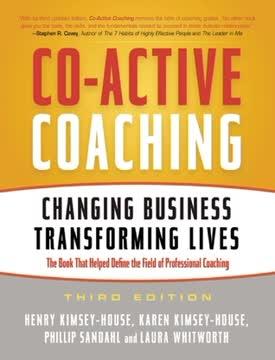
Most conversations about change fail before they begin. We tell people what to do. We offer advice. We share our own experiences as if they were universal templates. We diagnose problems and prescribe solutions. And then we wonder why nothing shifts. The reason is simple. People do not resist change. They resist being changed. When someone tells you what you should do, a quiet voice inside you pushes back. Even when the advice is good, even when the person means well, something fundamental is lost. Your own wisdom gets sidelined. Your own creativity gets ignored. Your own capacity to find answers gets treated as if it does not exist. This is the problem that co-active coaching solves. The term "co-active" points to something essential about how human beings grow and change. It describes a relationship where two people work together as equals, each bringing something vital to the conversation. The coach brings skills, structure, and a commitment to the other person's development. The client brings their life experience, their values, their dreams, and their own deep knowledge of their situation. Neither is passive. Neither is in charge. They are co-active. This approach emerged from a radical proposition. What if people are not broken? What if they do not need to be fixed? What if the job of a coach is not to impart wisdom but to evoke it? Henry Kimsey-House and his colleagues at The Coaches Training Institute developed this methodology over decades of working with thousands of coaches and clients. They discovered that when you treat people as naturally creative, resourceful, and whole, something remarkable happens. They start to believe it themselves. And when people believe in their own capacity, they take action that no amount of external pressure could produce. The old model of helping was based on a deficit. Find what is wrong. Diagnose the problem. Fix it. This works reasonably well for machines. It works poorly for human beings. A person is not a broken mechanism awaiting repair. A person is a living system with its own intelligence, its own values, and its own unique path forward. Co-active coaching flips the model. Instead of looking for what is wrong, the coach looks for what is right. Instead of diagnosing, the coach listens. Instead of prescribing, the coach asks. Instead of fixing, the coach partners. This does not mean coaching is passive or directionless. Far from it. Co-active coaching is rigorous, challenging, and deeply engaged. The coach holds the client to their own stated values and goals. The coach notices when words and actions do not align. The coach asks the questions that most people avoid. But the coach does all of this from a stance of…
Continue reading in the MinuteRead app
Get the complete 30-minute summary of Co-Active Coaching
Get the complete summary in the appPeople are naturally creative, resourceful, and whole. Treat them that way.
Listen at Level II. Focus entirely on the other person. It is rarer and more powerful than you think.
Ask questions instead of giving advice. The best answers come from within.
Trust your intuition. It carries wisdom that logic cannot access.
Stay curious. Openness creates space for discovery.
Balance action with learning. Both are necessary for growth.
"Co-Active Coaching" is a strong fit if you want practical ideas around leadership, business, psychology, especially themes like people are naturally creative, resourceful, and whole. treat them that way; listen at level ii. focus entirely on the other person. it is rarer and more powerful than you think. The MinuteRead summary distills these concepts into a focused read, whether you're deciding whether to buy the book or applying its lessons at work.
Henry Kimsey-House is a pioneering figure in the field of professional coaching. As the co-founder of The Coaches Training Institute (CTI) and co-author of Co-Active Coaching, he has significantly influenced the development of coaching practices since the 1980s. Kimsey-House's background in acting informs his approach to coaching, particularly in understanding human emotions and narrative processes. He is dedicated to creating immersive, transformative learning environments and continues to inno…
View all summaries by Henry Kimsey-HouseContinue Reading
Access the complete 30-minute summary and thousands more nonfiction books in the MinuteRead app.

Continue reading the complete summary in the MinuteRead app.