MinuteRead
30 min
Book summary
Premium summary · Opens in the app · 30 min read
Every year, millions of people enter the stock market hoping to build wealth. They read financial newspapers, follow market experts on television, and trade frequently based on tips and predictions. Yet most of them end up disappointed. Studies consistently show that the average investor earns returns far below what the market actually delivers. The gap between market returns and investor returns is not caused by bad luck. It is caused by bad behavior.
**Author:** Saurabh Mukherjea
**Estimated Reading Time:** 45 minutes
**What You'll Learn:** - How to build a financial plan that aligns with your life goals - Why patient, long-term investing beats constant trading - The Coffee Can Portfolio approach to finding exceptional companies - How to minimize costs and maximize returns - Practical strategies for asset allocation and retirement planning
**Who This Book Is For:** This book is for anyone who wants to build lasting wealth without spending hours tracking markets. Whether you are a young professional starting your investment journey, a mid-career individual planning for major life goals, or someone approaching retirement, the principles here will help you invest with clarity and confidence. If you have ever felt overwhelmed by financial advice or frustrated by poor investment results, this book offers a simpler, more effective path.
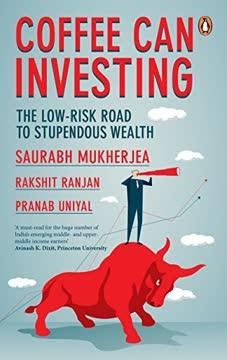
Every year, millions of people enter the stock market hoping to build wealth. They read financial newspapers, follow market experts on television, and trade frequently based on tips and predictions. Yet most of them end up disappointed. Studies consistently show that the average investor earns returns far below what the market actually delivers. The gap between market returns and investor returns is not caused by bad luck. It is caused by bad behavior. The fundamental problem is that most people approach investing backwards. They start with stock tips, market predictions, and hot sectors. They chase returns that have already happened. They buy when prices are high and sell when prices fall. They check their portfolios obsessively and react to every piece of news. In short, they treat investing as a game of prediction rather than a discipline of patience. Saurabh Mukherjea wrote Coffee Can Investing to address this problem directly. Drawing on decades of experience in Indian financial markets, he presents a radically different approach. Instead of trying to predict which stocks will rise next quarter, he asks a simpler question: which companies can grow consistently for the next ten or twenty years? Instead of reacting to market noise, he advocates building a portfolio and leaving it alone. Instead of chasing complexity, he shows how simplicity and low costs can dramatically improve outcomes. The title of the book comes from an old American practice. In the nineteenth century, Americans would store their savings in coffee cans and hide them under the mattress. They could not easily access the money, so they left it untouched for years. When they finally opened the can, they often found that their savings had grown substantially. The lesson is simple: sometimes the best thing you can do with your investments is leave them alone. Mukherjea applies this philosophy to the Indian stock market, but the principles are universal. He…
Continue reading in the MinuteRead app
Get the complete 30-minute summary of Coffee Can Investing
Get the complete summary in the appCreate a financial plan based on your life goals, categorized as security, stability, and ambition, with specific amount
Compounding is the most powerful force in wealth creation. A 26 percent annual return creates 1000x growth over 30 years
The Coffee Can Portfolio uses two filters: 10 percent revenue growth and 15 percent ROCE for ten consecutive years.
Once you build your portfolio, leave it alone for a decade. Frequent trading erodes returns through costs and emotional
Minimize costs at every opportunity. A 2.4 percent difference in fees can more than double your final wealth over forty
Allocate 80 to 85 percent to equity for aggressive growth, or 60 to 70 percent for balanced growth.
"Coffee Can Investing" is a strong fit if you want practical ideas around finance, personal finance, business, especially themes like create a financial plan based on your life goals, categorized as security, stability, and ambition, with specific amount; compounding is the most powerful force in wealth creation. a 26 percent annual return creates 1000x growth over 30 years. The MinuteRead summary distills these concepts into a focused read, whether you're deciding whether to buy the book or applying its lessons at work.
Saurabh Mukherjea is a prominent figure in the Indian investment landscape. He founded Marcellus Investment Managers and previously served as CEO of Ambit Capital, where he significantly grew the company's assets under advisory. Mukherjea's background includes co-founding Clear Capital, a London-based equity research firm. He holds a CFA charter and degrees in economics from the London School of Economics. His expertise spans various aspects of financial markets, particularly in small-cap equity…
View all summaries by Saurabh MukherjeaContinue Reading
Access the complete 30-minute summary and thousands more nonfiction books in the MinuteRead app.

Continue reading the complete summary in the MinuteRead app.