MinuteRead
30 min
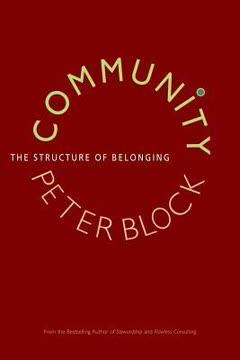
Book summary
by Peter Block
Premium summary · Opens in the app · 30 min read
Every community faces challenges. Schools struggle to engage parents. Neighborhoods grapple with isolation and distrust. Organizations try to build culture through programs and initiatives, yet something essential remains missing. People attend meetings, participate in planning processes, and serve on committees, but genuine belonging often stays out of reach.
**Author:** Peter Block **Estimated Reading Time:** 42 minutes
**What You'll Learn**
How to build authentic community by shifting the conversations we have, the questions we ask, and the ways we gather. You will discover why belonging matters more than programs, why possibility matters more than problems, and why small groups hold more transformative power than large institutions. You will learn practical frameworks for convening people, embracing dissent, fostering accountability, and designing spaces that create genuine connection.
**Who This Book Is For**
This book is for anyone who cares about the health of their neighborhood, workplace, congregation, or civic organization. It is for leaders who sense that traditional approaches to change are failing, for facilitators who want to move beyond surface-level engagement, and for citizens who feel disconnected from the communities they inhabit. If you have ever wondered why so many efforts to improve communities fall short, this book offers a different path forward.
Every community faces challenges. Schools struggle to engage parents. Neighborhoods grapple with isolation and distrust. Organizations try to build culture through programs and initiatives, yet something essential remains missing. People attend meetings, participate in planning processes, and serve on committees, but genuine belonging often stays out of reach. Peter Block argues that the problem is not a lack of effort or resources. The problem is the context in which we approach community building. We have inherited mental models that treat community as a problem to be solved, a deficiency to be corrected, or a system to be managed. These models, however well-intentioned, keep us stuck. Consider how most community improvement efforts unfold. A problem is identified. Experts are consulted. Data is gathered. A strategic plan is developed. Programs are implemented. Progress is measured. The entire process operates from a stance of deficiency and control. The underlying assumption is that something is broken and needs fixing, and that those in authority know how to fix it. This approach produces predictable results. People feel like objects of intervention rather than agents of change. Engagement remains shallow because people are asked to react to proposals rather than create possibilities. Accountability becomes a matter of compliance rather than ownership. And the deeper human need for belonging, for being seen and valued, goes unaddressed. Block proposes a fundamental shift. Community is not built through better programs or more efficient systems. Community is built through conversations that create belonging. It is built through invitations that honor choice. It is built through questions that evoke possibility. It is built when people gather in small groups and discover that they have gifts to offer and commitments to make. This shift requires changing the mental models we bring to our collective efforts. It requires moving from…
Continue reading in the MinuteRead app
Get the complete 30-minute summary of Community
Get the complete summary in the appCommunity is built through conversations that create belonging, not through programs that solve problems.
Shift your focus from problems to possibilities. Declare what you want to create rather than merely fixing what is broke
The six essential conversations are invitation, possibility, ownership, dissent, commitment, and gifts.
Invite rather than mandate. Choice creates ownership.
Welcome dissent as a gift. Listen without fixing.
Small groups are the unit of transformation. Intimacy creates change.
"Community" is a strong fit if you want practical ideas around leadership, business, sociology, especially themes like community is built through conversations that create belonging, not through programs that solve problems; shift your focus from problems to possibilities. declare what you want to create rather than merely fixing what is broke. The MinuteRead summary distills these concepts into a focused read, whether you're deciding whether to buy the book or applying its lessons at work.
Peter Block is an American author, consultant, and speaker known for his work on organizational development, community building, and stewardship. He has written several influential books, including "Flawless Consulting" and "The Answer to How Is Yes." Block's approach emphasizes personal responsibility, accountability, and the importance of creating structures that foster belonging and engagement. He draws on various disciplines, including psychology, sociology, and management theory, to develop…
View all summaries by Peter BlockContinue Reading
Access the complete 30-minute summary and thousands more nonfiction books in the MinuteRead app.

Continue reading the complete summary in the MinuteRead app.