 MinuteRead
30 min
Book summary
Premium summary · Opens in the app · 30 min read
Every business leader faces the same fundamental question: Why do some companies earn superior returns year after year while others, operating in the same industry with similar resources, struggle to survive?
### by Michael E. Porter
**Estimated Reading Time:** 48 minutes
**What You'll Learn:**
- Why some companies consistently outperform their rivals while others struggle - How to analyze any business through the lens of the value chain - The two fundamental paths to competitive advantage and how to choose between them - How technology shapes industry structure and competitive dynamics - Why competitor selection matters as much as competitor defeat - How to defend against substitution threats that erode profitability - The principles for building an integrated strategy that lasts
**Who This Book Is For:**
This book is for managers, executives, entrepreneurs, investors, and students of business who want to understand the deep structural forces that determine profitability. It is for anyone who has wondered why some companies thrive for decades while others fade despite talented people and good intentions. It is for readers who want to move beyond slogans and frameworks toward a rigorous, practical understanding of how competitive advantage is actually built and sustained.
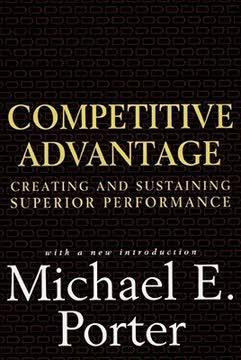
Every business leader faces the same fundamental question: Why do some companies earn superior returns year after year while others, operating in the same industry with similar resources, struggle to survive? The answer is not luck. It is not charisma. It is not even innovation in the narrow sense of new products or technologies. The answer, as Michael Porter demonstrated in his landmark work, lies in the structure of industries and the deliberate choices firms make about how to compete within them. When Porter published Competitive Advantage in 1985, the business world was awash in quick fixes and superficial frameworks. Consultants offered matrix after matrix. Executives chased excellence, quality circles, and management fads. What was missing was a rigorous, grounded theory of why firms succeed or fail. Porter provided that theory, and it has shaped strategic thinking ever since. The central insight of the book is deceptively simple: competitive advantage grows fundamentally out of the value a firm is able to create for its buyers that exceeds the firm's cost of creating it. This is not a slogan. It is a precise definition that has profound implications for how managers should think about their businesses. Value, in Porter's framework, is what buyers are willing to pay. A firm creates value when it delivers benefits to buyers that justify a price above the cost of producing those benefits. Competitive advantage exists when a firm can deliver value more efficiently than rivals, or deliver unique value that rivals cannot match. This definition shifts attention away from market share, growth rates, and other popular metrics toward the fundamental economics of value creation. It forces managers to ask hard questions: What exactly do our buyers value? What are…
Continue reading in the MinuteRead app
Get the complete 30-minute summary of Competitive Advantage
Get the complete summary in the appCompetitive advantage is about creating more value for buyers than rivals can, relative to cost.
The value chain is the fundamental tool for analyzing where advantage comes from.
Cost leadership and differentiation are the two generic strategies. Choose one.
Being stuck in the middle is the most common strategic failure.
Technology matters when it affects cost position or differentiation in ways rivals cannot match.
Some competitors are good for you. Learn to distinguish them from bad competitors.
"Competitive Advantage" is a strong fit if you want practical ideas around business, management, economics, especially themes like competitive advantage is about creating more value for buyers than rivals can, relative to cost; the value chain is the fundamental tool for analyzing where advantage comes from. The MinuteRead summary distills these concepts into a focused read, whether you're deciding whether to buy the book or applying its lessons at work.
Michael E. Porter is a renowned authority on competitive strategy and economic development. He is widely recognized as the "Father of Strategy" and has been ranked as the world's most influential management thinker. Porter is a University Professor at Harvard Business School and founded the Institute for Strategy and Competitiveness. He has authored numerous books and articles, and established the Monitor Group consulting firm. Porter's academic background includes degrees from Princeton and Har…
View all summaries by Michael E. PorterContinue Reading
Access the complete 30-minute summary and thousands more nonfiction books in the MinuteRead app.

Continue reading the complete summary in the MinuteRead app.






