 MinuteRead
30 min
Book summary
Premium summary · Opens in the app · 30 min read
Every business leader faces a moment when they must answer a deceptively simple question: what should we charge?
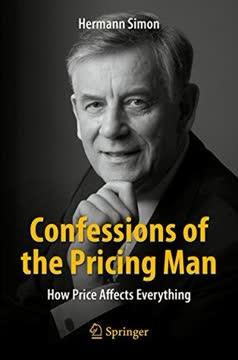
**Author:** Hermann Simon
**Estimated Reading Time:** 45 minutes
**What You'll Learn:** Why price is the most powerful profit lever available to any business, how customers truly perceive value, the psychological forces that shape willingness to pay, and the strategic frameworks that separate pricing masters from everyone else.
**Who This Book Is For:** Business leaders, entrepreneurs, marketers, sales professionals, and anyone who has ever wondered why some companies command premium prices while others race to the bottom. If you set, influence, or defend prices, this book will change how you think about your work.
Every business leader faces a moment when they must answer a deceptively simple question: what should we charge? Most people treat this question as an afterthought. They calculate costs, add a margin, check what competitors are doing, and move on. Pricing becomes a mechanical exercise, something handled by junior analysts or left to the whims of the market. The result is predictable: companies leave enormous sums of money on the table every single day. Hermann Simon has spent his career proving that this neglect is one of the greatest unforced errors in business. As the founder of Simon-Kucher Partners, he has advised thousands of companies across dozens of industries on pricing strategy. He has seen firsthand how a small adjustment in price can transform a company's fortunes, and how a poorly considered discount can destroy years of careful brand building. The central problem Simon identifies is not that pricing is inherently difficult. The problem is that most managers have never been trained to think about pricing as a strategic discipline. Business schools teach finance, marketing, operations, and strategy. But pricing, the activity that directly determines whether all those other functions generate profit, receives remarkably little attention. Simon estimates that managers spend roughly 70 percent of their time on cost issues, 20 percent on volume, and only 10 percent on pricing. This allocation is precisely backwards. The consequences of this neglect are staggering. Companies invest millions in product development, build sophisticated supply chains, hire talented people, and then set prices using rules of thumb that would embarrass a medieval merchant. They cut prices reflexively when demand softens, never realizing that a price cut is often the most expensive possible response. They fail to segment customers, leaving money on the table from buyers who would happily pay more. They ignore the psychological dimensions of pricing, treating customers as rational calculators when decades of research shows they are anything but. Simon's approach is different because it combines rigorous economic thinking with practical business experience. He is not an academic theorist writing from an ivory tower. He has sat in boardrooms, negotiated with procurement departments, and seen what actually happens when…
Continue reading in the MinuteRead app
Get the complete 30-minute summary of Confessions of the Pricing Man
Get the complete summary in the appPrice is the most powerful profit lever available to any business.
Only perceived value counts, not production cost.
Value must be created, communicated, and retained.
Psychological factors shape how customers perceive and respond to prices.
Price position is a strategic choice that shapes the entire business model.
Price differentiation can dramatically expand profit capture.
"Confessions of the Pricing Man" is a strong fit if you want practical ideas around business, economics, buisness, especially themes like price is the most powerful profit lever available to any business; only perceived value counts, not production cost. The MinuteRead summary distills these concepts into a focused read, whether you're deciding whether to buy the book or applying its lessons at work.
Hermann Simon is a renowned expert in pricing and strategy. As co-founder of Simon-Kucher Partners, a leading consulting firm specializing in pricing, he has extensive experience working with top CEOs and corporations worldwide. Simon's academic background as an economist informs his approach, combining classical and behavioral economics principles. His writing style is described as pragmatic and accessible, despite the technical nature of the subject. Simon emphasizes the importance of profit o…
View all summaries by Hermann SimonContinue Reading
Access the complete 30-minute summary and thousands more nonfiction books in the MinuteRead app.

Continue reading the complete summary in the MinuteRead app.






