MinuteRead
30 min
Book summary
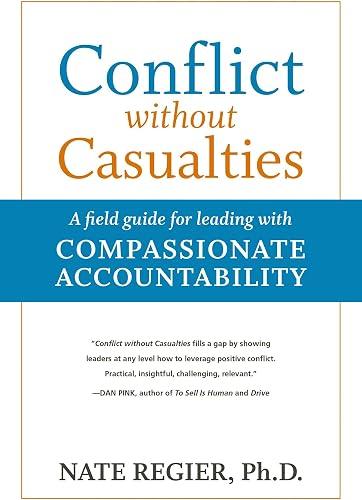
by Nate Regier
Premium summary · Opens in the app · 30 min read
Most people have a complicated relationship with conflict. We know it is inevitable. We know it can lead to growth, innovation, and deeper understanding. Yet when conflict arrives, most of us do one of two things: we fight or we flee. We attack or we avoid. We escalate or we suppress. Neither approach works particularly well, and both leave casualties in their wake.
**Author:** Nate Regier
**Estimated Reading Time:** 42 minutes
**What You'll Learn:**
- Why most conflict resolution advice fails and what actually works - How to recognize the hidden drama roles that sabotage your relationships - A practical framework for turning conflict into creative energy - Specific tools to prepare for difficult conversations - How to build a culture of compassionate accountability
**Who This Book Is For:**
This book is for anyone who has ever walked away from a difficult conversation feeling drained, misunderstood, or regretful. It is for leaders who want their teams to disagree productively instead of destructively. It is for partners, parents, and friends who are tired of the same arguments repeating themselves. If you have ever wished conflict could feel less like combat and more like collaboration, this book will show you how.
Most people have a complicated relationship with conflict. We know it is inevitable. We know it can lead to growth, innovation, and deeper understanding. Yet when conflict arrives, most of us do one of two things: we fight or we flee. We attack or we avoid. We escalate or we suppress. Neither approach works particularly well, and both leave casualties in their wake. Nate Regier argues that the problem is not conflict itself. The problem is how we have been taught to think about it. We have been conditioned to see conflict as a threat, a disruption, a sign that something has gone wrong. We treat it as a fire to be extinguished rather than a signal to be understood. This mindset leads to what Regier calls "drama," a pattern of interaction that drains energy, damages relationships, and prevents real solutions. The central insight of this book is both simple and profound: conflict is energy. It is neither good nor bad. It is a natural byproduct of human beings with different perspectives, needs, and desires interacting with each other. What matters is not whether conflict occurs, but how we use the energy it generates. We can use it to create drama, which leaves casualties. Or we can use it to create compassion, which leaves everyone stronger. Regier draws on decades of experience as a psychologist, consultant, and trainer to build a practical framework for transforming conflict. He introduces the Drama Triangle, a model that reveals the three roles we unconsciously adopt when conflict turns destructive. He then presents the Compassion Cycle, a healthier alternative that combines openness, resourcefulness, and persistence. Throughout the book, he provides specific tools, formulas, and preparation strategies that anyone can use. What makes this approach different is its emphasis on emotional responsibility. Regier does not offer communication tricks or negotiation tactics. He argues that sustainable change requires us to understand…
Continue reading in the MinuteRead app
Get the complete 30-minute summary of Conflict Without Casualties
Get the complete summary in the appDrama is the misuse of conflict energy to justify negative behavior.
The Drama Triangle has three roles: Victim, Persecutor, and Rescuer. All three are destructive.
The Compassion Cycle has three skills: openness, resourcefulness, and persistence.
Start conflicts with openness to create safety.
Move through all three skills continuously. Do not get stuck in any one.
Make three conscious choices: state your wants, let go and move on, stop and listen.
"Conflict Without Casualties" is a strong fit if you want practical ideas around leadership, business, psychology, especially themes like drama is the misuse of conflict energy to justify negative behavior; the drama triangle has three roles: victim, persecutor, and rescuer. all three are destructive. The MinuteRead summary distills these concepts into a focused read, whether you're deciding whether to buy the book or applying its lessons at work.
Motivated to help readers with "Drama is what happens when people struggle against themselves or each other, Nate Regier wrote “Conflict Without Casualties” to package those ideas for a fast, focused read. In “Conflict Without Casualties”, Nate Regier focuses on "Drama is what happens when people struggle against themselves or each other. Through “Conflict Without Casualties”, Nate Regier distills the core ideas on leadership into lessons readers can absorb in a single short sitting. Readers tur…
Continue Reading
Access the complete 30-minute summary and thousands more nonfiction books in the MinuteRead app.

Continue reading the complete summary in the MinuteRead app.