 MinuteRead
30 min
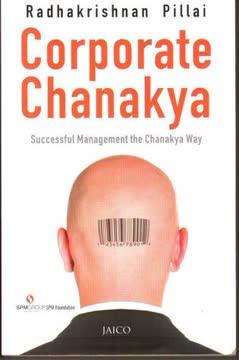
Book summary
Premium summary · Opens in the app · 30 min read
Imagine a leader who lived over two thousand years ago, yet whose insights into power, management, and human nature remain startlingly relevant today. Kautilya, also known as Chanakya, was a philosopher, teacher, and strategist who authored the Arthashastra, an ancient Indian treatise on statecraft, economics, and military strategy. His work helped Chandragupta Maurya establish one of the largest empires in Indian history. But Kautilya's genius extends far beyond ancient politics.
**Author:** Radhakrishnan Pillai
**Estimated Reading Time:** 45 minutes
**What You'll Learn:**
- The four pillars of true power in leadership - How ancient wisdom addresses modern corporate challenges - Why vigilance matters more than strategy - The art of balanced leadership in turbulent times - How to build organizations that last
**Who This Book Is For:**
This book is for leaders, managers, entrepreneurs, and anyone who wants to understand the timeless principles that govern successful organizations. If you have ever wondered why some leaders inspire loyalty while others face constant resistance, or why some companies thrive while others crumble despite having similar resources, this book offers answers drawn from one of history's greatest strategic minds.
Imagine a leader who lived over two thousand years ago, yet whose insights into power, management, and human nature remain startlingly relevant today. Kautilya, also known as Chanakya, was a philosopher, teacher, and strategist who authored the Arthashastra, an ancient Indian treatise on statecraft, economics, and military strategy. His work helped Chandragupta Maurya establish one of the largest empires in Indian history. But Kautilya's genius extends far beyond ancient politics. The modern corporate world faces challenges that would feel familiar to Kautilya. Leaders must manage diverse teams, allocate limited resources, anticipate competitive threats, and maintain discipline without becoming tyrants. They must balance the demands of shareholders with the needs of employees. They must make decisions with incomplete information while protecting sensitive strategic plans. The fundamental problems of leadership have not changed in two millennia. What has changed is the context. Kautilya wrote for kings and ministers. Today, the same principles apply to CEOs and managers, entrepreneurs and team leaders. The corporation has replaced the kingdom. The market has replaced the battlefield. The boardroom has replaced the royal court. But the underlying dynamics of power, influence, and organizational success remain remarkably consistent. Radhakrishnan Pillai recognized this connection. With a doctorate in Arthashastra and years of experience as a management consultant, he saw that Kautilya's ancient wisdom could illuminate modern business challenges. His book, Corporate Chanakya, bridges these two worlds, translating ancient Sanskrit concepts into practical guidance for contemporary leaders. The problem most leaders face is not a lack of information. Books on management fill entire libraries. Business schools produce thousands of graduates each year. Consulting firms offer endless frameworks and methodologies. Yet organizations still fail. Leaders still struggle. Teams still underperform. The missing ingredient is often wisdom: the ability to see beneath surface-level challenges and understand the deeper dynamics at play. This is where Kautilya excels. He was not merely a theorist. He was a practitioner who helped build an empire. His insights come from real-world experience, not abstract speculation. He understood that leadership is messy,…
Continue reading in the MinuteRead app
Get the complete 30-minute summary of Corporate Chanakya
Get the complete summary in the appPower has four pillars: knowledge, manpower, finance, and enthusiasm. Cultivate all four.
Internal revolt is more dangerous than external competition. Monitor for discontent constantly.
Just punishment requires the right level, manner, and timing. Avoid both severity and leniency.
Control the six negative behaviors: lust, anger, greed, pride, arrogance, and overexcitement.
Good laws serve the benefit of all. Craft rules carefully and enforce them consistently.
Vigilance is essential because human minds are inconstant. Watch both internal and external threats.
"Corporate Chanakya" is a strong fit if you want practical ideas around business, self help, management, especially themes like power has four pillars: knowledge, manpower, finance, and enthusiasm. cultivate all four; internal revolt is more dangerous than external competition. monitor for discontent constantly. The MinuteRead summary distills these concepts into a focused read, whether you're deciding whether to buy the book or applying its lessons at work.
Radhakrishnan Pillai is an author and management consultant known for his work on applying ancient Indian wisdom to modern business practices. He gained recognition for his book "Corporate Chanakya," which interprets Chanakya's teachings in a corporate context. Pillai has a Ph.D. in Arthashastra, the ancient Indian treatise on statecraft and economics written by Chanakya. He is considered a pioneer in popularizing Chanakya's teachings for contemporary audiences, particularly in the business worl…
View all summaries by Radhakrishnan PillaiContinue Reading
Access the complete 30-minute summary and thousands more nonfiction books in the MinuteRead app.

Continue reading the complete summary in the MinuteRead app.






