MinuteRead
5 min
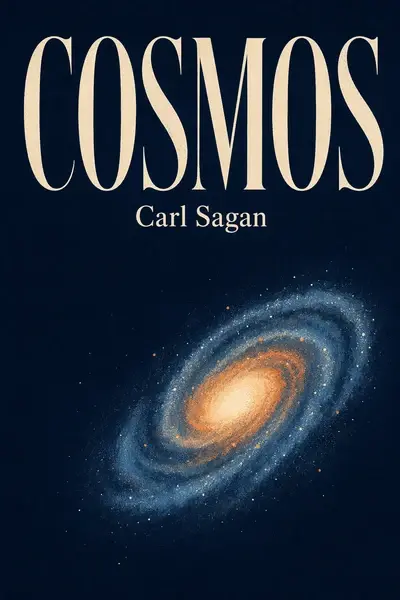
Cosmos will make you smarter by teaching you the basics of how the universe works, including our own solar system and its history.
Cosmos will make you smarter by teaching you the basics of how the universe works, including our own solar system and its history.
Are those little dots we see in the sky at night the kings of the past, or burning balls of gas millions of miles away? Today we know more about the universe than we ever have. But it wasn’t always this way.
From the beginning, we’ve been fascinated with the heavens, trying to figure them out. Even early nomadic peoples used the stars to set the time for annual gatherings. They could also determine when to pick fruits or know migration times of buffalo by where the stars were.
We can predict the movements and places of almost all celestial bodies with increasing accuracy. Even the planets move in a cool figure-eight shape called an analemma. Ptolemy used this fact to theorize that the Earth was the center and everything revolved around it.
This way of thinking persisted for centuries until Copernicus posited that planets revolve around the sun instead. Later, scientists like Kepler and Brahe would further develop our understanding of the heavens.
Kepler, for example, was the first to suggest that planets orbits around the sun were elliptical and not circular. Turns out he was right about this. He also stumbled upon Newton’s theory of gravity half a century early, even if he did first call it magnetism.
The movie Contact might only be really good science fiction. After all, we all wonder if we are really alone in the universe, don’t we? The reality is radio waves are the most likely way that extraterrestrial life will first connect with us. The reason for this is because this technology is quick, low-cost, and simple. The likely message they would send is something like a set of prime numbers because it would succinctly and clearly communicate intention and intelligence. What would these lifeforms even look like though? Chances are they’d be quite different from us. Just take our own earth for example. How many different types of living creatures can you think of? There are a lot, and this is all the result of a slow and random process that is a result of the earth’s unique conditions. It’s only logical, then, that extraterrestrials will look pretty strange to us. Life on Jupiter, for example, might end up being some balloon-shaped organisms that make food with some sort of photosynthesis. Although, is it even possible for us to make physical contact with these aliens? Theoretically, it might be a possibility. But our planet’s political system makes it a fat chance. Project Orion is one example of why. It proposed an interstellar ship that could use atomic…
Continue reading in the MinuteRead app
Get the complete 5-minute summary of Cosmos
Get the complete summary in the appWe learn our place in the universe from the heavens, which make us constantly curious.
UFO’s are probably not how aliens would make first contact with us.
In the late 70s humankind sent two space probes on what would become an interstellar journey.
"Cosmos" is a strong fit if you want practical ideas around future, motivation & inspiration, science, especially themes like we learn our place in the universe from the heavens, which make us constantly curious; ufo’s are probably not how aliens would make first contact with us. The MinuteRead summary distills these concepts into a focused read, whether you're deciding whether to buy the book or applying its lessons at work.
Motivated to help readers with cosmos will make you smarter by teaching you the basics of how the universe works, Carl Sagan wrote “Cosmos” to package those ideas for a fast, focused read. In “Cosmos”, Carl Sagan focuses on cosmos will make you smarter by teaching you the basics of how the universe works. Through “Cosmos”, Carl Sagan distills the core ideas on future into lessons readers can absorb in a single short sitting. Readers turn to this work when they want Carl Sagan's perspective on th…
View all summaries by Carl SaganContinue Reading
Access the complete 5-minute summary and thousands more nonfiction books in the MinuteRead app.

Continue reading the complete summary in the MinuteRead app.