 MinuteRead
30 min
Book summary
by Jason Jordan
Premium summary · Opens in the app · 30 min read
Every sales organization measures something. Walk into any sales office and you will see walls covered with numbers. Revenue targets. Pipeline reports. Activity counts. Conversion rates. The assumption behind all this measurement is simple: if we track the right numbers, we can improve them.
**Author:** Jason Jordan **Estimated Reading Time:** 45 minutes
**What You'll Learn:** - Why most sales metrics fail to improve performance - The fundamental difference between activities, objectives, and results - How to build a causal chain from daily actions to business outcomes - Which sales processes matter for different selling roles - How to design a metrics system your sales force will actually use
**Who This Book Is For:** Sales leaders who are tired of chasing numbers they cannot control. Sales operations professionals who want to build measurement systems that drive behavior. Executives who need to understand why their sales force does what it does. And anyone who has ever stared at a dashboard full of metrics and wondered which ones actually matter.
Every sales organization measures something. Walk into any sales office and you will see walls covered with numbers. Revenue targets. Pipeline reports. Activity counts. Conversion rates. The assumption behind all this measurement is simple: if we track the right numbers, we can improve them. But most sales organizations are measuring the wrong things in the wrong ways. They track outcomes they cannot control while ignoring the activities that actually drive those outcomes. They confuse busyness with effectiveness. They build elaborate dashboards that tell them what happened yesterday but offer no guidance for what to do tomorrow. Jason Jordan spent years studying how sales organizations actually use metrics. What he found was uncomfortable. Most companies have no clear logic connecting the numbers they track to the results they want. They measure revenue, which is an outcome. They measure profit, which is also an outcome. They measure customer satisfaction, which is an outcome. Then they wonder why their sales force cannot seem to move these numbers. The problem is not a lack of data. The problem is a lack of understanding about what data can actually be managed. Think about it this way. A farmer cannot directly control how much corn grows in a field. The farmer can control when to plant, how much to water, what fertilizer to use, and when to harvest. Those are activities. The harvest is the result. A good farmer focuses on the activities because that is where control lives. Sales works the same way. You cannot directly manage revenue. You cannot directly manage profit. You cannot directly manage market share. These are results that emerge from thousands of individual actions taken by salespeople every day. If you want to change the results, you must change the actions. This insight sounds obvious when stated plainly. Yet most sales organizations operate as if the opposite were true. They set revenue targets and then pressure their salespeople to hit them. They review pipeline reports and demand…
Continue reading in the MinuteRead app
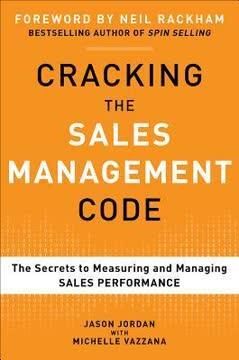
Get the complete 30-minute summary of Cracking the Sales Management Code
Get the complete summary in the appActivities can be managed. Outcomes cannot.
Sales metrics fall into three levels: Business Results, Sales Objectives, and Sales Activities.
Business Results like revenue and profit cannot be directly managed.
Sales Objectives are the bridge between results and activities.
The five sales processes are Call Management, Opportunity Management, Account Management, Territory Management, and Sale
Different selling roles require different sales processes.
"Cracking the Sales Management Code" is a strong fit if you want practical ideas around business, management, leadership, especially themes like activities can be managed. outcomes cannot; sales metrics fall into three levels: business results, sales objectives, and sales activities. The MinuteRead summary distills these concepts into a focused read, whether you're deciding whether to buy the book or applying its lessons at work.
Jason Jordan is a respected author and expert in the field of sales management. With his book Cracking the Sales Management Code , Jordan provides a comprehensive framework for sales operations and management. His approach focuses on linking day-to-day activities to strategic objectives, emphasizing the importance of measurable metrics in sales processes. Jordan's work is recognized for its practical applications and has been widely recommended by business leaders and sales professionals. His in…
View all summaries by Jason JordanContinue Reading
Access the complete 30-minute summary and thousands more nonfiction books in the MinuteRead app.

Continue reading the complete summary in the MinuteRead app.






