MinuteRead
30 min
Book summary
Premium summary · Opens in the app · 30 min read
Every day, billions of dollars change hands based on someone's estimate of what something is worth. A portfolio manager buys a stock because she believes it trades below its true value. A corporate executive offers to acquire a competitor because he believes the combined company will be worth more than the sum of its parts. A venture capitalist funds a startup based on projections of what it might become. A homeowner decides whether to renovate based on what the improvements will add to the sale
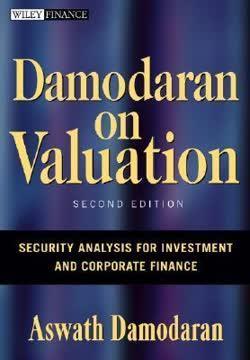
**Author:** Aswath Damodaran
**Estimated Reading Time:** 45 minutes
**What You'll Learn:** How to value any asset using the three fundamental approaches to valuation, how to estimate discount rates and cash flows, how to avoid the biases that corrupt valuations, and how to apply valuation principles across portfolio management, acquisitions, and corporate finance.
**Who This Book Is For:** Investors, analysts, corporate managers, students of finance, and anyone who needs to make decisions based on what an asset is truly worth.
Every day, billions of dollars change hands based on someone's estimate of what something is worth. A portfolio manager buys a stock because she believes it trades below its true value. A corporate executive offers to acquire a competitor because he believes the combined company will be worth more than the sum of its parts. A venture capitalist funds a startup based on projections of what it might become. A homeowner decides whether to renovate based on what the improvements will add to the sale price. All of these decisions share a common foundation. They require an answer to a deceptively simple question: What is this asset worth? The question is simple. The answer is not. Valuation sits at the intersection of finance, economics, and human psychology. It requires understanding cash flows, growth, risk, and the behavior of markets. It demands rigor in analysis and humility in the face of uncertainty. It is both a science and a craft, governed by mathematical principles but shaped by judgment, experience, and an awareness of one's own biases. Aswath Damodaran has spent decades teaching valuation to students, practitioners, and executives. His work has influenced how an entire generation of finance professionals thinks about value. In this book, he lays out the fundamental frameworks, tools, and principles that form the foundation of sound valuation practice. The central message is both reassuring and challenging. Reassuring because the basic principles of valuation are universal. The same concepts apply whether you are valuing a corner grocery store or a multinational corporation, a bond or a patent, a mature company or a high-growth startup. Challenging because valuation is never a purely mechanical exercise. It requires confronting uncertainty, managing bias, and making judgments that cannot be outsourced to a spreadsheet. Many people approach valuation hoping for precision. They want a number, a target price, a definitive answer. But valuation does not work that way. The future is uncertain, and any estimate of value is necessarily imprecise. The goal is not to eliminate uncertainty but to understand it, to quantify it where possible, and to make decisions that account for it. Another common misconception is that valuation is only relevant for financial professionals. In reality, valuation principles apply to a wide…
Continue reading in the MinuteRead app
Get the complete 30-minute summary of Damodaran on Valuation
Get the complete summary in the appValue is the present value of expected cash flows, discounted at a rate that reflects risk.
Bias is pervasive. Acknowledge it and build safeguards against it.
Cash flow is not earnings. Account for reinvestment needs.
Growth requires investment. Tie growth assumptions to reinvestment and return on capital.
No company grows faster than the economy forever. Assume growth slows over time.
Terminal value often dominates valuation. Test its sensitivity to assumptions.
"Damodaran on Valuation" is a strong fit if you want practical ideas around finance, business, economics, especially themes like value is the present value of expected cash flows, discounted at a rate that reflects risk; bias is pervasive. acknowledge it and build safeguards against it. The MinuteRead summary distills these concepts into a focused read, whether you're deciding whether to buy the book or applying its lessons at work.
Aswath Damodaran is a prominent figure in finance, serving as a Professor of Finance at New York University's Stern School of Business. He is widely recognized for his contributions to the field of valuation, corporate finance, and investment management. Damodaran has authored numerous influential academic and practitioner texts on these subjects, which are extensively used in both educational and professional settings. His work extends beyond writing, as he is also known for providing comprehen…
View all summaries by Aswath DamodaranContinue Reading
Access the complete 30-minute summary and thousands more nonfiction books in the MinuteRead app.

Continue reading the complete summary in the MinuteRead app.