MinuteRead
30 min
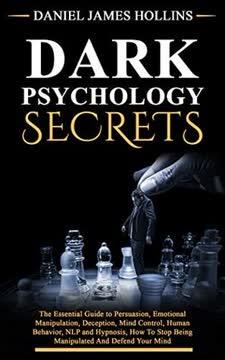
Book summary
Premium summary · Opens in the app · 30 min read
Every day, you make decisions that feel like your own. You choose what to buy, whom to trust, what to believe, and how to respond to the people around you. The sense of autonomy is comforting. It tells you that you are in control of your life.
**Author:** Daniel James Hollins
**Estimated Reading Time:** 45 minutes
**What You'll Learn:**
- Why every human mind carries the potential for manipulation and harm - How covert influence tactics operate in relationships, business, and media - The mechanics of emotional manipulation and how to recognize them - How hypnosis and self-hypnosis actually work - The difference between ethical persuasion and psychological exploitation - Practical strategies for building resistance to manipulation - How purpose and self-awareness create lasting protection
**Who This Book Is For:**
This book is for anyone who has ever walked away from a conversation feeling confused, guilty, or uncertain about what just happened. It is for people who suspect they are being influenced in ways they cannot quite identify. It is for professionals who want to understand the hidden dynamics of persuasion in business and politics. And it is for readers who want to build genuine psychological resilience against the manipulative forces that surround us daily.
Every day, you make decisions that feel like your own. You choose what to buy, whom to trust, what to believe, and how to respond to the people around you. The sense of autonomy is comforting. It tells you that you are in control of your life. But what if that sense of control is partially an illusion? What if some of your decisions, perhaps more than you realize, have been quietly shaped by forces designed to bypass your conscious awareness? What if certain people in your life, or certain messages you encounter, are engineered to influence you without your knowledge or consent? This is the territory of dark psychology. The term sounds dramatic, and in some ways it is. Dark psychology refers to the study of how people use manipulation, coercion, deception, and emotional exploitation to achieve their goals at the expense of others. It encompasses everything from the subtle guilt trip delivered by a family member to the sophisticated propaganda campaigns conducted by governments. It includes the salesperson who creates false urgency, the romantic partner who slowly isolates you from friends, and the political advertisement that bypasses logic entirely to trigger fear or anger. The uncomfortable truth at the heart of this subject is that the capacity for manipulation exists in all of us. Dark psychology does not divide the world into good people and bad people. Instead, it suggests that every human mind contains the potential for harmful thoughts and behaviors. Most people never act on these impulses in significant ways. They experience fleeting moments of selfishness or minor manipulation and move on. But a small percentage of people develop these capacities into sophisticated tools of control. Understanding this is not about becoming paranoid. It is about becoming aware.…
Continue reading in the MinuteRead app
Get the complete 30-minute summary of Dark Psychology Secret
Get the complete summary in the appThe capacity for manipulation exists in every human mind, including yours.
Covert manipulation operates below conscious awareness. You cannot resist what you cannot see.
Propaganda and NLP bypass logic by appealing to emotions and subconscious associations.
Emotional manipulation exploits fundamental human needs for love, approval, and certainty.
Hypnosis is not mind control. It is a state of focused attention and heightened suggestibility.
Ethical persuasion respects autonomy. Unethical persuasion exploits vulnerabilities.
"Dark Psychology Secret" is a strong fit if you want practical ideas around inspiration, psychology, self help, especially themes like the capacity for manipulation exists in every human mind, including yours; covert manipulation operates below conscious awareness. you cannot resist what you cannot see. The MinuteRead summary distills these concepts into a focused read, whether you're deciding whether to buy the book or applying its lessons at work.
There is no information provided about the author Daniel James Hollins in the given documents. The only mention of the author is in the book title and authorship information. Without additional details, it's impossible to provide a summary of the author's background, qualifications, or other works. The lack of author information suggests that the focus of the provided content is primarily on the book itself and its reception by readers, rather than on the author's personal or professional histor…
View all summaries by Daniel James HollinsContinue Reading
Access the complete 30-minute summary and thousands more nonfiction books in the MinuteRead app.

Continue reading the complete summary in the MinuteRead app.