MinuteRead
30 min
Most of us are stuck in a paradox we rarely name. We say we want change. We attend seminars, read books, and make plans. Yet when the moment arrives to actually alter how we think, behave, or lead, we retreat. We choose the familiar. We tell ourselves that the timing is not right, that the risk is too great, that the current approach just needs more effort. And so we continue doing what we have always done, hoping for a different result.
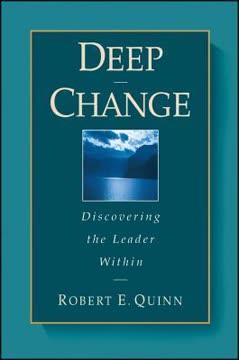
**Author:** Robert E. Quinn **Estimated Reading Time:** 45 minutes
**What You'll Learn:** - Why incremental improvement is often not enough to save a career or organization - How to recognize when you are choosing slow death over deep change - The internal barriers that keep capable people stuck in failing patterns - A practical framework for personal and organizational transformation - How to lead others through change by first changing yourself
**Who This Book Is For:** This book is for anyone who senses that something fundamental needs to shift in their work, their leadership, or their organization. It is for executives who feel trapped by their own success, managers who know their teams are going through the motions, and individuals who suspect they are capable of far more than their current circumstances allow. If you have ever felt that the safe path is slowly draining the life out of you, this book will help you understand why and what to do about it.
Most of us are stuck in a paradox we rarely name. We say we want change. We attend seminars, read books, and make plans. Yet when the moment arrives to actually alter how we think, behave, or lead, we retreat. We choose the familiar. We tell ourselves that the timing is not right, that the risk is too great, that the current approach just needs more effort. And so we continue doing what we have always done, hoping for a different result. Robert E. Quinn wrote Deep Change to address this exact predicament. His central observation is uncomfortable: the very strategies that once made us successful often become the chains that hold us back. The skills that earned us promotions become the habits that prevent us from leading. The organizational structures that once drove efficiency become the barriers to adaptation. And the identities we have carefully constructed become the prisons from which we cannot escape. Quinn is not a motivational speaker offering empty encouragement. He is a professor at the University of Michigan and one of the world's leading scholars of organizational behavior. His work is grounded in decades of research, consulting, and personal experience. What makes Deep Change distinctive is its honesty about the cost of transformation. Quinn does not pretend that change is easy or that it always works. He acknowledges the fear, the uncertainty, and the genuine possibility of failure. But he also makes a compelling case that the alternative is worse. The problem Quinn identifies is not a lack of knowledge. Most people know what they should do. The problem is that knowing is not enough. Real change requires a shift in identity, not just behavior. It requires becoming a different kind of…
Continue reading in the MinuteRead app
Get the complete 30-minute summary of Deep Change
Get the complete summary in the appDeep change is fundamentally different from incremental change. It requires new ways of thinking and behaving, not just
You are always choosing between deep change and slow death. The choice is continuous, whether you are aware of it or not
Walking into uncertainty is essential for growth. You will never feel ready, and you will never eliminate risk.
The hero's journey is a map for transformation. It involves departure, initiation, and return, and it changes your ident
Busyness is not progress. Monitor your vitality to recognize when you are trapped in the logic of task pursuit.
Integrity is built through observing your lack of integrity. Confront the gaps between your values and your behavior.
"Deep Change" is a strong fit if you want practical ideas around leadership, business, personal development, especially themes like deep change is fundamentally different from incremental change. it requires new ways of thinking and behaving, not just; you are always choosing between deep change and slow death. the choice is continuous, whether you are aware of it or not. The MinuteRead summary distills these concepts into a focused read, whether you're deciding whether to buy the book or applying its lessons at work.
Robert E. Quinn is a professor of business at the University of Michigan and an expert in organizational culture and change. He has authored numerous books on leadership and organizational development. Quinn's work focuses on the intersection of personal and organizational transformation, emphasizing the role of individual leaders in driving meaningful change. His writing style combines academic insights with practical applications, often including reflective exercises for readers. Quinn's ideas…
View all summaries by Robert E. QuinnContinue Reading
Access the complete 30-minute summary and thousands more nonfiction books in the MinuteRead app.

Continue reading the complete summary in the MinuteRead app.