 MinuteRead
30 min
Book summary
Premium summary · Opens in the app · 30 min read
Most organizations want growth. They pursue it through acquisitions, cost cutting, and incremental improvements to existing products. But organic growth, the kind that comes from creating new value for customers, remains elusive. It feels risky, unpredictable, and dependent on flashes of creative genius that cannot be summoned on demand.
**Author:** Jeanne Liedtka **Estimated Reading Time:** 48 minutes
**What You'll Learn:** How to apply design thinking as a systematic process for driving organic growth and innovation. This book teaches the four-question framework that guides teams from deep customer understanding through ideation, prototyping, and market launch. You will learn specific tools including journey mapping, assumption testing, rapid prototyping, and customer co-creation.
**Who This Book Is For:** Managers and leaders who need to generate growth beyond incremental improvements. This book is for anyone who suspects that traditional analytical tools are insufficient for innovation, and who wants a structured, learnable approach to creating new value for customers.
Most organizations want growth. They pursue it through acquisitions, cost cutting, and incremental improvements to existing products. But organic growth, the kind that comes from creating new value for customers, remains elusive. It feels risky, unpredictable, and dependent on flashes of creative genius that cannot be summoned on demand. This is the problem Jeanne Liedtka addresses. She argues that innovation does not have to be a mysterious black box. There is a systematic approach to generating breakthrough ideas, testing them cheaply, and bringing them to market with reduced risk. That approach is design thinking. Design thinking is often misunderstood. Some dismiss it as a trendy buzzword. Others imagine it requires artistic talent or special creative gifts. Still others reduce it to brainstorming sessions filled with sticky notes and beanbag chairs. Liedtka cuts through these misconceptions. She presents design thinking as a rigorous, learnable discipline that any manager can master. The book draws a powerful parallel. Decades ago, total quality management transformed how organizations approached quality. Before TQM, quality was something everyone cared about but few knew how to systematically achieve. TQM provided tools, processes, and a management philosophy that made quality improvement a repeatable organizational capability. Design thinking, Liedtka argues, can do the same for innovation and growth. What makes this approach different from traditional business analysis is its starting point. Most business thinking begins with constraints: budgets, capabilities, competitive positioning. Design thinking begins with human beings. It asks: What do customers truly need? What frustrates them? What would make their lives meaningfully better? By grounding innovation in deep empathy for the people being served, design thinking opens possibilities that spreadsheet analysis alone would never reveal. The process is not linear. It moves between divergent thinking, where teams generate many possibilities, and convergent thinking, where they narrow to the most promising options. It embraces the reality that the first attempt will be imperfect. It builds in rapid cycles of testing and refinement. And it acknowledges something that experienced innovators know well: you will get it mostly wrong at first, and that is exactly why you need…
Continue reading in the MinuteRead app
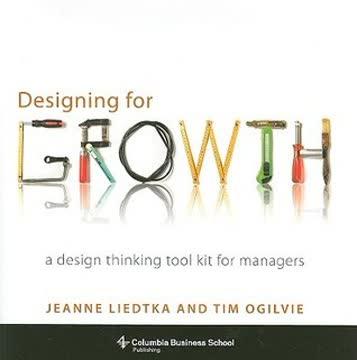
Get the complete 30-minute summary of Designing for Growth
Get the complete summary in the appDesign thinking is a systematic, learnable process for innovation, not a mysterious creative gift.
Start with empathy. Observe real customers in real contexts before generating solutions.
Use the four questions: What is? What if? What wows? What works?
Generate many options before evaluating any. Defer judgment during brainstorming.
Expect your first version to be wrong. Prototype quickly and cheaply to learn what needs to change.
Test critical assumptions before investing in full development. Design experiments that could prove you wrong.
"Designing for Growth" is a strong fit if you want practical ideas around business, design, leadership, especially themes like design thinking is a systematic, learnable process for innovation, not a mysterious creative gift; start with empathy. observe real customers in real contexts before generating solutions. The MinuteRead summary distills these concepts into a focused read, whether you're deciding whether to buy the book or applying its lessons at work.
Jeanne Liedtka is a professor at the University of Virginia's Darden School of Business and an expert in design thinking and innovation. She has extensive experience in strategy consulting and has authored several books on design thinking and its application in business. Liedtka's work focuses on helping managers and organizations integrate design thinking into their processes to drive growth and innovation. Her approach emphasizes practical tools and techniques that can be applied in various bu…
View all summaries by JeanneLiedtkaContinue Reading
Access the complete 30-minute summary and thousands more nonfiction books in the MinuteRead app.

Continue reading the complete summary in the MinuteRead app.






