MinuteRead
30 min
Book summary
Premium summary · Opens in the app · 30 min read
Something strange is happening to our children. A generation ago, autism affected roughly one in ten thousand children. Today, the Centers for Disease Control reports one in sixty-eight. ADHD diagnoses have multiplied tenfold in the same period. Learning disabilities now touch fifteen to twenty percent of every classroom. These numbers are not subtle shifts. They represent a quiet crisis unfolding in homes and schools across the developed world.
**Author:** Robert Melillo
**Estimated Reading Time:** 45 minutes
**What You'll Learn:** Why so many childhood disorders share a common root cause, how brain hemisphere imbalance creates different sets of symptoms, and the step-by-step program for restoring neurological balance through targeted sensory-motor stimulation, nutrition, and behavioral strategies.
**Who This Book Is For:** Parents who sense something is off with their child's development, educators seeking deeper understanding of learning and behavior challenges, and anyone who has been told a neurological diagnosis is a life sentence and suspects otherwise.
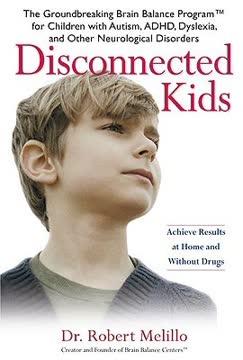
Something strange is happening to our children. A generation ago, autism affected roughly one in ten thousand children. Today, the Centers for Disease Control reports one in sixty-eight. ADHD diagnoses have multiplied tenfold in the same period. Learning disabilities now touch fifteen to twenty percent of every classroom. These numbers are not subtle shifts. They represent a quiet crisis unfolding in homes and schools across the developed world. The conventional response has been to treat each diagnosis as a separate condition with its own medication protocol and its own management strategy. One child gets a stimulant for attention. Another gets an antipsychotic for aggression. A third enters special education for reading. The underlying assumption is that these are distinct problems requiring distinct solutions, and that the best we can do is manage symptoms. Robert Melillo looked at the same data and saw something different. As a clinician working with thousands of children, he noticed patterns that transcended diagnostic labels. The hyperactive child with ADHD and the withdrawn child with autism seemed like opposites, yet both struggled with social connection. The dyslexic child who could not decode words and the child who read fluently but understood nothing seemed like opposites, yet both were failing academically. What if these apparent opposites were actually two sides of the same coin? Melillo's central insight is both simple and radical. The human brain has two hemispheres, and they must work together in a state of electrical balance and synchrony. When one hemisphere develops more slowly than the other, communication breaks down. The result is a functional disconnection, a brain that cannot integrate its own processing. The specific symptoms depend on which hemisphere lags behind, but the root problem is the same. This changes everything. If the problem is functional rather than structural, it is potentially reversible. If the problem is developmental rather than genetic, it can be addressed through targeted stimulation. If the problem is imbalance rather than damage, the solution is not medication but rehabilitation. The Brain Balance Program emerged from this understanding. It is not a collection of generic advice about diet and exercise. It is a systematic approach to identifying which hemisphere is underperforming and delivering…
Continue reading in the MinuteRead app
Get the complete 30-minute summary of Disconnected Kids
Get the complete summary in the appFunctional Disconnection Syndrome is an imbalance between the brain's hemispheres, not brain damage. It is potentially r
Right-brain deficiency produces ADHD-like and autism-like symptoms. Left-brain deficiency produces dyslexia-like and lea
Skipped developmental milestones, like crawling, and retained primitive reflexes are early warning signs of neurological
Assess before intervening. Identify which hemisphere is weak by observing motor, sensory, academic, and behavioral patte
Use targeted exercises that stimulate the weak hemisphere without stimulating the strong hemisphere. Generic activity wi
Do exercises three to four times per week. Fifteen minutes of consistent work beats an hour of occasional work.
"Disconnected Kids" is a strong fit if you want practical ideas around parenting, autistic spectrum disorder, health, especially themes like functional disconnection syndrome is an imbalance between the brain's hemispheres, not brain damage. it is potentially r; right-brain deficiency produces adhd-like and autism-like symptoms. left-brain deficiency produces dyslexia-like and lea. The MinuteRead summary distills these concepts into a focused read, whether you're deciding whether to buy the book or applying its lessons at work.
Dr. Robert Melillo is a chiropractic neurologist and pioneer in the field of childhood neurological disorders. He developed the Brain Balance Program, which aims to address various conditions such as autism, ADHD, and dyslexia through a holistic approach. Melillo has authored several books on the topic and founded Brain Balance Achievement Centers across the United States. Despite controversy surrounding his methods, many parents credit his work with dramatically improving their children's lives…
View all summaries by Robert MelilloContinue Reading
Access the complete 30-minute summary and thousands more nonfiction books in the MinuteRead app.

Continue reading the complete summary in the MinuteRead app.