MinuteRead
30 min
Book summary
Premium summary · Opens in the app · 30 min read
In 1980, nobody wanted a personal computer. The machines were toys. They had tiny screens, limited memory, and processing power that could not touch the mainframes and minicomputers running the world's serious work. The customers who mattered, corporate IT departments and large organizations, had no use for them. The companies that made real computers, Digital Equipment Corporation, Wang, Data General, all looked at PCs and saw irrelevant gadgets for hobbyists.
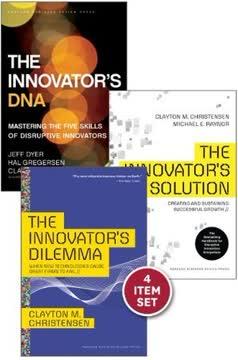
**Author:** Clayton M. Christensen **Estimated Reading Time:** 42 minutes
### What You'll Learn
Why great companies fail despite doing everything right. The hidden patterns that cause industry leaders to lose their markets to scrappy newcomers. How to spot disruptions before they destroy your business. The organizational forces that make innovation so difficult inside successful companies. Practical frameworks for building new growth businesses without killing your core operations.
### Who This Book Is For
Leaders who sense their industry is changing but cannot articulate how. Entrepreneurs building products the incumbents ignore. Managers frustrated by their organization's inability to pursue exciting new ideas. Investors trying to separate genuine disruption from hype. Anyone who has watched a dominant company collapse and wondered how smart people failed to see it coming.
In 1980, nobody wanted a personal computer. The machines were toys. They had tiny screens, limited memory, and processing power that could not touch the mainframes and minicomputers running the world's serious work. The customers who mattered, corporate IT departments and large organizations, had no use for them. The companies that made real computers, Digital Equipment Corporation, Wang, Data General, all looked at PCs and saw irrelevant gadgets for hobbyists. By 1995, Digital Equipment Corporation was gone. Wang was gone. The entire minicomputer industry had been obliterated. The hobbyist toy had eaten their world. This pattern repeats across industries with astonishing regularity. Steel mills dismissed mini-mills as incapable of producing quality steel. Department stores laughed at discount retailers selling cheap goods in warehouse spaces. Blockbuster watched Netflix mail DVDs in red envelopes and saw no threat to their thousands of profitable stores. In every case, the established leaders were not stupid. They were not lazy. They were doing exactly what good managers are supposed to do: listening to their best customers, investing in profitable products, and pursuing high-margin opportunities. That is the puzzle at the heart of this book. How can doing the right thing lead to failure? How can excellent management, the kind taught at every business school and practiced at every successful company, become a liability? Clayton Christensen spent years studying this phenomenon. He examined the disk drive industry, where new companies seemed to emerge from nowhere and topple established leaders with alarming speed. He looked at mechanical excavators, where a new technology displaced an old one despite being initially inferior on every metric that customers cared about. He studied retail, steel, computers, and motorcycles. In every case, the pattern held. The answer he found is both simple and deeply counterintuitive. There are two fundamentally different types of innovation. Sustaining innovations make good products better. They serve existing customers by improving performance along the dimensions those customers already value. Established companies…
Continue reading in the MinuteRead app
Get the complete 30-minute summary of Disruptive Innovation
Get the complete summary in the appDisruption is a process where a simpler, cheaper, or more convenient product starts in overlooked markets and improves u
Sustaining innovation makes good products better for existing customers. Disruptive innovation offers a different value
Established companies almost always win sustaining battles. Entrants almost always win disruptive battles.
The resource allocation process inside companies systematically starves disruptive projects of the resources they need.
Large companies cannot pursue small opportunities because small markets do not satisfy their growth needs.
Markets that do not exist cannot be analyzed. Use discovery-driven planning instead of demanding precise projections.
"Disruptive Innovation" is a strong fit if you want practical ideas around business, especially themes like disruption is a process where a simpler, cheaper, or more convenient product starts in overlooked markets and improves u; sustaining innovation makes good products better for existing customers. disruptive innovation offers a different value. The MinuteRead summary distills these concepts into a focused read, whether you're deciding whether to buy the book or applying its lessons at work.
Clayton M. Christensen is a renowned business scholar and professor at Harvard Business School. He is best known for his theory of disruptive technology, introduced in his book The Innovator's Dilemma. Born in Salt Lake City, Christensen has an impressive academic background, including degrees from BYU, Oxford, and Harvard. He is a member of The Church of Jesus Christ of Latter-day Saints and has served in various leadership positions within the church. Christensen speaks fluent Korean and has a…
View all summaries by Clayton M. ChristensenContinue Reading
Access the complete 30-minute summary and thousands more nonfiction books in the MinuteRead app.

Continue reading the complete summary in the MinuteRead app.