MinuteRead
5 min
Book summary
Premium summary · Opens in the app · 5 min read
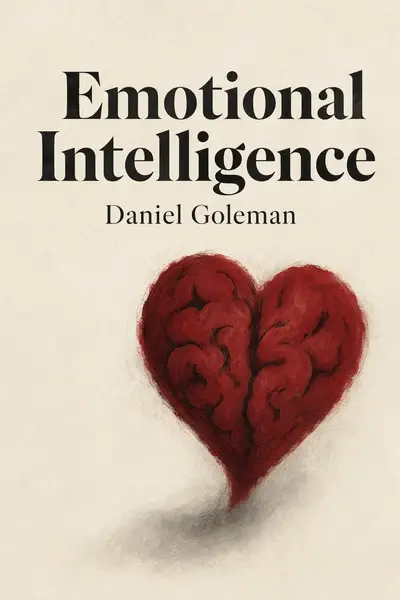
Emotional Intelligence explains the importance of emotions in your life, how they help and hurt your ability to navigate the world, followed by practical advice on how to improve your own emotional intelligence and why that is the key to leading a successful life.
Emotional Intelligence explains the importance of emotions in your life, how they help and hurt your ability to navigate the world, followed by practical advice on how to improve your own emotional intelligence and why that is the key to leading a successful life.
There are two parts to being emotionally intelligent. One is being emotionally self-aware. It simply means that you’re able to recognize and label your feelings.
For example, when children learn to speak, they usually need to be given the vocabulary first, so if your son is angry because you’re not letting him have candy before dinner, he’ll know he feels bad, but can’t tell you what exactly it is, until you tell him that what he’s feeling is anger.
The second part of the EQ equation is emotional self-regulation.
As an adult, being able to look at your emotions on a meta-level (thanks to mindfulness, learned from meditation or other self awareness exercises) is crucial in choosing how to react to your feelings – or if you should react at all.
For example, when you sit in your office and hear a sudden, loud bang, like the sound of an explosion, your emotional processing center will perceive it as a threat and put your body in alert mode. But when your rational brain double checks and sees there’s no actual threat there, it calms you down again, so you can get back on track to what you were doing.
Both of these qualities rely heavily on the neural connections between your rational and emotional brain, which, if severed, can cause serious problems.
IQ, the level of your intelligence, is usually what we think determines success. But Goleman’s research led him to believe that EQ, emotional intelligence, is just as, if not more important, to find happiness. For example, in the world of business and careers, students with higher levels of empathy seem to get better grades, even if their peers are just as smart. That’s because they can better manage their feelings – for example being bored, but still doing their homework – and perform better in social settings, like knowing when to speak and when to be quiet in class. Similarly, as you might know from the famous marshmallow experiment, kids who can better discipline themselves at a young age tend to perform better later as well. Plus, managers, who are socially skilled, will have the power to persuade people when they need to and thus do a better job at leading people. Your health also highly depends on your EQ, because the more you have of it, the better you are able to mitigate stress, which can prevent a lot, if not all, of…
Continue reading in the MinuteRead app
Get the complete 5-minute summary of Emotional Intelligence
Get the complete summary in the appEmotional intelligence depends on your ability to be self-aware and self-regulate.
If you have a high EQ, you’re more likely to be successful and healthy.
You can boost your EQ by mirroring other people’s body language and thinking optimistically.
"Emotional Intelligence" is a strong fit if you want practical ideas around communication skills, business, culture, especially themes like emotional intelligence depends on your ability to be self-aware and self-regulate; if you have a high eq, you’re more likely to be successful and healthy. The MinuteRead summary distills these concepts into a focused read, whether you're deciding whether to buy the book or applying its lessons at work.
Continue Reading
Access the complete 5-minute summary and thousands more nonfiction books in the MinuteRead app.

Continue reading the complete summary in the MinuteRead app.