 MinuteRead
30 min
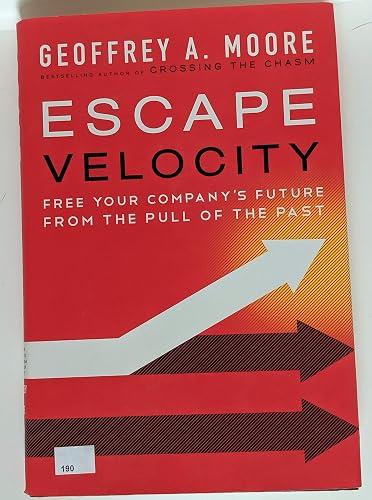
Escape Velocity offers a hierarchy of five powers that determine any business’s ability to achieve large-scale, long-term success, including its chosen industry, position with competitors and customers, product portfolio, and inner efficiency, making useful suggestions on optimizing these factors in order to stay relevant for decades to come.
Escape Velocity offers a hierarchy of five powers that determine any business’s ability to achieve large-scale, long-term success, including its chosen industry, position with competitors and customers, product portfolio, and inner efficiency, making useful suggestions on optimizing these factors in order to stay relevant for decades to come.
Many a company that was once the world’s #1 in their industry no longer exists. Motorola. Silicon Graphics. Polaroid. Others are shells of their former selves. Nokia, Kodak, At&T, anyone? Why? Because they consumed their power instead of maintaining it.
Power is different from performance, which is the thing corporate culture tends to focus on, Moore explains. Annual reports, quarterly figures, and sales targets dominate the conversation, but they miss the point: What’s your unique contribution to the world, what industry are you in, and where do those two leave you with customers and competitors?
Even if it’s not initially compensated, in the long run, any business must replenish its power. There are 5 ways to do so, and they form a hierarchy in order of importance:
Category Power: Are you in organically growing industries or shrinking ones? Company Power: Who’s the team to beat in your industry? Market Power: Are you chasing the right customer segments? And are you winning them? Offer Power: Is your flagship offering something customers can’t get anywhere else? Or are you playing catch-up? Execution Power: How efficient are you at driving change in all of the above?
If you look at your business through these 5 lenses, you’ll start focusing on the right long-term activities instead of just your next buck. You’ll know exactly which levers to pull for what reason. Let’s look at 2 of them in more detail.
In 2010, the world-famous magazine Newsweek was sold for a single dollar. Meanwhile, 3Par, “a not particularly distinguished storage company,” sold for $2.3 billion. Why? Category power. Computer storage was hot, print media was not. “Category power is the number-one predictor of future economic performance.” It’s determined by a simple question: Is your industry growing or not? “If you’re in a category that’s growing 100%, even if you’re kind of a doofus, you’re probably going to do pretty well this year,” Moore says. Meanwhile, you can fight tooth and nail in a stagnant industry and only eke out a 1% gain. To understand your category power, consider the 5 stages most industries go through: Emerging Category: Your industry is new and shiny, but will it ever succeed? Growing Category: The mainstream is confirmed to be coming — and fast! Mature Category: The industry is now stable, predictable, and slowly grows in cycles. Declining Category: Though slowly, the inevitable decline has begun. End of Life Category: Still…
Continue reading in the MinuteRead app
Get the complete 5-minute summary of Escape Velocity
Get the complete summary in the appYour company’s longevity is determined by a hierarchy of 5 powers.
Category Power is the most important determinator of whether your business will grow or shrink.
Offer Power is how you neutralize, improve upon, and differentiate yourself from the competition.
"Escape Velocity" is a strong fit if you want practical ideas around business, entrepreneurship, startups, especially themes like your company’s longevity is determined by a hierarchy of 5 powers; category power is the most important determinator of whether your business will grow or shrink. The MinuteRead summary distills these concepts into a focused read, whether you're deciding whether to buy the book or applying its lessons at work.
Geoffrey Moore is an author, speaker, and advisor who splits his consulting time between start-up companies in the Wildcat Venture Partners portfolios and established high-tech enterprises, most recently including Salesforce, Microsoft, Autodesk, F5Networks, Gainsight, Google, and Splunk. Moore’s life’s work has focused on the market dynamics surrounding disruptive innovations. His first book, Crossing the Chasm, focuses on the challenges start-up companies face transitioning from early adoptin…
View all summaries by Geoffrey MooreContinue Reading
Access the complete 5-minute summary and thousands more nonfiction books in the MinuteRead app.

Continue reading the complete summary in the MinuteRead app.






