 MinuteRead
30 min
Book summary
Premium summary · Opens in the app · 30 min read
Every day, in conference rooms and virtual meetings around the world, smart people with good ideas fail to get their message across. They present data. They walk through slides. They answer questions. And yet, when the meeting ends, nothing changes. Decisions get delayed. Recommendations get ignored. Opportunities slip away.
**Author:** Janine Kurnoff
**Estimated Reading Time:** 45 minutes
**What You'll Learn:** - The four signposts that form the backbone of every compelling business story - How to craft a BIG Idea that anchors your message and drives decisions - Techniques for adapting your story to any audience, format, or time constraint - Visual storytelling strategies that amplify rather than distract - How to build a storytelling culture within your team and organization
**Who This Book Is For:** Professionals who need to communicate ideas, influence decisions, and inspire action. Whether you are preparing a board presentation, pitching a new initiative, leading a team meeting, or writing an important email, the principles in this book will transform how you connect with your audience.
Every day, in conference rooms and virtual meetings around the world, smart people with good ideas fail to get their message across. They present data. They walk through slides. They answer questions. And yet, when the meeting ends, nothing changes. Decisions get delayed. Recommendations get ignored. Opportunities slip away. The problem is rarely the quality of the ideas. It is the way those ideas are communicated. Most business communication is built on a flawed assumption: that if you present enough information in a logical order, people will reach the right conclusion. This assumption treats audiences like computers waiting to process data. But human beings do not process information the way spreadsheets do. We process information through narrative. We remember stories. We connect with characters. We lean in when there is tension and we feel satisfaction when there is resolution. Janine Kurnoff has spent years helping professionals at leading companies transform their communication. Her work has revealed a simple truth: the people who get their ideas approved, funded, and implemented are not necessarily the ones with the best ideas. They are the ones who tell the best stories. This does not mean turning business presentations into entertainment. It means applying the fundamental structure of storytelling to the way you communicate in professional settings. It means understanding that every audience, whether it is one executive or a hundred stakeholders, needs to be taken on a journey. The challenge is that most of us have never been taught how to do this. We learned to write essays in school with thesis statements and supporting paragraphs. We learned to create presentations with bullet points and charts. We learned to write emails with clear subject lines and action items. None of this is wrong, but none of it is sufficient. The missing ingredient is narrative structure. Consider the last presentation you sat through. Can you remember the key message? Can you remember what the presenter wanted you to do? If you are like most…
Continue reading in the MinuteRead app
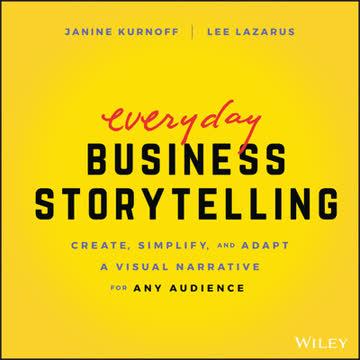
Get the complete 30-minute summary of Everyday Business Storytelling
Get the complete summary in the appEvery compelling business story follows four signposts: setting, characters, conflict, and resolution.
Resolution must always come last. Build tension before you release it.
Your BIG Idea is the one thing you want your audience to remember. Make it simple, actionable, and focused on your audie
Active headlines communicate insights, not just content labels. They should tell a story when read in sequence.
Adapt your story structure for different audiences. Walk in your audience's shoes.
Visuals should support your story, not distract from it. Every visual should serve a purpose.
"Everyday Business Storytelling" is a strong fit if you want practical ideas around business, communication, productivity, especially themes like every compelling business story follows four signposts: setting, characters, conflict, and resolution; resolution must always come last. build tension before you release it. The MinuteRead summary distills these concepts into a focused read, whether you're deciding whether to buy the book or applying its lessons at work.
Janine Kurnoff is an author and expert in business communication and storytelling. While specific biographical information is limited in the given content, her work in "Everyday Business Storytelling" demonstrates her expertise in developing effective communication strategies for business professionals. Kurnoff's approach focuses on practical, actionable advice for creating compelling presentations, emails, and other business communications. Her emphasis on storytelling techniques and visual exa…
View all summaries by Janine KurnoffContinue Reading
Access the complete 30-minute summary and thousands more nonfiction books in the MinuteRead app.

Continue reading the complete summary in the MinuteRead app.






