MinuteRead
30 min
Book summary
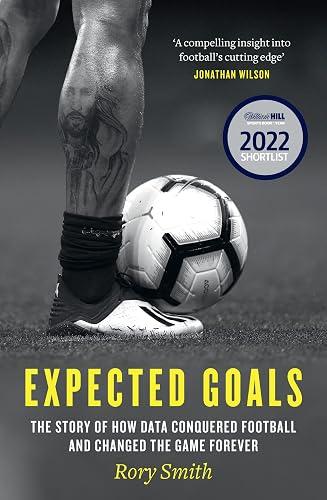
by Rory Smith
Premium summary · Opens in the app · 30 min read
Football has always believed itself to be special. Unlike baseball, with its discrete moments and countable outcomes, or American football, with its stoppages and set plays, soccer flows continuously for ninety minutes. Players move in relation to one another, space opens and closes, and a single moment of brilliance can overturn hours of tactical preparation. For most of the sport's history, the idea that this fluid, emotional, deeply human game could be reduced to numbers seemed not just wrong
**Author:** Rory Smith **Estimated Reading Time:** 42 minutes
### What You'll Learn
How a sport long considered too fluid and artistic to be measured gradually surrendered to the power of numbers. You will discover the pioneers who risked their reputations to bring analytics into football, the gamblers who quietly built sophisticated models that would transform how clubs identify talent, and the clubs that turned data into a competitive weapon. You will understand what Expected Goals actually measures, why it matters, and how the tension between data and human intuition continues to shape the beautiful game.
### Who This Book Is For
Anyone who has ever wondered why their club keeps signing players who fail to deliver. Anyone who has argued about whether a striker is clinical or lucky. Anyone who wants to understand how a sport that resisted quantification for more than a century finally opened its doors to the analysts, the mathematicians, and the gamblers who saw patterns where others saw only chaos.
Football has always believed itself to be special. Unlike baseball, with its discrete moments and countable outcomes, or American football, with its stoppages and set plays, soccer flows continuously for ninety minutes. Players move in relation to one another, space opens and closes, and a single moment of brilliance can overturn hours of tactical preparation. For most of the sport's history, the idea that this fluid, emotional, deeply human game could be reduced to numbers seemed not just wrong but almost offensive. This belief persisted for decades. While baseball underwent its statistical revolution in the 1980s and 1990s, football remained stubbornly resistant. The sport's traditionalists insisted that what mattered could not be measured: passion, heart, desire, the intangible qualities that separated winners from losers. Managers trusted their eyes and their instincts. Scouts relied on experience and gut feeling. The idea that a spreadsheet could tell you more about a player than watching him for ninety minutes seemed absurd. Yet beneath this resistance, something was stirring. A handful of outsiders, armed with curiosity and mathematical training, began to wonder whether football's chaos might contain hidden patterns. They started collecting data, building models, and asking questions that made the sport's establishment uncomfortable. Could shot quality be quantified? Could a player's contribution be measured beyond goals and assists? Could a team's performance be evaluated independently of results? The answers to these questions would eventually transform football. They would change how clubs recruit players, how managers prepare for matches, how broadcasters present the game to fans, and how supporters understand what they are watching. They would create new professions, new rivalries, and new ways of thinking about a sport that had prided itself on resisting measurement. Rory Smith's Expected Goals…
Continue reading in the MinuteRead app
Get the complete 30-minute summary of Expected Goals
Get the complete summary in the appFootball resisted data for decades because insiders believed the game was too fluid and human to be measured.
The pioneers of football analytics were outsiders who brought expertise from other fields and challenged conventional wi
Sam Allardyce used analytics at Bolton to compete with wealthier rivals, proving that data could work in English footbal
Professional gamblers built models that could predict football outcomes, anticipating metrics like Expected Goals.
Expected Goals measures shot quality, revealing patterns that traditional metrics like goals and assists miss.
The resistance to analytics was about power as much as philosophy. Insiders feared losing their authority.
"Expected Goals" is a strong fit if you want practical ideas around football, sports, history, especially themes like football resisted data for decades because insiders believed the game was too fluid and human to be measured; the pioneers of football analytics were outsiders who brought expertise from other fields and challenged conventional wi. The MinuteRead summary distills these concepts into a focused read, whether you're deciding whether to buy the book or applying its lessons at work.
Motivated to help readers with "Football had flirted with data as far back as the 1950s, Rory Smith wrote “Expected Goals” to package those ideas for a fast, focused read. In “Expected Goals”, Rory Smith focuses on "Football had flirted with data as far back as the 1950s. Through “Expected Goals”, Rory Smith distills the core ideas on football into lessons readers can absorb in a single short sitting. Readers turn to this work when they want Rory Smith's perspective on the subject without workin…
Continue Reading
Access the complete 30-minute summary and thousands more nonfiction books in the MinuteRead app.

Continue reading the complete summary in the MinuteRead app.