MinuteRead
30 min
Book summary
by Lucy Jo Palladino
Premium summary · Opens in the app · 30 min read
You sit down to finish an important project. You have a clear deadline. You know exactly what needs to be done. But instead of starting, you check your phone. Then you open your email. Then you remember something you meant to look up online. Forty-five minutes later, you have not started the project, and you feel worse than you did before.
**Author:** Lucy Jo Palladino
**Estimated Reading Time:** 45 minutes
**What You'll Learn:**
- Why attention works like an upside-down U curve and how to find your peak - The seven key skills for managing focus in a distracted world - How to recognize when you're overstimulated or understimulated - Practical strategies for overcoming procrastination, anxiety, and digital overload - How to build sustainable habits that protect your attention
**Who This Book Is For:**
Anyone who has ever sat down to work and found themselves checking email instead. Anyone who has felt scattered, overwhelmed, or unable to concentrate. Parents who want to help their children develop attention skills. Professionals who need to perform under pressure. And anyone who suspects that the digital age is rewiring their brain in ways they don't like.
You sit down to finish an important project. You have a clear deadline. You know exactly what needs to be done. But instead of starting, you check your phone. Then you open your email. Then you remember something you meant to look up online. Forty-five minutes later, you have not started the project, and you feel worse than you did before. This is not a character flaw. It is not laziness. It is not a sign that you lack discipline. It is a signal that your brain is not in the right state for focused attention. Lucy Jo Palladino spent more than three decades as a psychologist studying attention. She worked with children who struggled in school, adults who struggled at work, and high performers who wanted to sharpen their edge. Over time, she noticed something that changed how she thought about focus entirely. The problem was not that people had weak attention. The problem was that they did not understand how attention actually works. Most people assume that focus is a matter of willpower. If you want to concentrate, you just try harder. If you get distracted, you are not trying hard enough. This belief is not only wrong, it is actively harmful. It leads people to push themselves harder when what they actually need is to pull back. It leads them to blame themselves for a biological mismatch between their state of arousal and the demands of the task. Palladino's central insight is simple but profound. Attention operates on a curve. When your level of stimulation is too low, you are bored and unfocused. When it is too high, you are anxious and overwhelmed. The sweet spot is in the middle, where you are alert but relaxed, engaged but calm. She calls this your focus zone. The challenge of the modern world is that almost everything pushes us out of this zone. Our phones buzz with notifications.…
Continue reading in the MinuteRead app
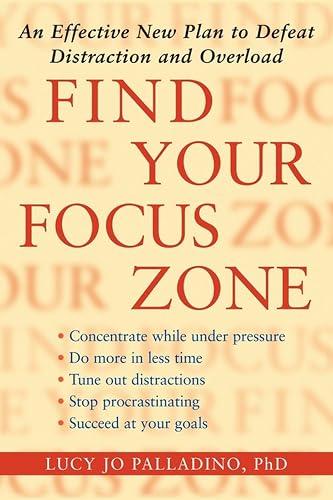
Get the complete 30-minute summary of Find Your Focus Zone
Get the complete summary in the appAttention operates on an upside-down U curve. Too little stimulation leads to boredom. Too much leads to anxiety. The fo
Check your adrenaline score regularly. On a scale of one to ten, where are you right now? Use this awareness to adjust y
Understimulation is just as common as overstimulation. If you are bored, find ways to increase your engagement. If you a
Your brain is plastic. The habits you practice shape your neural pathways. Practice focus to get better at focusing.
Emotional regulation is the foundation of attention. Learn to manage your emotions so they do not manage you.
Procrastination is often rooted in fear. Break tasks into small steps and use reality checks to challenge catastrophic t
"Find Your Focus Zone" is a strong fit if you want practical ideas around self help, psychology, personal development, especially themes like attention operates on an upside-down u curve. too little stimulation leads to boredom. too much leads to anxiety. the fo; check your adrenaline score regularly. on a scale of one to ten, where are you right now? use this awareness to adjust y. The MinuteRead summary distills these concepts into a focused read, whether you're deciding whether to buy the book or applying its lessons at work.
Motivated to help readers with attention is best when your level of stimulation is just right, Lucy Jo Palladino wrote “Find Your Focus Zone” to package those ideas for a fast, focused read. In “Find Your Focus Zone”, Lucy Jo Palladino focuses on attention is best when your level of stimulation is just right. Through “Find Your Focus Zone”, Lucy Jo Palladino distills the core ideas on self help into lessons readers can absorb in a single short sitting. Readers turn to this work when they want Lu…
Continue Reading
Access the complete 30-minute summary and thousands more nonfiction books in the MinuteRead app.

Continue reading the complete summary in the MinuteRead app.