MinuteRead
30 min
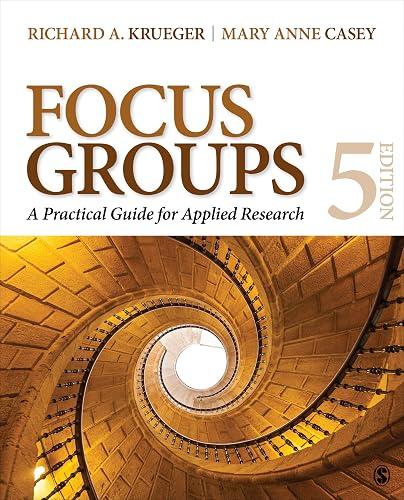
Book summary
by Richard A. Krueger
Premium summary · Opens in the app · 30 min read
Every organization wants to understand the people it serves. Businesses want to know why customers choose one product over another. Nonprofits want to understand whether their programs are meeting real needs. Government agencies want to hear how policies affect daily life. Universities want to learn how students experience their education.
**Author:** Richard A. Krueger
**Estimated Reading Time:** 45 minutes
**What You'll Learn:** How to design, conduct, analyze, and report focus group research that produces genuine insight rather than superficial opinion. You will learn why purpose drives every decision, how to craft questions that spark real conversation, what makes an effective moderator, and how to adapt the method for different audiences and contexts.
**Who This Book Is For:** Researchers, evaluators, program managers, graduate students, and organizational leaders who need to understand what people truly think and feel. Whether you are planning your first focus group or refining years of practice, this condensed edition provides the essential frameworks and practical guidance to do the work well.
Every organization wants to understand the people it serves. Businesses want to know why customers choose one product over another. Nonprofits want to understand whether their programs are meeting real needs. Government agencies want to hear how policies affect daily life. Universities want to learn how students experience their education. The challenge is that most of what people think and feel remains hidden beneath the surface. Surveys can tell you what percentage of respondents selected a particular answer, but they cannot tell you why. They cannot capture the hesitation before someone answers, the story that emerges when one person's comment sparks another's memory, or the intensity of feeling behind a particular viewpoint. This is where focus groups enter the picture. A focus group is a carefully planned conversation with a small number of people who share something important in common. It is designed to explore perceptions, feelings, and underlying motivations in a way that individual interviews and quantitative surveys cannot. When done well, a focus group creates an environment where people feel comfortable enough to say what they actually think, not what they believe they are supposed to say. Richard Krueger has spent decades refining the craft of focus group research. His work has shaped how researchers across academic, nonprofit, and commercial settings approach this method. What makes his contribution distinctive is his insistence that focus groups are not simply casual conversations or informal group discussions. They are a rigorous research method with specific principles, procedures, and standards. The problem is that many people who conduct focus groups do not understand these principles. They gather a group of people, ask a few questions, and then report whatever was said as if it represented universal truth. They confuse anecdote with evidence. They mistake the loudest voice in the room for the most important insight. They treat a single group as sufficient when it is merely a snapshot. Krueger's approach offers a corrective. He argues that focus group research begins long before anyone walks into the room. It…
Continue reading in the MinuteRead app
Get the complete 30-minute summary of Focus Groups
Get the complete summary in the appClarify purpose before doing anything else. Write a purpose statement and get stakeholder agreement.
Recruit homogeneous groups. Participants should share characteristics relevant to the topic.
Keep groups small. Five to eight participants is ideal for most noncommercial topics.
Conduct at least three or four groups per participant category. A single group is a snapshot, not a pattern.
Ask open-ended, one-dimensional questions that invite conversation, not just answers.
Use the five-second pause. Silence creates space for deeper sharing.
"Focus Groups" is a strong fit if you want practical ideas around research, reference, sociology, especially themes like clarify purpose before doing anything else. write a purpose statement and get stakeholder agreement; recruit homogeneous groups. participants should share characteristics relevant to the topic. The MinuteRead summary distills these concepts into a focused read, whether you're deciding whether to buy the book or applying its lessons at work.
Motivated to help readers with planning begins by being clear about the purpose of the study, Richard A. Krueger wrote “Focus Groups” to package those ideas for a fast, focused read. In “Focus Groups”, Richard A. Krueger focuses on planning begins by being clear about the purpose of the study. Through “Focus Groups”, Richard A. Krueger distills the core ideas on research into lessons readers can absorb in a single short sitting. Readers turn to this work when they want Richard A. Krueger's persp…
Continue Reading
Access the complete 30-minute summary and thousands more nonfiction books in the MinuteRead app.

Continue reading the complete summary in the MinuteRead app.