MinuteRead
5 min
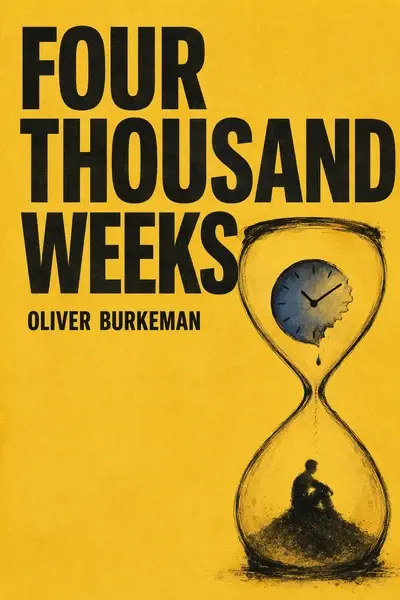
Four Thousand Weeks explores time management from a different point of view, tapping into ancient knowledge from famous philosophers, researchers, and spiritual figures to help us let go of our modern ideals of constant self-optimization and high-level performance in favor of a more sustainable understanding of time.
Four Thousand Weeks explores time management from a different point of view, tapping into ancient knowledge from famous philosophers, researchers, and spiritual figures to help us let go of our modern ideals of constant self-optimization and high-level performance in favor of a more sustainable understanding of time.
If we take a look at history, we can notice that people didn’t always observe time as we do today. Back in medieval times, people went on with their life thinking about daily struggles, how they have to work the land, take care of the animals, or about things they’ve heard in the village. However, time played its role as well, as they had to crop and harvest during a certain season, wake up before dawn, and finish up certain things before sunset.
However, people didn’t think about it the way we do today. They didn’t try to organize every day in advance or optimize their workflow constantly to save more time. Due to the fact that religion helped spread the belief in the afterlife, people didn’t value their limited days on earth that much. Frankly, this is both a good and a bad thing. Stress and anxiety were definitely lower back then, as people weren’t pressured by deadlines and limited hours.
Still, development happened at a much slower pace. But living in such a developed world today, are we feeling better about ourselves? Are we enjoying life more? Not really. The constant pressure of managing our time better led us to forget about the end goal: enjoying life as it is. As such, the lesson here is to stop structuring everything in your life. Leave time for blank thoughts, white space, and unstructured time. Simply put, enjoy life, don’t spend all of it planning.
Let’s start by debunking a common myth: Everybody procrastinates. Yes, even the most successful online gurus, motivational speakers, and most definitely, top performers do so. Why? Because this is how we’re programmed to function. We cannot possibly perform at our highest parameters at all times. That’s why whenever we try to do so, we eventually end up becoming burnt out. Not allowing unstructured time in your life and wanting to manage every day perfectly is an unhealthy approach to life, which you’ll have to ditch sooner or later. Instead, try finding a balance between procrastination and productivity. How? By learning how to prioritize properly. When you rank your tasks from most to least important and take care of them accordingly, you’re much more likely to finish things. Moreover, allow yourself to procrastinate when your mind feels tired. After doing a task, give your brain a chance to wander and rest. This will help you get back to work…
Continue reading in the MinuteRead app
Get the complete 5-minute summary of Four Thousand Weeks
Get the complete summary in the appHumans didn’t care much about their days before time wasn’t considered such an important factor
Prioritizing and accepting procrastination can lead to enhanced productivity
When you have free time, spend it doing the things you love
"Four Thousand Weeks" is a strong fit if you want practical ideas around career, future, happiness, especially themes like humans didn’t care much about their days before time wasn’t considered such an important factor; prioritizing and accepting procrastination can lead to enhanced productivity. The MinuteRead summary distills these concepts into a focused read, whether you're deciding whether to buy the book or applying its lessons at work.
Motivated to help readers with four Thousand Weeks explores time management from a different point of view, Oliver Burkeman wrote “Four Thousand Weeks” to package those ideas for a fast, focused read. In “Four Thousand Weeks”, Oliver Burkeman focuses on four Thousand Weeks explores time management from a different point of view. Through “Four Thousand Weeks”, Oliver Burkeman distills the core ideas on career into lessons readers can absorb in a single short sitting. Readers turn to this work whe…
View all summaries by Oliver BurkemanContinue Reading
Access the complete 5-minute summary and thousands more nonfiction books in the MinuteRead app.

Continue reading the complete summary in the MinuteRead app.