 MinuteRead
30 min
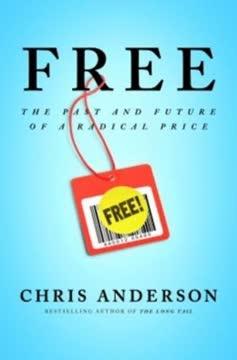
The most enduring mystery of the digital age is not how technology works. It is how value works when the cost of producing and distributing something falls to nearly nothing.
**Author:** Chris Anderson **Estimated Reading Time:** 45 minutes
Why the most powerful price in business is zero. How digital economics have transformed marginal costs, making free not just possible but inevitable. The psychology that makes free offers irresistible to the human brain. The new scarcities that emerge in a world of digital abundance. How to build a business when your competitors give away what you sell. The hidden costs of free that nobody talks about. A framework for understanding the gift economy, freemium models, and the future of value creation.
Entrepreneurs trying to build businesses in markets where free alternatives already exist. Creators wondering how to make a living when digital copies cost nothing to distribute. Marketers seeking to understand why free is the most powerful customer acquisition tool ever invented. Anyone curious about why Wikipedia exists, how Google makes billions giving away search, and what happens when the marginal cost of everything trends toward zero.
The most enduring mystery of the digital age is not how technology works. It is how value works when the cost of producing and distributing something falls to nearly nothing. Chris Anderson wrote Free to answer a question that haunted business leaders, creators, and economists at the dawn of the twenty-first century: What happens when everything becomes too cheap to meter? The book arrived in 2009, when the digital revolution had already upended music, publishing, and software. But Anderson saw something deeper. He saw that free was not a temporary disruption or a marketing gimmick. It was the natural endpoint of three exponential curves converging at once. The problem the book addresses is simple but profound. Traditional economics taught us that price equals marginal cost plus some margin. But what happens when marginal cost approaches zero? What happens when the cost of serving one more customer, streaming one more video, storing one more file, or sending one more message becomes so small it is not worth measuring? The old rules break. New rules emerge. And most people, including most business leaders, do not understand them. This matters because free is not going away. Every year, the cost of computation, storage, and bandwidth drops by roughly half. The deflation rate of the digital world is nearly fifty percent annually. Whatever it costs YouTube to stream a video today will cost half as much in a year. Whatever it costs to host a website, store a terabyte of data, or run a cloud application will keep falling. The gravitational pull toward free is relentless. People struggle with this challenge because free feels like a threat. It feels like the end of profit, the death of creative industries, the destruction of livelihoods. And for some, it has…
Continue reading in the MinuteRead app
Get the complete 30-minute summary of Free
Get the complete summary in the appDigital goods have near-zero marginal costs, which makes free the natural price rather than a temporary promotion.
Zero triggers psychological responses that bypass rational decision-making. People treat free as a different category, n
Abundance creates new scarcities. When information is free, attention, trust, and curation become valuable.
The triple play of Moore's Law, storage economics, and bandwidth improvements ensures that digital costs will continue f
Freemium is the dominant business model of the digital economy. Give away the basic version, charge for premium features
You cannot compete with free on price. You must find adjacent scarcities and serve them better than anyone else.
"Free" is a strong fit if you want practical ideas around business, economics, technology, especially themes like digital goods have near-zero marginal costs, which makes free the natural price rather than a temporary promotion; zero triggers psychological responses that bypass rational decision-making. people treat free as a different category, n. The MinuteRead summary distills these concepts into a focused read, whether you're deciding whether to buy the book or applying its lessons at work.
Chris Anderson is a prominent figure in technology and media, serving as Editor-in-Chief of Wired magazine since 2001. He has led the magazine to multiple National Magazine Award nominations and wins. Anderson is best known for his bestselling book "The Long Tail" and his influential work on internet trends. His career includes roles at The Economist, Nature, and Science, where he contributed to technology and business coverage. Anderson's expertise in digital economics and media has earned him …
View all summaries by Chris AndersonContinue Reading
Access the complete 30-minute summary and thousands more nonfiction books in the MinuteRead app.

Continue reading the complete summary in the MinuteRead app.






