MinuteRead
30 min
Book summary
Premium summary · Opens in the app · 30 min read
Most people believe that becoming wealthy through investing requires special intelligence, insider knowledge, or an extraordinary tolerance for risk. They picture millionaires as people who made brilliant stock picks, timed the market perfectly, or inherited family money. This belief is not just wrong. It is dangerous because it convinces ordinary people that wealth building is not for them.
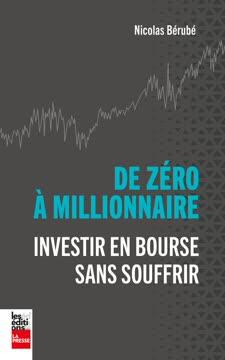
**Author:** Nicolas Bérubé
**Estimated Reading Time:** 45 minutes
**What You'll Learn:**
* Why most professional investors fail to beat a simple index fund * How to build lasting wealth without watching the market daily * The real price of investment fees and how they quietly destroy fortunes * How to develop the emotional discipline that separates wealthy investors from everyone else * A practical path from your first dollar invested to long-term financial independence
**Who This Book Is For:**
This book is for anyone who has ever felt confused, overwhelmed, or skeptical about investing. It is for people who suspect there must be a simpler way to build wealth than chasing hot stocks or listening to financial pundits. It is for those who want to understand why some investors succeed while most fail, and how to position themselves firmly in the first group.
Most people believe that becoming wealthy through investing requires special intelligence, insider knowledge, or an extraordinary tolerance for risk. They picture millionaires as people who made brilliant stock picks, timed the market perfectly, or inherited family money. This belief is not just wrong. It is dangerous because it convinces ordinary people that wealth building is not for them. Nicolas Bérubé spent years as a financial journalist watching the investment industry from the inside. What he discovered was uncomfortable. The industry that promises to help people build wealth often does the opposite. High fees, complex products, and constant predictions create confusion that benefits financial professionals more than their clients. The system is not designed to make you rich. It is designed to make the financial industry rich. The truth is far simpler and far more hopeful. Building wealth does not require genius. It requires understanding a few fundamental principles, applying them consistently, and avoiding the mistakes that destroy most investors. The path from zero to millionaire is not a secret. It is a well-documented, historically validated process that anyone can follow. The problem is that this simple path is boring. It does not make for exciting television. It does not sell financial magazines. It does not generate commissions for brokers. So the industry constantly invents new products, new strategies, and new reasons to trade, all of which benefit the industry at your expense. Bérubé wrote this book to cut through that noise. He interviewed successful investors, studied market history, and examined the evidence. What he found is that the most successful investors share common traits. They keep costs low. They diversify broadly. They invest consistently. They ignore short-term noise. They stay the course through market downturns. None of these traits require special intelligence. All of them require discipline. The stakes are enormous. A person who starts investing early…
Continue reading in the MinuteRead app
Get the complete 30-minute summary of From Zero to Millionaire
Get the complete summary in the appBuy low-cost index funds that track broad market indices.
Minimize fees. Every basis point matters over decades.
Start investing as early as possible. Time is your greatest asset.
Automate your investments to remove emotion and ensure consistency.
Accept volatility as the price of admission. Do not sell during downturns.
Do not try to pick stocks or time the market. You will fail.
"From Zero to Millionaire" is a strong fit if you want practical ideas around finance, business, personal finance, especially themes like buy low-cost index funds that track broad market indices; minimize fees. every basis point matters over decades. The MinuteRead summary distills these concepts into a focused read, whether you're deciding whether to buy the book or applying its lessons at work.
Nicolas Bérubé is a Canadian author and financial journalist known for his work in personal finance and investing. He has written multiple books on the subject, including "From Zero to Millionaire" and "Les millionnaires ne sont pas ceux que vous croyez" (Millionaires Are Not Who You Think They Are). Nicolas Bérubé is recognized for his ability to simplify complex financial concepts and make them accessible to a general audience. His writing style often incorporates anecdotes and real-life examp…
View all summaries by Nicolas BérubéContinue Reading
Access the complete 30-minute summary and thousands more nonfiction books in the MinuteRead app.

Continue reading the complete summary in the MinuteRead app.