MinuteRead
30 min
Book summary
by Shamkant B. Navathe
Premium summary · Opens in the app · 30 min read
Every time you withdraw cash from an ATM, scroll through a social media feed, book a flight, or order a product online, you are interacting with a database system. These systems operate so seamlessly that most people never pause to consider the extraordinary coordination happening behind the scenes. Yet the modern world runs on databases. They store our medical records, manage global supply chains, power search engines, and track financial transactions worth trillions of dollars each day.
**Author:** Shamkant B. Navathe
**Estimated Reading Time:** 45 minutes
**What You'll Learn:**
- The core architecture that powers every modern database system - How databases solve problems that file systems cannot - The three-schema framework that separates data from applications - Why transactions and concurrency control matter for data integrity - How database technology evolved from early hierarchical systems to today's distributed architectures - Practical frameworks for classifying and choosing database systems
**Who This Book Is For:**
This condensed edition is for software developers who want deeper understanding of the systems they use daily, students building a foundation in data management, technical managers evaluating database technologies, and anyone who works with data and wants to understand what happens beneath the surface of their queries.
Every time you withdraw cash from an ATM, scroll through a social media feed, book a flight, or order a product online, you are interacting with a database system. These systems operate so seamlessly that most people never pause to consider the extraordinary coordination happening behind the scenes. Yet the modern world runs on databases. They store our medical records, manage global supply chains, power search engines, and track financial transactions worth trillions of dollars each day. The challenge is that building and maintaining these systems is genuinely difficult. Data must be stored reliably. Multiple users must access the same information simultaneously without corrupting it. Queries must return results quickly even when databases grow to billions of records. Systems must recover gracefully when hardware fails. Security must protect sensitive information from unauthorized access. And all of this must happen while hiding enormous complexity from the people who simply need to retrieve or update information. Before database management systems existed, organizations relied on file processing systems. Each application maintained its own files. A university might have one file for student registration, another for grades, another for billing. The same student's name and address would appear in multiple places. When a student moved, someone had to update every file manually. If they missed one, the system contained inconsistent data. Writing new applications meant creating new files and new programs to read them. There was no central control, no standard way to query data, and no protection against concurrent access. The database approach emerged to solve these problems. Instead of scattering data across application-specific files, a database centralizes data under the control of a database management system, or DBMS. This shift seems simple in retrospect, but it fundamentally changed how organizations think about data. Data became a shared organizational resource rather than a byproduct of individual applications. Shamkant Navathe's work, developed with Ramez Elmasri over multiple editions, has become the standard reference for understanding this field. What makes this…
Continue reading in the MinuteRead app
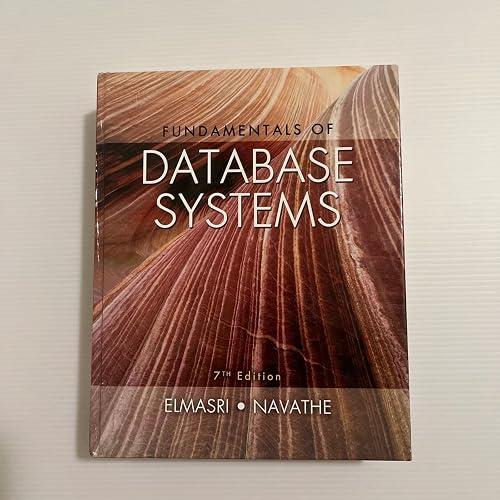
Get the complete 30-minute summary of Fundamentals of Database Systems
Get the complete summary in the appA DBMS actively manages data through definition, construction, manipulation, and sharing, not just storage.
The metadata catalog makes a database self-describing, enabling program-data independence.
Data abstraction lets users work with conceptual models rather than physical storage details.
Transactions provide atomicity, consistency, isolation, and durability, protecting data integrity under concurrent acces
The three-schema architecture separates internal, conceptual, and external levels, enabling data independence.
Different users need different interfaces, from formal query languages to user-friendly forms and menus.
"Fundamentals of Database Systems" is a strong fit if you want practical ideas around computer science, reference, technology, especially themes like a dbms actively manages data through definition, construction, manipulation, and sharing, not just storage; the metadata catalog makes a database self-describing, enabling program-data independence. The MinuteRead summary distills these concepts into a focused read, whether you're deciding whether to buy the book or applying its lessons at work.
Motivated to help readers with this book introduces the fundamental concepts necessary for designing, Shamkant B. Navathe wrote “Fundamentals of Database Systems” to package those ideas for a fast, focused read. In “Fundamentals of Database Systems”, Shamkant B. Navathe focuses on this book introduces the fundamental concepts necessary for designing. Through “Fundamentals of Database Systems”, Shamkant B. Navathe distills the core ideas on computer science into lessons readers can absorb in a si…
Continue Reading
Access the complete 30-minute summary and thousands more nonfiction books in the MinuteRead app.

Continue reading the complete summary in the MinuteRead app.