 MinuteRead
30 min
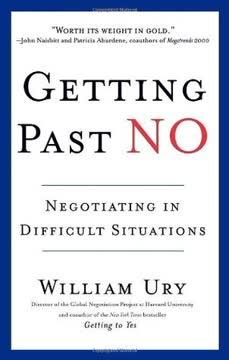
Book summary
by William Ury
Premium summary · Opens in the app · 30 min read
There is a moment in every difficult conversation when everything hangs in the balance. The other person has just said no. Perhaps they slammed the door, raised their voice, or simply crossed their arms and refused to budge. Your heart rate climbs. Your face flushes. Every instinct tells you to fight back, to argue harder, to prove you're right.
**Author:** William Ury
**Estimated Reading Time:** 45 minutes
**What You'll Learn:** - How to stay calm and strategic when facing difficult people - A five-step method for turning confrontation into collaboration - Practical techniques for negotiating with anyone, from hostile colleagues to stubborn family members - How to use power wisely without escalating conflict - Ways to turn adversaries into partners
**Who This Book Is For:** Anyone who has ever faced a difficult conversation, a stubborn opponent, or a seemingly impossible negotiation. Whether you're dealing with a demanding boss, a resistant client, a difficult teenager, or a political adversary, this book provides a proven framework for getting past "no" and reaching mutually satisfying agreements.
There is a moment in every difficult conversation when everything hangs in the balance. The other person has just said no. Perhaps they slammed the door, raised their voice, or simply crossed their arms and refused to budge. Your heart rate climbs. Your face flushes. Every instinct tells you to fight back, to argue harder, to prove you're right. That instinct is your biggest enemy. William Ury has spent decades studying what happens when people face opposition. As co-founder of Harvard's Program on Negotiation, he has mediated conflicts ranging from corporate boardroom battles to international disputes. He has watched skilled executives crumble in front of hostile counterparts and witnessed ordinary people achieve extraordinary breakthroughs in seemingly hopeless situations. The difference, he discovered, is not talent or charisma. It is strategy. Most people approach difficult negotiations as if they were entering a battle. They prepare arguments. They steel themselves for confrontation. They plan how to win. But the harder they push, the harder the other side pushes back. The result is stalemate, damaged relationships, and missed opportunities. Ury's insight is simple but profound: the most natural thing to do when faced with a difficult person is to react. And the most natural thing is usually the biggest mistake you can make. The problem is not the other person. The problem is our own reaction to them. When someone attacks, we defend. When someone demands, we resist. When someone refuses, we escalate. This cycle of action and reaction is what Ury calls "the trap of reaction." It is the single greatest obstacle to reaching agreement. Consider what happens in a typical workplace conflict. A manager criticizes an employee's work. The employee becomes defensive and explains why the criticism is unfair. The manager feels unheard and criticizes more forcefully. The employee withdraws or pushes back harder. Within minutes, a simple performance discussion has become a battle of wills. Both parties walk away frustrated, and the underlying issue remains unresolved. The same pattern plays out in marriages, business partnerships, international…
Continue reading in the MinuteRead app
Get the complete 30-minute summary of Getting Past No
Get the complete summary in the appGo to the balcony. Suspend your reaction and gain perspective before responding.
Step to their side. Listen, acknowledge, and disarm hostility.
Reframe. Change the game from confrontation to problem-solving.
Build a golden bridge. Make it easy for them to say yes.
Use power to educate, not escalate. Show consequences without making threats.
Know your BATNA. Your alternative gives you power and clarity.
"Getting Past No" is a strong fit if you want practical ideas around business, communication, psychology, especially themes like go to the balcony. suspend your reaction and gain perspective before responding; step to their side. listen, acknowledge, and disarm hostility. The MinuteRead summary distills these concepts into a focused read, whether you're deciding whether to buy the book or applying its lessons at work.
William L. Ury is a renowned expert in negotiation and conflict resolution. He co-founded Harvard's Program on Negotiation and has authored several bestselling books on the subject. Ury has extensive experience as a negotiation adviser and mediator in various conflicts worldwide, from corporate mergers to international disputes. He has worked with governments, organizations, and individuals to facilitate agreements and prevent conflicts. Ury's background in social anthropology informs his approa…
View all summaries by William UryContinue Reading
Access the complete 30-minute summary and thousands more nonfiction books in the MinuteRead app.

Continue reading the complete summary in the MinuteRead app.






