MinuteRead
30 min
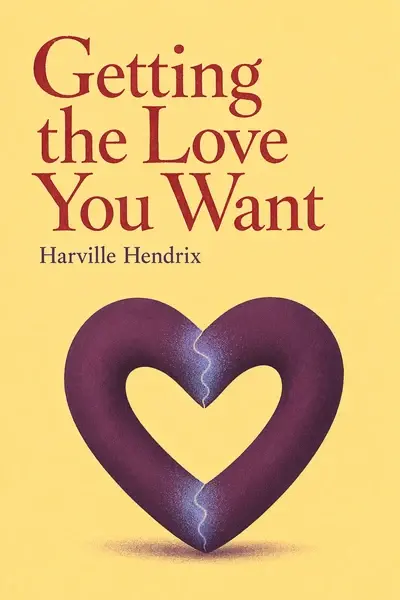
Book summary
Premium summary · Opens in the app · 30 min read
Most people believe that love should be easy. We grow up on stories of romance that end at the wedding, as if the hard part is finding someone and everything after that is a gentle ride into the sunset. Then we enter relationships and discover something confusing: the person who once seemed perfect now irritates us in ways we never imagined. The qualities that attracted us become the qualities that drive us crazy. The passion fades, replaced by frustration, and we wonder if we chose the wrong pe
**Author:** Harville Hendrix, Ph.D.
**Estimated Reading Time:** 45 minutes
**What You'll Learn:**
- Why you chose your partner, even when the choice seemed mysterious or accidental - How childhood wounds silently shape your adult relationships - Why the power struggle is not a sign of failure but a doorway to deeper love - A structured dialogue method that transforms conflict into connection - How to turn frustration with your partner into a path for mutual healing
**Who This Book Is For:**
This book is for anyone who has ever wondered why love starts with such intensity and then becomes so difficult. It is for couples caught in repeating arguments, for individuals who notice they keep choosing the same kind of partner, and for anyone who suspects that the key to a lasting relationship lies not in finding the right person but in becoming the right person. If you have ever felt that your partner should know what you need without you having to ask, or if you have found yourself disappointed that the person you fell in love with seems to have disappeared, this book will explain what is happening and what you can do about it.
Most people believe that love should be easy. We grow up on stories of romance that end at the wedding, as if the hard part is finding someone and everything after that is a gentle ride into the sunset. Then we enter relationships and discover something confusing: the person who once seemed perfect now irritates us in ways we never imagined. The qualities that attracted us become the qualities that drive us crazy. The passion fades, replaced by frustration, and we wonder if we chose the wrong person. Harville Hendrix offers a different explanation. The problem is not that you chose the wrong person. The problem is that you chose exactly the right person for reasons you do not yet understand. Hendrix spent decades as a couples therapist watching the same patterns emerge in relationship after relationship. He noticed that people do not select partners randomly. They select partners who resemble their childhood caregivers in profound and specific ways. This selection happens unconsciously, driven by a deep need to heal old wounds. The partner you chose carries both the positive and negative traits of the people who raised you, and your unconscious mind believes that this person can finally give you what you never received. This is a radical reframing. It means your relationship problems are not evidence that you made a mistake. They are evidence that your unconscious mind is trying to complete unfinished business. The pain you feel in your relationship is not a signal to leave. It is a signal…
Continue reading in the MinuteRead app
Get the complete 30-minute summary of Getting the Love You Want
Get the complete summary in the appYou chose your partner for a reason: to heal childhood wounds.
The Imago is the unconscious image of your ideal partner, formed in childhood.
Romantic love is temporary. The power struggle is inevitable.
The power struggle is not a sign of failure. It is a doorway to deeper love.
Your partner is not the source of your pain. They are the mirror that reveals it.
You cannot change your partner. You can only change yourself.
"Getting the Love You Want" is a strong fit if you want practical ideas around relationships, self help, psychology, especially themes like you chose your partner for a reason: to heal childhood wounds; the imago is the unconscious image of your ideal partner, formed in childhood. The MinuteRead summary distills these concepts into a focused read, whether you're deciding whether to buy the book or applying its lessons at work.
Harville Hendrix, Ph.D. , is a renowned relationship expert and bestselling author. His book "Getting the Love You Want" has sold over two million copies. With more than three decades of experience as an educator and therapist, Hendrix specializes in couples therapy and conducts workshops nationwide. He founded the Imago Institute for Relationship Therapy, applying his theories in practical settings. Hendrix's work focuses on helping couples understand and heal childhood wounds to improve their …
View all summaries by Harville HendrixContinue Reading
Access the complete 30-minute summary and thousands more nonfiction books in the MinuteRead app.

Continue reading the complete summary in the MinuteRead app.