MinuteRead
30 min
Book summary
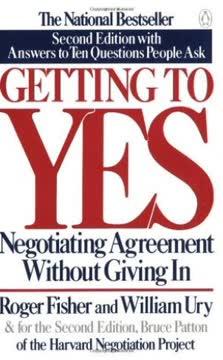
by Roger Fisher
Premium summary · Opens in the app · 30 min read
Negotiation is a fact of life. You negotiate with your spouse about where to go for dinner. You negotiate with your boss about a raise. You negotiate with a car dealer about a price. You negotiate with colleagues about project deadlines. Some people even negotiate with themselves about whether to hit the snooze button one more time.
**Getting to Yes** *Negotiating Agreement Without Giving In* By Roger Fisher
**Estimated Reading Time:** 45 minutes
**What You'll Learn**
How to negotiate effectively in any situation without resorting to hardball tactics or soft surrender. You will learn a method called principled negotiation, developed at the Harvard Negotiation Project, that has been used to resolve business disputes, international conflicts, and everyday disagreements. This approach shows you how to get what you deserve while preserving relationships and building better outcomes for everyone involved.
**Who This Book Is For**
Anyone who has ever walked away from a negotiation feeling they gave up too much, damaged a relationship, or failed to reach an agreement that should have been possible. Whether you are negotiating a salary, resolving a family dispute, closing a business deal, or mediating a conflict between colleagues, the principles in this book apply. If you have ever believed you must choose between being tough and being fair, this book will change how you think.
Negotiation is a fact of life. You negotiate with your spouse about where to go for dinner. You negotiate with your boss about a raise. You negotiate with a car dealer about a price. You negotiate with colleagues about project deadlines. Some people even negotiate with themselves about whether to hit the snooze button one more time. Despite how often we negotiate, most of us go about it badly. We fall into patterns that feel natural but produce poor results. We either dig into our position and fight, or we give in to preserve the relationship. Neither approach works well. Hard bargaining leaves people angry and agreements fragile. Soft bargaining leaves you resentful and taken advantage of. Roger Fisher and his colleagues at the Harvard Negotiation Project spent decades studying what actually works. They analyzed negotiations that succeeded and those that failed. They looked at labor disputes, international treaties, business mergers, and everyday conflicts. What they discovered was a third way, an approach that is neither hard nor soft but rather principled. The standard way people negotiate is called positional bargaining. Each side takes a position, argues for it, and makes concessions until they reach a compromise or deadlock. It is the most common form of negotiation because it feels intuitive. You want something, so you state what you want. The other side wants something different, so they state what they want. Then you haggle. Positional bargaining has serious problems. It produces unwise agreements because people lock themselves into positions and stop thinking creatively. It is inefficient because each side starts with extreme demands and inches toward the middle. It damages relationships because it becomes a contest of will. And it gets worse when more parties are involved,…
Continue reading in the MinuteRead app
Get the complete 30-minute summary of Getting to Yes
Get the complete summary in the appSeparate the people from the problem. Address relationship issues directly without trading them against substance.
Focus on interests, not positions. Ask why someone wants what they want.
Generate multiple options before deciding. Separate brainstorming from evaluation.
Insist on objective criteria. Base the outcome on principle, not pressure.
Know your BATNA. Your best alternative determines your power and protects you from bad deals.
Use negotiation jujitsu. Do not react to attacks. Redirect them toward the problem.
"Getting to Yes" is a strong fit if you want practical ideas around business, self help, psychology—especially themes like separate the people from the problem. address relationship issues directly without trading them against substance; focus on interests, not positions. ask why someone wants what they want. The MinuteRead summary distills these concepts into a focused read, whether you're deciding whether to buy the book or applying its lessons at work.
Roger Fisher was a renowned academic and negotiation expert. As the Samuel Williston Professor of Law Emeritus at Harvard Law School, he founded and directed the Harvard Negotiation Project. Fisher's work revolutionized the field of conflict resolution, emphasizing win-win solutions and principled negotiation techniques. He authored several influential books and founded consulting organizations to provide negotiation training and strategic advice. Fisher's methods have been applied in various hi…
View all summaries by Roger FisherContinue Reading
Access the complete 30-minute summary and thousands more nonfiction books in the MinuteRead app.

Continue reading the complete summary in the MinuteRead app.