MinuteRead
30 min
Book summary
Premium summary · Opens in the app · 30 min read
Something strange has happened to economics. The discipline that once promised to guide societies toward prosperity has become a source of division and distrust. Politicians invoke economic arguments to justify policies that ordinary people experience as harmful. Experts make confident predictions that fail to materialize. And the public, understandably, has stopped listening.
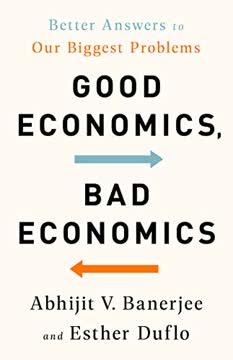
**Author:** Abhijit V. Banerjee and Esther Duflo
**Estimated Reading Time:** 45 minutes
**What You'll Learn:** Why the most pressing economic debates of our time are dominated by bad arguments, how rigorous evidence can illuminate the real trade-offs behind immigration, trade, automation, and inequality, and what policies might actually help ordinary people in an age of slowing growth and rising anxiety.
**Who This Book Is For:** Anyone who has ever felt that the economic debates dominating the news are disconnected from lived reality. If you want to understand why people are angry about trade, skeptical of experts, and anxious about the future, this book offers a clear-eyed guide to what the evidence actually shows and what we can do about it.
Something strange has happened to economics. The discipline that once promised to guide societies toward prosperity has become a source of division and distrust. Politicians invoke economic arguments to justify policies that ordinary people experience as harmful. Experts make confident predictions that fail to materialize. And the public, understandably, has stopped listening. This book begins with a simple observation: the world is facing enormous challenges, from slowing growth to rising inequality to climate change, and the economic tools we have been using to address these challenges are not working well enough. The authors, both Nobel Prize-winning economists, argue that the problem is not economics itself but the way economics has been practiced and communicated. The central failure is a preference for elegant theory over messy reality. Economists have built sophisticated models that assume people are rational, markets are efficient, and policies work as intended. But real people are complicated. They care about dignity and belonging, not just income. They make decisions based on emotion and social pressure, not just calculation. And real markets are full of friction, power imbalances, and information problems that models often ignore. When policies based on these flawed assumptions fail, the response is often to blame the victims. If workers lose their jobs to trade, they should have been more flexible. If immigrants seem threatening, people should be more rational. If inequality grows, it must be the natural result of market forces rewarding talent and effort. This blame-the-victim mentality has created a dangerous gap between economic expertise and public trust. The authors propose a different approach. Instead of starting with models and forcing reality to fit, they start with evidence. They ask what actually happens when people migrate, when trade expands, when automation arrives, when governments intervene. The answers are often surprising and frequently contradict what both the left and the right claim. This book is not an attack on economics. It is an attempt to rescue economics from ideology and return it to its proper…
Continue reading in the MinuteRead app
Get the complete 30-minute summary of Good Economics for Hard Times
Get the complete summary in the appThe economy is not a zero-sum game. Immigration, trade, and growth can create benefits for everyone, but only if we mana
Immigration does not take jobs from native workers. The evidence consistently shows that immigrants complement native wo
Free trade creates winners and losers. The losers are often concentrated and visible, and failing to address their pain
Preferences are malleable. They are shaped by social context and experience, which means policies can shape preferences,
GDP is a means, not an end. The goal is to improve quality of life, especially for the worst-off.
Climate change is urgent and requires collective action. Rich countries and rich individuals bear the greatest responsib
"Good Economics for Hard Times" is a strong fit if you want practical ideas around economics, business, politics, especially themes like the economy is not a zero-sum game. immigration, trade, and growth can create benefits for everyone, but only if we mana; immigration does not take jobs from native workers. the evidence consistently shows that immigrants complement native wo. The MinuteRead summary distills these concepts into a focused read, whether you're deciding whether to buy the book or applying its lessons at work.
Abhijit Vinayak Banerjee is an Indian economist and professor at MIT. He co-founded the Abdul Latif Jameel Poverty Action Lab and is affiliated with Innovations for Poverty Action. Banerjee's work focuses on alleviating global poverty through experimental approaches. He was awarded the 2019 Nobel Memorial Prize in Economic Sciences for his contributions to development economics. Banerjee has also received the Infosys Prize in Social Sciences. His research emphasizes evidence-based solutions to s…
View all summaries by Abhijit V. BanerjeeContinue Reading
Access the complete 30-minute summary and thousands more nonfiction books in the MinuteRead app.

Continue reading the complete summary in the MinuteRead app.