 MinuteRead
30 min
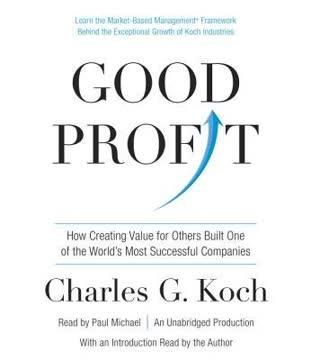
In 1961, Charles Koch returned to Wichita, Kansas, to join his father's company. At the time, Koch Industries was a modest oil refining and engineering firm with annual revenues of about $21 million. Most people outside the region had never heard of it.
**How Creating Value for Others Built One of the World's Most Successful Companies**
By Charles G. Koch
*Estimated Reading Time: 48 minutes*
**What You'll Learn**
The management philosophy that transformed a small refining company into one of the largest private enterprises in the world. You will discover how principled entrepreneurship, market-based thinking, and a relentless focus on creating value for others can drive extraordinary long-term success.
**Who This Book Is For**
This book is for leaders, managers, entrepreneurs, and anyone who wants to understand how to build an organization that thrives by making genuine contributions to society. It is for those who suspect that the path to lasting success runs not through shortcuts and favors, but through creating real value for customers, employees, and communities.
In 1961, Charles Koch returned to Wichita, Kansas, to join his father's company. At the time, Koch Industries was a modest oil refining and engineering firm with annual revenues of about $21 million. Most people outside the region had never heard of it. Over the following five decades, Koch Industries grew into one of the largest private companies in the world, with operations spanning refining, chemicals, fertilizers, forest products, and trading. By any conventional measure, the growth was extraordinary. But Charles Koch insists that the growth itself was never the goal. The goal was good profit. Good profit, as Koch defines it, is profit earned by creating superior value for customers while consuming fewer resources and always acting lawfully and with integrity. It is profit that comes from making a genuine contribution to society. Bad profit, by contrast, comes from corporate welfare, political favors, exploiting information asymmetries, or otherwise taking advantage of people. This distinction may sound simple. It is not. Koch spent decades developing and refining a management philosophy he calls Market-Based Management, or MBM, that operationalizes this idea across every dimension of a business. The philosophy draws on principles from economics, psychology, and the study of how free societies create prosperity. It is, in essence, an attempt to bring the discipline and dynamism of free markets inside the walls of a company. The problem Koch identified is that most organizations, even well-intentioned ones, drift toward stagnation. They become bureaucratic. They reward compliance rather than contribution. They protect existing business models rather than seeking better ones. They centralize decision-making in ways that disconnect authority from knowledge. They create incentive systems that encourage short-term thinking. Over time, they stop creating value and start extracting it. Koch saw this pattern repeatedly, both in the companies his firm acquired and in the broader business landscape. He became convinced that the root cause was a failure to understand how value is actually created in a free society. Prosperity,…
Continue reading in the MinuteRead app
Get the complete 30-minute summary of Good Profit
Get the complete summary in the appGood profit comes from creating value for others. Bad profit comes from extracting value from them.
Market-Based Management applies the principles of free markets within an organization through five dimensions: Vision, V
Virtue is more important than talent. Hire for values, then develop skills.
Knowledge is information that improves results. Sharing knowledge multiplies its value.
Decisions should be made by those with the best knowledge, not those with the highest rank.
People respond to incentives. Design incentive systems that reward long-term value creation.
"Good Profit" is a strong fit if you want practical ideas around business, economics, leadership, especially themes like good profit comes from creating value for others. bad profit comes from extracting value from them; market-based management applies the principles of free markets within an organization through five dimensions: vision, v. The MinuteRead summary distills these concepts into a focused read, whether you're deciding whether to buy the book or applying its lessons at work.
Charles G. Koch is a prominent American businessman and philanthropist. He earned multiple engineering degrees from MIT and has been CEO of Koch Industries since 1967, growing it into one of the largest private companies in the US. Koch is known for his libertarian views and has been a significant supporter of libertarian causes and think tanks. He co-founded the Cato Institute and has authored books on his business philosophy, including "Good Profit." Koch's management approach, Market Based Ma…
View all summaries by Charles G. KochContinue Reading
Access the complete 30-minute summary and thousands more nonfiction books in the MinuteRead app.

Continue reading the complete summary in the MinuteRead app.






