 MinuteRead
30 min
Book summary
by Jim Collins
Premium summary · Opens in the app · 30 min read
In 2001, Jim Collins published *Good to Great*, a book that examined how ordinary companies transformed themselves into extraordinary performers. The research was rigorous, the findings were surprising, and the book became one of the most influential business texts of its generation. But almost immediately, Collins began receiving a different kind of question.
**Author:** Jim Collins
**Estimated Reading Time:** 48 minutes
**What You'll Learn:**
- Why the principles of greatness apply just as powerfully to nonprofits, schools, and government agencies as they do to corporations - How to define success when profit is not the measure - Why Level 5 leadership looks different when power is diffuse - How to build a resource engine that sustains your mission - Why confronting brutal facts matters more than optimism - How to create pockets of greatness even within broken systems
**Who This Book Is For:**
This book is for anyone who leads, works in, supports, or cares about organizations that exist to make the world better rather than to make money. If you run a nonprofit, teach in a school, serve in government, sit on a board, volunteer your time, or donate your resources, this book will change how you think about excellence. It is also for business leaders who want to understand why the principles of great companies translate so powerfully to the social sectors.
In 2001, Jim Collins published *Good to Great*, a book that examined how ordinary companies transformed themselves into extraordinary performers. The research was rigorous, the findings were surprising, and the book became one of the most influential business texts of its generation. But almost immediately, Collins began receiving a different kind of question. The questions came from pastors and school superintendents, from museum directors and hospital administrators, from nonprofit founders and government officials. They all asked some version of the same thing: Does this apply to us? At first glance, the question seemed reasonable. After all, a business has a clear measure of success. Profit. Stock price. Return on investment. A business can look at its financial statements and know whether it is winning or losing. But what does a church measure? How does a school know if it is truly great? What is the equivalent of a profit margin for a homeless shelter or a symphony orchestra? Collins initially resisted answering. His research had focused on business corporations, and he was reluctant to extend his findings beyond what the evidence supported. But the questions kept coming, and they came from people who were deeply serious about their work. So he decided to apply the same intellectual rigor to a new question: Can the principles of good to great work in the social sectors? The answer, he discovered, was both simple and profound. The principles do apply. But they apply differently. The core finding of *Good to Great* was that greatness is not primarily a function of circumstance. It is a function of conscious choice and discipline. Great organizations, whether they sell widgets or save lives, share certain fundamental…
Continue reading in the MinuteRead app
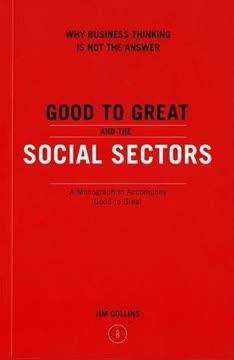
Get the complete 30-minute summary of Good To Great And The Social Sectors
Get the complete summary in the appGreatness is a choice, not a circumstance. It is available to any organization that has the discipline to pursue it.
Define success in terms of mission outcomes, not inputs. Measure what matters, even if it is difficult to quantify.
Level 5 leadership combines personal humility with intense professional will. It is not about being nice. It is about ma
In the social sectors, power is diffuse. Leaders must build coalitions and persuade, not command.
Get the right people on the bus. The mission is your most powerful recruiting tool. Be selective.
Develop a Hedgehog Concept: passion, potential for excellence, and resource engine. Focus on the intersection.
"Good To Great And The Social Sectors" is a strong fit if you want practical ideas around business, leadership, management, especially themes like greatness is a choice, not a circumstance. it is available to any organization that has the discipline to pursue it; define success in terms of mission outcomes, not inputs. measure what matters, even if it is difficult to quantify. The MinuteRead summary distills these concepts into a focused read, whether you're deciding whether to buy the book or applying its lessons at work.
James C. Collins is a renowned researcher and author focused on studying enduring great companies. He has authored several bestselling books, including "Built to Last" and "Good to Great," which have been translated into numerous languages. Collins began his career as a faculty member at Stanford Graduate School of Business before founding his own management laboratory in Colorado. He combines academic rigor with practical business experience, teaching executives from both corporate and social s…
View all summaries by Jim CollinsContinue Reading
Access the complete 30-minute summary and thousands more nonfiction books in the MinuteRead app.

Continue reading the complete summary in the MinuteRead app.






