 MinuteRead
30 min
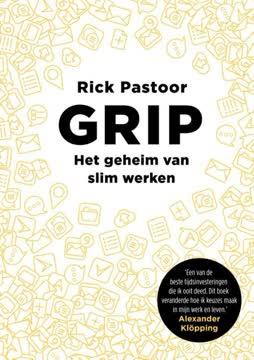
Book summary
by Rick Pastoor
Premium summary · Opens in the app · 30 min read
Most productivity advice fails for a simple reason. It assumes you have infinite willpower, a perfectly predictable schedule, and a job that never throws surprises at you. The moment reality hits, the system collapses. You abandon the elaborate morning routine. The color-coded planner sits untouched. The app you downloaded with such enthusiasm becomes another icon gathering digital dust.
**Author:** Rick Pastoor
**Estimated Reading Time:** 45 minutes
**What You'll Learn:**
- How to build a calendar system that protects your focus and priorities - Why your brain is a terrible storage device and what to do instead - How to process email without letting it run your life - The weekly ritual that keeps chaos from derailing your progress - How to align your work with what actually matters to you - How to set goals you will actually achieve - Why accountability partners transform your follow-through - How to solve problems by understanding them deeply first
**Who This Book Is For:**
Anyone who feels busy but not productive. Anyone whose days disappear into meetings, messages, and small tasks while the important work keeps getting postponed. Anyone who wants a practical system for taking control of their time without turning into a rigid productivity robot.
Most productivity advice fails for a simple reason. It assumes you have infinite willpower, a perfectly predictable schedule, and a job that never throws surprises at you. The moment reality hits, the system collapses. You abandon the elaborate morning routine. The color-coded planner sits untouched. The app you downloaded with such enthusiasm becomes another icon gathering digital dust. Rick Pastoor understands this because he lived it. As a young professional working in fast-moving technology companies, he found himself drowning in the same chaos everyone else experiences. Endless email threads. Back-to-back meetings. A to-do list that grew faster than he could complete items. The nagging sense that he was constantly busy but never quite making progress on the things that mattered. What makes his approach different is that he does not promise a perfect system. He promises a resilient one. The kind that bends without breaking when your day goes sideways. The kind that helps you recover when you inevitably fall off track. The kind that works with your actual life, not the idealized version of it. The central insight of this book is deceptively simple. Your calendar has limits. That sounds like a problem, but it is actually the solution. Most of us treat time as an infinite resource that we can somehow stretch to accommodate everything. We say yes to every request. We fill every gap. We believe that if we just work a little faster, respond a little quicker, and sleep a little less, we can somehow get it all done. This is a lie. Time is finite. And once you accept that, something remarkable happens. You start making choices. Real choices about what deserves your attention and what does not. You start treating your calendar as a tool for setting priorities rather than a record of other people's demands on your…
Continue reading in the MinuteRead app
Get the complete 30-minute summary of Grip
Get the complete summary in the appYour calendar is a planning tool, not just a record of obligations. Use it to protect your priorities.
Capture everything in a trusted system outside your head. Your brain is for thinking, not storing.
Process email in batches using the 4D method: Delete, Do, Delegate, Defer.
Do a weekly recap every Friday. Review the past week and plan the next one.
Find the intersection of your passion, skills, and mission. This is where fulfillment lives.
Set SMART goals and break them into quarterly milestones.
"Grip" is a strong fit if you want practical ideas around business, productivity, self help, especially themes like your calendar is a planning tool, not just a record of obligations. use it to protect your priorities; capture everything in a trusted system outside your head. your brain is for thinking, not storing. The MinuteRead summary distills these concepts into a focused read, whether you're deciding whether to buy the book or applying its lessons at work.
Rick Pastoor is a Dutch author and entrepreneur known for his work on productivity and personal development. He gained recognition for his book "Grip," which offers practical advice on time management and goal setting. Pastoor's approach combines insights from various productivity experts with his own experiences. He has a background in technology and startups, having worked with companies like Uber and WeTransfer. Pastoor's writing style is praised for being clear and accessible, making complex…
View all summaries by Rick PastoorContinue Reading
Access the complete 30-minute summary and thousands more nonfiction books in the MinuteRead app.

Continue reading the complete summary in the MinuteRead app.






