 MinuteRead
30 min
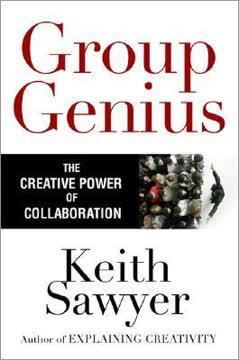
Book summary
by Keith Sawyer
Premium summary · Opens in the app · 30 min read
Every culture loves the story of the lone genius. We imagine Archimedes shouting "Eureka!" in his bath, Newton discovering gravity when an apple falls on his head, Einstein working alone in a patent office and revolutionizing physics. These stories are compelling because they simplify creativity into a single dramatic moment. One person. One flash of insight. One world-changing idea.
**Author:** Keith Sawyer
**Estimated Reading Time:** 45 minutes
**What You'll Learn:**
- Why the myth of the lone genius misleads us about how innovation actually happens - How group flow creates peak creative performance in teams - Why traditional brainstorming fails and what actually works - How conversation serves as the engine of collaborative creativity - How organizations can structure themselves for continuous innovation - How collaborative webs extend creativity beyond company boundaries - How customers and communities drive breakthrough innovations
**Who This Book Is For:**
This book is for anyone who creates, leads, or manages people. It is for entrepreneurs who believe they must have the single great idea, for managers who wonder why their teams underperform creatively, for educators who want to nurture innovative thinking, and for individuals who suspect that the romantic image of the solitary genius does not match reality. If you have ever felt that your best ideas emerged from conversations rather than isolated contemplation, this book will validate your experience and show you how to cultivate more of those moments.
Every culture loves the story of the lone genius. We imagine Archimedes shouting "Eureka!" in his bath, Newton discovering gravity when an apple falls on his head, Einstein working alone in a patent office and revolutionizing physics. These stories are compelling because they simplify creativity into a single dramatic moment. One person. One flash of insight. One world-changing idea. But these stories are wrong. The truth about innovation is far more interesting. Breakthroughs do not emerge from isolated minds. They emerge from networks of people who build on each other's ideas, challenge each other's assumptions, and combine their diverse perspectives into something none of them could have created alone. The mountain bike was not invented by one person. The airplane was not the product of two brothers working in isolation. Darwin's theory of evolution developed through years of correspondence with colleagues around the world. Even the most seemingly solitary creative acts are deeply rooted in collaboration. Keith Sawyer, a professor at the University of North Carolina at Chapel Hill, has spent his career studying how creativity actually works. His background is unusual for an academic. He spent years performing improvisational theater and playing jazz piano, experiences that gave him an intimate understanding of how groups create something from nothing in real time. When he later became a researcher, he brought this performer's perspective to the study of innovation. What he discovered challenges decades of assumptions about creativity. The problem is not just that we tell the wrong stories about innovation. The problem is that these stories shape how we work, how we organize companies, how we educate children, and how we think about our…
Continue reading in the MinuteRead app
Get the complete 30-minute summary of Group Genius
Get the complete summary in the appCreativity is collaborative. The lone genius is a myth.
Group flow is the peak experience of collaborative creativity. Create the conditions for it to emerge.
Traditional brainstorming does not work. Use brainwriting or electronic brainstorming instead.
The mind itself is collaborative. Even solitary creative acts are built on social materials.
Conversation is the engine of collaborative creativity. Create time and space for it.
The collaborative organization is structured to facilitate interaction, not control it.
"Group Genius" is a strong fit if you want practical ideas around business, psychology, leadership, especially themes like creativity is collaborative. the lone genius is a myth; group flow is the peak experience of collaborative creativity. create the conditions for it to emerge. The MinuteRead summary distills these concepts into a focused read, whether you're deciding whether to buy the book or applying its lessons at work.
Keith Sawyer is the Morgan Distinguished Professor in Educational Innovations at the University of North Carolina at Chapel Hill. He is known for his work on creativity, collaboration, and learning. Sawyer's research focuses on group creativity and innovation, particularly in educational and organizational settings. He has authored several books on these topics, including "Group Genius: The Creative Power of Collaboration." Sawyer's background in improvisational theater and jazz performance info…
View all summaries by Keith SawyerContinue Reading
Access the complete 30-minute summary and thousands more nonfiction books in the MinuteRead app.

Continue reading the complete summary in the MinuteRead app.






